
Runpreneur Journey Blog
Embark on an extraordinary journey with the Runpreneur community. Discover inspiring stories, insider tips, and the transformative power of our global challenge. From first-time runners to seasoned athletes, our blog captures the essence of the Runpreneur movement, inspiring others to join the cause.

When Does a Running Streak Become Truly Established? Lessons from 2026 Days of Consecutive Daily Running
When Does a Running Streak Become Truly Established? Lessons from 2026 Days of Consecutive Daily Running
I get asked about running streaks fairly regularly. When to start one, how to maintain one, what counts, what doesn't. But the question I find most interesting — and most honest — is this one: how do you actually know when a running streak is truly established?
I'm on day 2026 of consecutive daily running. That's just over five and a half years of going out every single day, minimum five kilometres, barefoot style or as close to it as I can manage. I've run through a broken foot. I've run in circumstances I wouldn't wish on anyone. I haven't stopped. Not because I'm trying to prove something to the world, but because the mission I'm running for is bigger than any excuse I could come up with.
So when I talk about what makes a streak truly established, I'm speaking from a place of having thought about this deeply. Not academically — experientially.
Let me share how I think about it.
Every milestone matters, but they're not all equal
Thirty days is real. Ninety days is significant. A year of consecutive daily running is a genuine achievement that most people who start a streak will never reach. A thousand days — which is just over two and three quarter years — is another level entirely. Each of these markers represents something meaningful, and I'd never dismiss someone who reached any of them and then stopped.
But if I'm honest about what separates a streak that has become part of the architecture of your life — as opposed to a challenge you completed — I think there's a different way to measure it.
The benchmark I use is this: are your consecutive days ahead of the calendar year you're currently in?
I'm recording this on day 2026. We're in the year 2025. That means I'm a year ahead of the current calendar. For me, that's the marker of an elite streak. It means your running habit has outlasted an entire year beyond where the world's clocks currently sit. It means consistency has compounded to a point where your streak number has pulled ahead of time itself, in a sense.
It's a simple benchmark, but it carries real weight.
Why streaks stop — and why mine hasn't
Most running streaks end for one of two reasons. Either something external forces a stop — injury, illness, circumstance — or the motivation to continue runs out before the body does.
I've had both test me. The broken foot didn't stop me, though I'm not here to tell anyone they should push through injury the way I did. That was a personal decision rooted in how deeply I feel about this particular mission. I'm not advocating recklessness. What I am saying is that when a streak reaches a certain depth, it stops being something you do and becomes something you are. At that point, stopping requires more mental effort than continuing.
That's the quiet shift that happens somewhere in the long middle of a streak. I can't tell you exactly when it happened for me. There was no specific day where I woke up and thought, right, this is now part of who I am. It just settled in over time.
The role of milestones in long-term consistency
One thing I've learned across 2026 days is that milestones aren't just for celebrating. They serve a functional purpose. They give you something to aim at during the stretches where nothing dramatic is happening — no race, no big number, no external recognition. Just you, your shoes, and another five kilometres.
Creating personal benchmarks — like the "ahead of the year" marker I described — gives the mind something to orient around. Long-term consistency doesn't run on inspiration. It runs on structure, habit, and the occasional well-placed target that makes you think: yes, I want to get there.
Where this fits into the bigger picture
I started this streak as part of a mission to run the equivalent of a lap of the earth — 40,075 kilometres — in barefoot-style footwear, while raising £1 million for children's causes, principally Great Ormond Street Hospital and BBC Children in Need. Every kilometre I cover is a kilometre closer to that goal. At 20,260 kilometres completed, I have 19,815 kilometres still to go.
The streak and the mission are inseparable. The streak is the mechanism. The mission is the reason. And that distinction matters enormously when things get hard — which they do, regularly, on a timeline this long.
I don't run every day because I love every run. I run every day because the children this fundraiser exists for don't get a day off from what they're facing. That's not dramatic language — it's just the honest truth of why I keep going when the easy option would be to rest.
What I'd say to someone starting or building a streak
If you're at day five, day fifty, or day five hundred — keep going. Every version of a streak has value. Don't measure yourself against someone on day 2026. Measure yourself against yesterday's version of you.
But if you want a long-term goal to orient around, try this: can you get your consecutive day count above the calendar year you're currently in? That's a benchmark worth working towards. It takes years. It requires the kind of consistency that most people will try and most won't complete. But if you reach it, you'll know — with real certainty — that your streak is established.
Not just as a habit. As part of who you are.
If you want to follow the journey, support the mission, or just watch what five and a half years of daily running in barefoot-style footwear looks like in practice, you can find everything at the links below. And if you believe in what I'm doing for these children, a share or a subscribe genuinely moves the needle.
See you tomorrow. Day 2027.

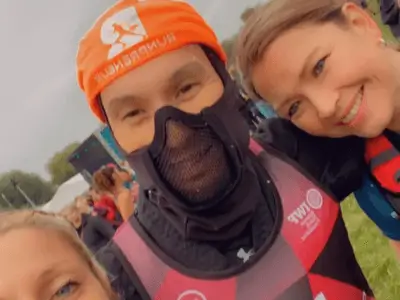
Kevin's 40,075km Challenge: Raising £1 Million for Children
Meet Kevin, a dedicated Runpreneur who embarked on an extraordinary journey to raise £1 million for children in need. Over the course of his 40,075km challenge, Kevin's unwavering determination and passion inspired thousands to join the Runpreneur movement.
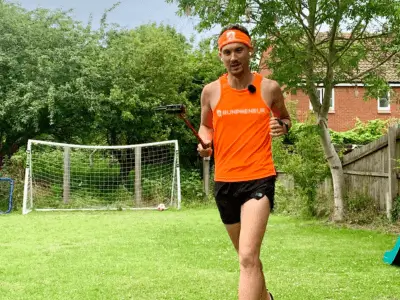
Runpreneur Vlogging: Capturing Kevin's Journey
Experience the Runpreneur challenge through the lens of Kevin's video diary. Witness his ups and downs, the camaraderie of the community, and the transformative power of running for a cause. Dive into the visual stories that capture the essence of the Runpreneur movement.

Empowering Children, One Step at a Time
As Kevin logged every kilometre of his 40,075km challenge, the true purpose behind his journey came into focus. Each step, each bead of sweat, fuelled essential healthcare, education, and nutrition programs for children in need around the world.

The Transformative 4x4x48 Challenge
Experience the thrill and personal growth of our iconic 48-hour running event. Witness the determination and resilience of Runpreneurs as they push their limits, one mile at a time.
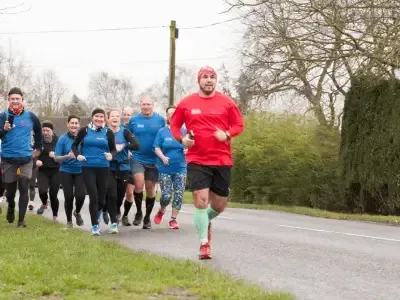
Runpreneur Vlogging: Capturing the Journey
Dive into the visual stories of our Runpreneurs as they document their experiences through engaging video logs. Witness the challenges, triumphs, and moments of camaraderie that define the Runpreneur spirit.
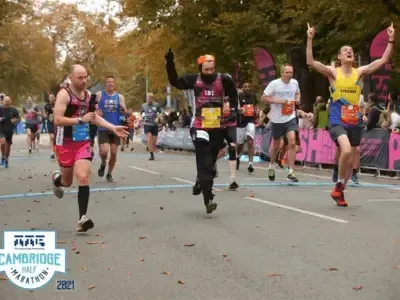
Becoming a Runpreneur: Join the Movement
Learn how you can become a Runpreneur and be part of this global community. Discover the steps to sign up, complete the challenge, and share your journey, all while making a lasting difference.
Connect With Us:



















I am on a mission to raise £1,000,000 for children's causes by daily run-vlogging barefoot-style, covering the total distance of a lap around the world—40,075 km.