
Runpreneur Journey Blog
Embark on an extraordinary journey with the Runpreneur community. Discover inspiring stories, insider tips, and the transformative power of our global challenge. From first-time runners to seasoned athletes, our blog captures the essence of the Runpreneur movement, inspiring others to join the cause.
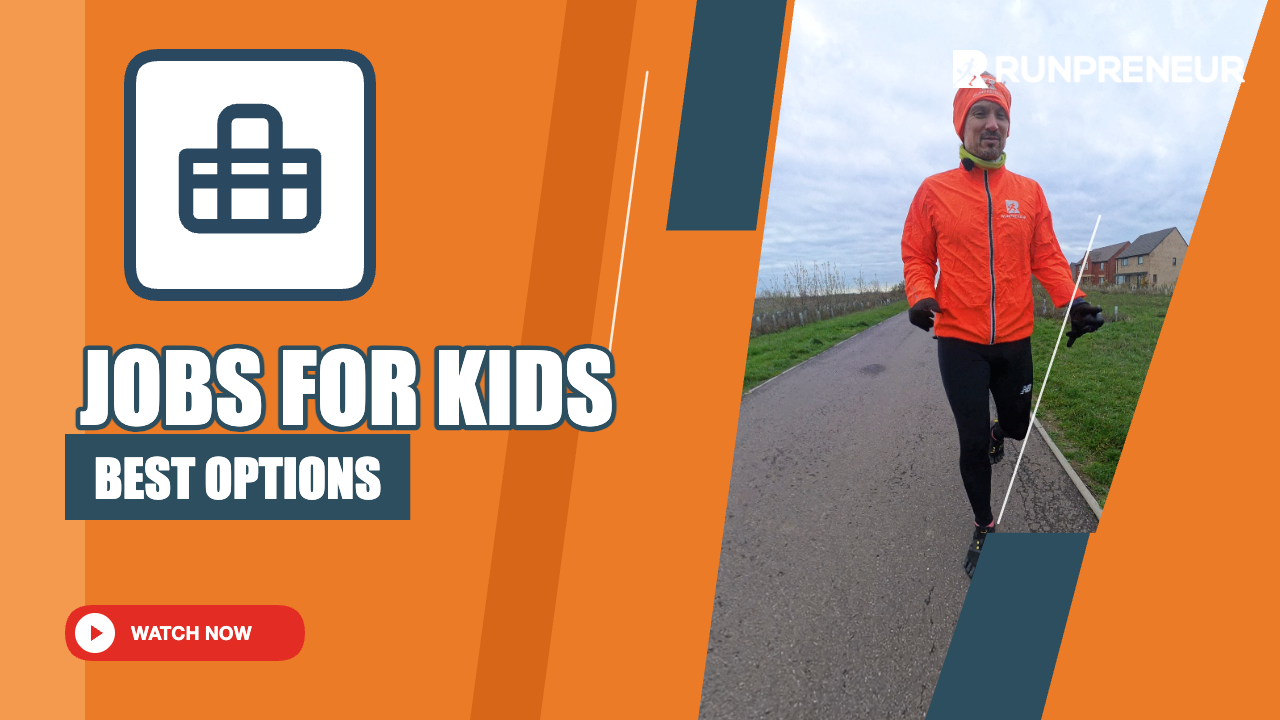
Teaching Kids About Money and Commerce — What I've Learned on Day 1995 of My Running Streak
Teaching Kids About Money and Commerce — What I've Learned on Day 1995 of My Running Streak
Day 1995. I'm part-running, part-walking through an injury that has made the last few weeks genuinely difficult. Five days from now I want to be running fully again, in time for day 2000. But today, while I was moving through my kilometres, my mind was on my kids — specifically, what kinds of early work experiences are actually worth something in the world they're growing up into.
This is something I think about more than most people might expect from someone who spends the majority of his waking thoughts on running streaks and fundraising targets. But the two things are not as separate as they might seem. What I'm trying to build through this mission — consistency, discipline, understanding how effort compounds over time — those are exactly the same values I want my children to internalise early.
Let me tell you where we are as a family on this.
My oldest son is almost 15. My daughter is 13. My youngest is 11. The youngest is probably a year or two away from genuinely grasping the responsibility that comes with work. But my eldest and my daughter are both at the point where early experiences with earning and commerce can really start to shape how they think.
My son worked in my café for the best part of a year. I thought that was a good starting point — not because working in a café is glamorous, but because it put him face to face with customers every single day. Communication, patience, managing the unexpected — that is a skill set that schools simply do not teach. He was confident by the end of it in a way that he had not been at the start.
When we closed the café, his role went with it. So we had to think again.
My father spent decades running small businesses — furniture, electrical goods, jewellery. He is retired now, but when he wound things down, he held onto a significant amount of old stock. We came up with an idea that my son could work through that stock with my father and sell it, primarily through eBay, splitting the profits between them. It has turned into something genuinely useful.
What my son is learning is not just how to list items online. He is learning how to research value — particularly important right now because the price of gold is exceptionally high and some of what my father held onto is 9 carat gold rings and necklaces that are selling for a meaningful amount. He is learning about hallmarks, cleaning, accurate descriptions, postings costs, platform fees, what margin actually means in practice. He is running a small business. He just does not call it that yet.
But perhaps the thing that matters most to me about this arrangement is something I did not plan. My son and my father are spending real time together, building something side by side. My father is getting practical help clearing stock he has been meaning to deal with for years. My son is gaining skills, earning money, and building a relationship with his grandfather in a way that would not have happened otherwise. I could have stepped in and done this with him myself — and I will admit there was a moment where I thought about it — but I am glad I did not. What they are building together is theirs.
My daughter is doing something different. She has been buying and reselling clothes on Vinted for several months now. The way she operates it is resourceful — she buys secondhand items she likes, uses them, and when she is done with them she relists and sells them on. She recycles the money continuously, which means she effectively funds her own wardrobe by managing the process carefully. She is learning about pricing, descriptions, what sells and what does not, how to photograph items, and what buyers are actually looking for.
Neither of my children are doing something dramatic. But both of them are learning the fundamentals of commerce — revenue, cost of goods, gross profit, packaging costs, fees, margin — at an age when most of their peers have no framework for any of it. And that matters. Not because I want to push them into entrepreneurship, but because understanding how money actually works — how it is earned, how it is managed, how it can be saved and eventually invested — puts them in a genuinely stronger position for whatever they choose to do in life.
When I was growing up, a paper round was the standard introduction to earning. That world has largely gone. The jobs that existed for young people a generation ago have either disappeared or transformed. Technology has changed everything. And rather than lament that, I think the intelligent response is to help young people engage with the tools and platforms that exist now — e-commerce, online marketplaces, digital selling — and start building financial literacy through direct experience.
That is what I am trying to do with my children. Imperfectly, with limited time, alongside everything else that is going on.
On the running side, I am still managing kilometres every day. The injury has slowed me considerably and the last few weeks have been a genuine test of the commitment behind this streak. I am currently at 19,950 kilometres of a 40,075 kilometre goal — the equivalent of one lap of the earth. Just over 20,000 kilometres remain. The mission is to raise £1 million for children's causes including Great Ormond Street Hospital and BBC Children in Need, and the mechanism is straightforward — the more people who find this content, the more awareness builds, and the more money can ultimately be raised.
I do not talk about my children's lives to fill content. I talk about them because they are the reason the mission feels real. Every kilometre I log, injured or not, is connected to a broader belief that children's lives — including my own children's futures — are worth showing up for consistently, even when it is hard.
Day 2000 is five days away. I intend to be running properly by then. We will see.
If any of this resonates — whether you are a parent thinking about how to introduce your children to the concept of work and money, or someone who simply wants to follow a long-term mission built on consistency — I would be glad to hear from you. Drop a comment, share this with someone it might help, or simply follow along.
See you tomorrow.
Kevin's 40,075km Challenge: Raising £1 Million for Children
Meet Kevin, a dedicated Runpreneur who embarked on an extraordinary journey to raise £1 million for children in need. Over the course of his 40,075km challenge, Kevin's unwavering determination and passion inspired thousands to join the Runpreneur movement.
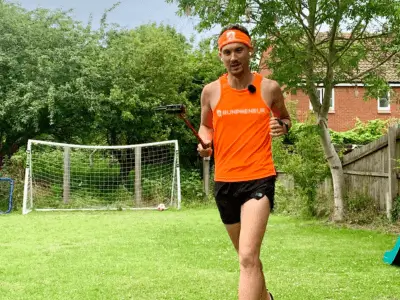
Runpreneur Vlogging: Capturing Kevin's Journey
Experience the Runpreneur challenge through the lens of Kevin's video diary. Witness his ups and downs, the camaraderie of the community, and the transformative power of running for a cause. Dive into the visual stories that capture the essence of the Runpreneur movement.
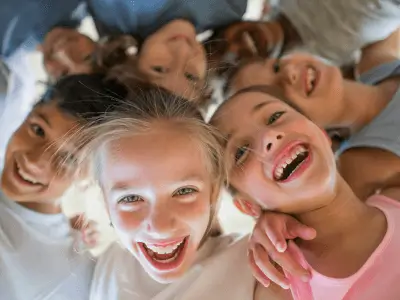
Empowering Children, One Step at a Time
As Kevin logged every kilometre of his 40,075km challenge, the true purpose behind his journey came into focus. Each step, each bead of sweat, fuelled essential healthcare, education, and nutrition programs for children in need around the world.
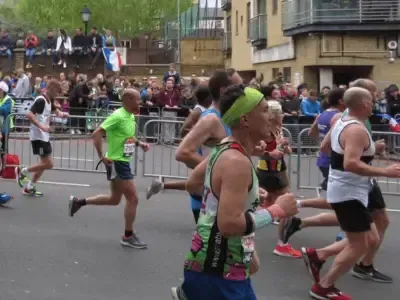
The Transformative 4x4x48 Challenge
Experience the thrill and personal growth of our iconic 48-hour running event. Witness the determination and resilience of Runpreneurs as they push their limits, one mile at a time.
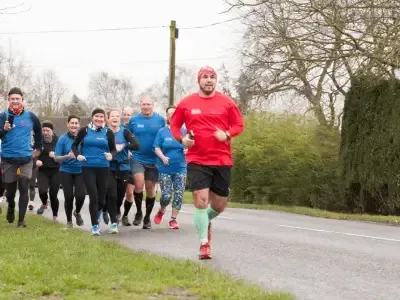
Runpreneur Vlogging: Capturing the Journey
Dive into the visual stories of our Runpreneurs as they document their experiences through engaging video logs. Witness the challenges, triumphs, and moments of camaraderie that define the Runpreneur spirit.
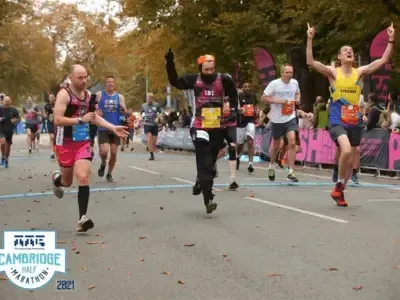
Becoming a Runpreneur: Join the Movement
Learn how you can become a Runpreneur and be part of this global community. Discover the steps to sign up, complete the challenge, and share your journey, all while making a lasting difference.
Connect With Us:



















I am on a mission to raise £1,000,000 for children's causes by daily run-vlogging barefoot-style, covering the total distance of a lap around the world—40,075 km.