
Runpreneur Journey Blog
Embark on an extraordinary journey with the Runpreneur community. Discover inspiring stories, insider tips, and the transformative power of our global challenge. From first-time runners to seasoned athletes, our blog captures the essence of the Runpreneur movement, inspiring others to join the cause.
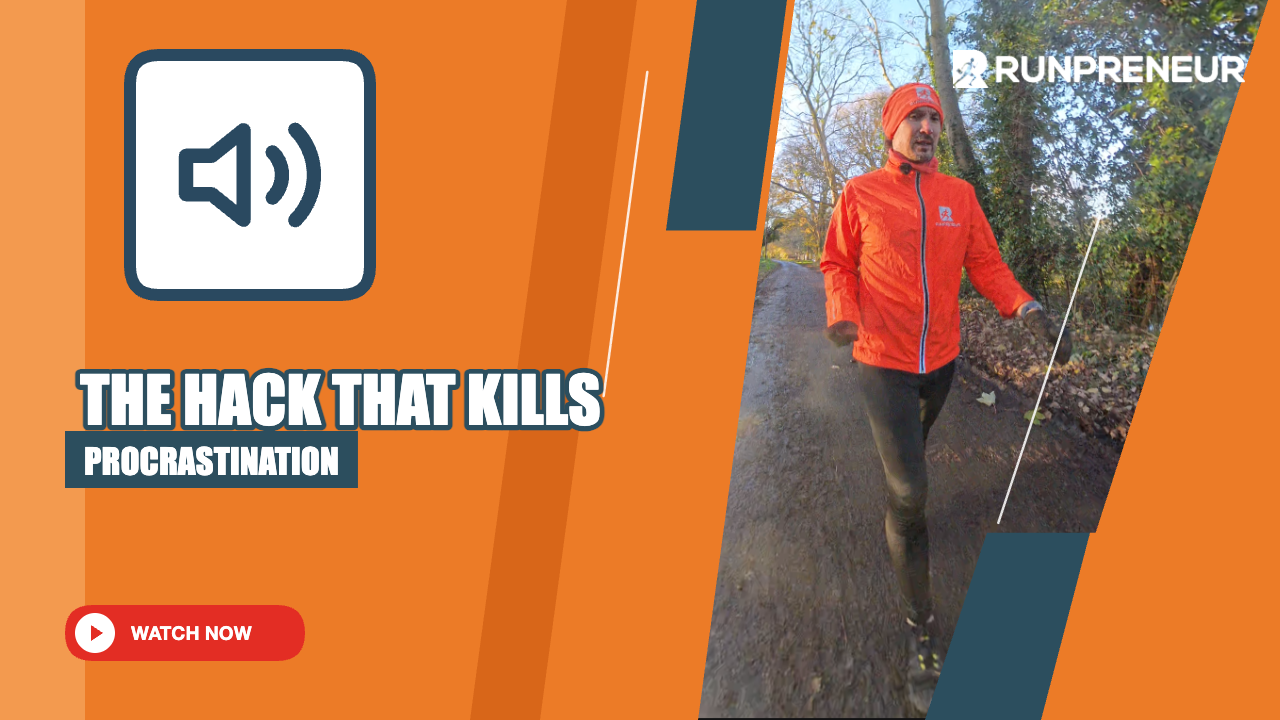
Why Talking to People Is the Best Fix for Procrastination (And What I Learned on Day 2011)
Why Talking to People Is the Best Fix for Procrastination (And What I Learned on Day 2011)
I have battled procrastination for most of my entrepreneurial life. Not occasionally. Not in phases. Consistently, repeatedly, and sometimes frustratingly. And I say that not as a confession of weakness but as an honest statement of fact, because I think most people who work independently, run their own businesses, or operate remotely will recognise exactly what I mean.
Today is day 2011 of my consecutive daily running streak. I have now covered 20,110km of a 40,075km goal — a lap of the world on foot, barefoot style, in service of raising £1 million for children's causes including Great Ormond Street Hospital and BBC Children in Need. Every single day, no exceptions. And yet, despite the discipline that streak demands, I still deal with procrastination in my working life. The two things are not mutually exclusive. Discipline in one area does not automatically eliminate the pull of avoidance in another.
So today I want to talk about something that has genuinely helped me: using communication as a tool to break the procrastination cycle.
The Home Working Trap
I run my companies from home. I have an office there, I have the freedom to structure my day, and on paper that sounds ideal. In practice, the home environment works against sustained productivity if you let it. The television is there. The kitchen is there. The sofa is there. All of the creature comforts that signal rest and downtime are within arm's reach. I can have a sharp, focused morning and then find myself drifting by mid-afternoon, not through laziness exactly, but through the slow gravitational pull of familiarity.
I have spoken before about changing your environment as a way of disrupting procrastination. Getting out of the house, working from a coffee shop, a library, somewhere with energy and movement around you. And that does work. The shift in environment creates a shift in mental state. The novelty shakes things loose.
But here is the problem with relying only on that approach. If you go to the same coffee shop every Tuesday and Thursday, it stops being novel fairly quickly. Familiarity sets in there too. The environment becomes just another version of home. The disruption wears off.
So what next?
Communication as a Productivity Reset
What I have found to be consistently effective — more reliable than location changes alone — is deliberate human communication. Not idle chat. Not distraction for the sake of it. But intentional contact with another person at the right moment.
When I feel procrastination beginning to creep in, that specific mental heaviness where focus starts to slip and the pull toward doing nothing gets stronger, I have learned to treat that as a signal to connect with someone. It might be a colleague, a friend who also works independently, or an accountability partner. The conversation does not need to be long or particularly meaningful. Five minutes is often enough. The point is that it disrupts the internal drift.
There is something in the act of talking to another person that resets the mental state. You have to be present, coherent, engaged. You cannot be half in and half out of a conversation the way you can with a task you have been staring at for too long. The interaction pulls you out of the fog.
The Accountability Layer
There is also a deeper layer to this. When you work with or around people who understand your goals and your working patterns, there is a natural accountability that forms. Not pressure in an unhealthy sense, but a quiet awareness that someone else sees your day. That awareness alone can be enough to keep you moving when you would otherwise stall.
I have found this particularly useful with people who are in similar situations. Remote workers, freelancers, other entrepreneurs. People who understand the specific challenge of self-directed work and who are fighting the same battles. When you arrange to work alongside someone, even silently, even virtually, the dynamic changes. You are no longer alone with your own resistance.
Understanding Your Biological Prime Time
One refinement I would add is this: learn when your procrastination is most likely to strike. Not all hours of the day are equal for everyone. I know that I am reasonably productive in the morning for a short window, then I have a dip, I pick up again around midday, and I have a stronger period in the afternoon. That pattern is fairly consistent for me.
If you know your own version of that, you can use it strategically. Schedule your meetings, your calls, your check-ins, for the times when you know your energy is at its lowest. That way, the communication is doing double duty. It is keeping you connected and moving on work, but it is also filling a slot that would otherwise be vulnerable to procrastination. You are not using your peak mental energy for meetings that could have happened later, and you are not leaving your low-energy windows empty and unguarded.
This is what I mean by small, deliberate gains that compound over time. None of these things on their own will transform your working life overnight. But the combination of understanding your energy patterns, placing communication deliberately within your day, and building relationships with people who help hold you accountable — that adds up to something meaningful.
Why This Matters in the Context of the Mission
I think about this a lot in relation to the streak itself. Covering 20,110km and having 19,965km still ahead of me is a very long road. The only way that continues is through daily consistency, not motivation, not inspiration, not ideal conditions, but the decision each day to do what needs doing regardless.
Procrastination is the enemy of that. And communication, in its broadest sense, is part of what keeps it at bay. The people who follow this journey, who support the fundraiser, who leave a comment or send a message, they are part of that accountability structure too. I am aware of them. That awareness matters.
Every kilometre run supports children who need it. Every pound raised through this mission goes toward that. The more people who know about it, the more children we can help. That is not a slogan. It is the simple mechanics of how this works.
If procrastination is something you deal with, try the communication approach. Identify one or two people you can work alongside or check in with regularly. Learn when your low-energy windows fall in the day. Schedule connection for those moments. See what happens over a week, then a month.
The compound effect of small, consistent adjustments is real. I have 2011 consecutive days of evidence for that.
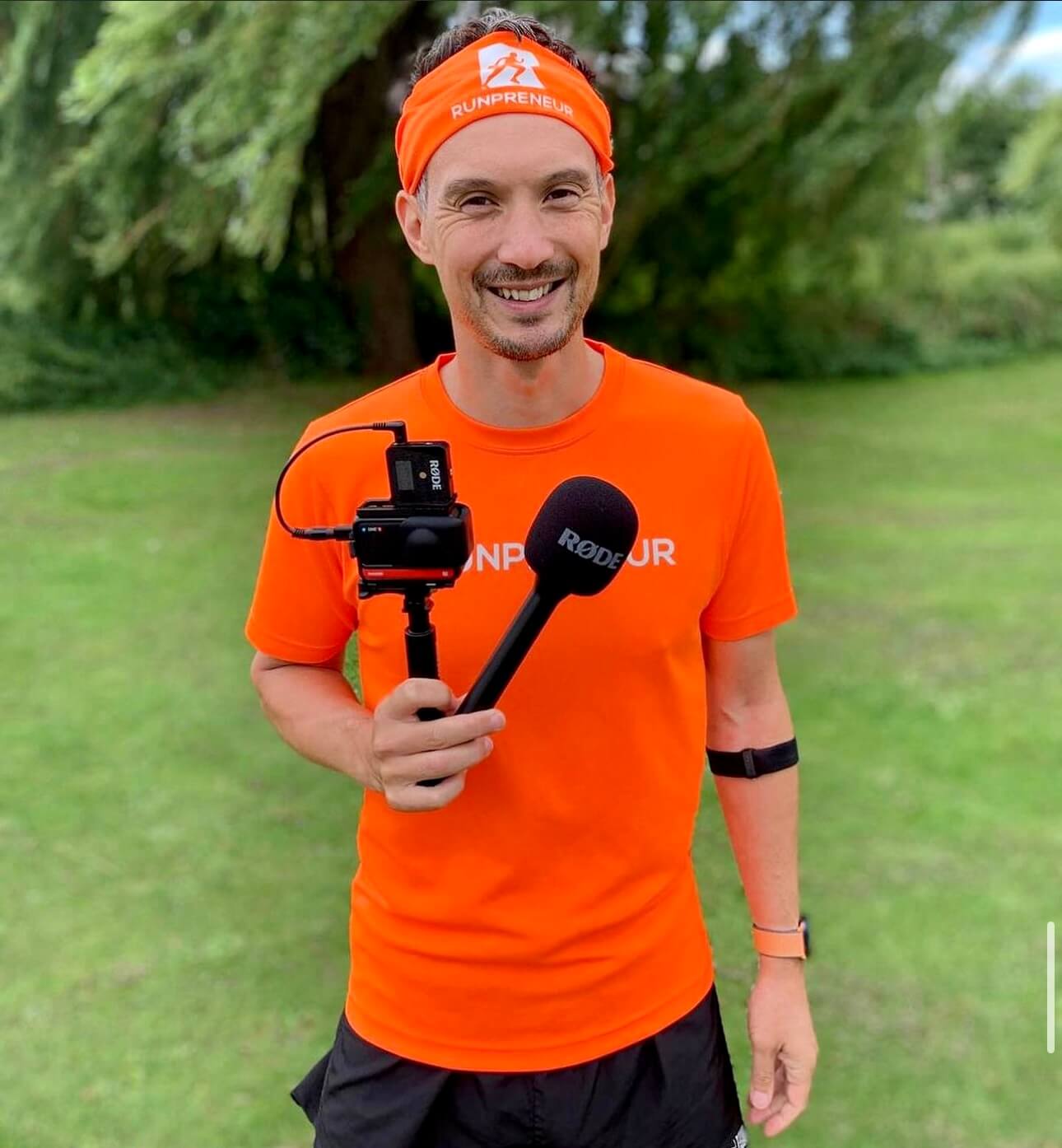
Kevin's 40,075km Challenge: Raising £1 Million for Children
Meet Kevin, a dedicated Runpreneur who embarked on an extraordinary journey to raise £1 million for children in need. Over the course of his 40,075km challenge, Kevin's unwavering determination and passion inspired thousands to join the Runpreneur movement.
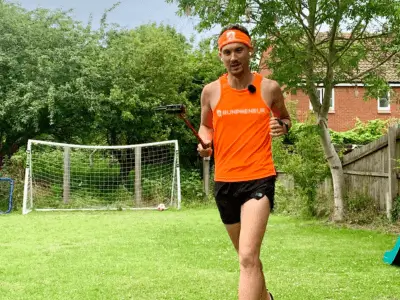
Runpreneur Vlogging: Capturing Kevin's Journey
Experience the Runpreneur challenge through the lens of Kevin's video diary. Witness his ups and downs, the camaraderie of the community, and the transformative power of running for a cause. Dive into the visual stories that capture the essence of the Runpreneur movement.

Empowering Children, One Step at a Time
As Kevin logged every kilometre of his 40,075km challenge, the true purpose behind his journey came into focus. Each step, each bead of sweat, fuelled essential healthcare, education, and nutrition programs for children in need around the world.
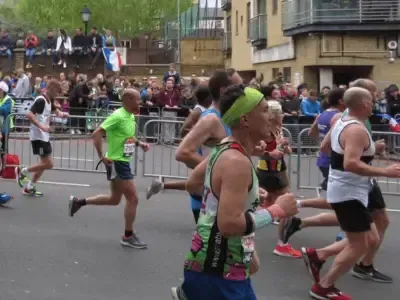
The Transformative 4x4x48 Challenge
Experience the thrill and personal growth of our iconic 48-hour running event. Witness the determination and resilience of Runpreneurs as they push their limits, one mile at a time.
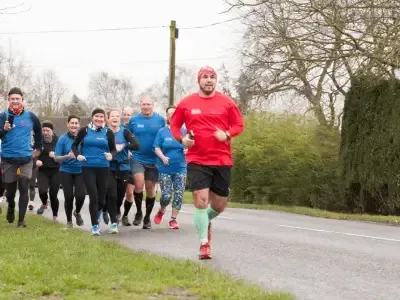
Runpreneur Vlogging: Capturing the Journey
Dive into the visual stories of our Runpreneurs as they document their experiences through engaging video logs. Witness the challenges, triumphs, and moments of camaraderie that define the Runpreneur spirit.
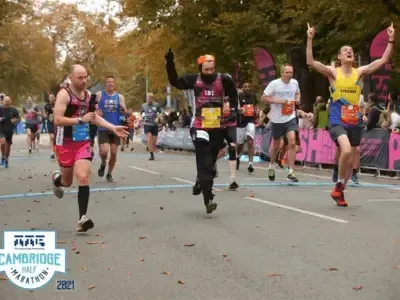
Becoming a Runpreneur: Join the Movement
Learn how you can become a Runpreneur and be part of this global community. Discover the steps to sign up, complete the challenge, and share your journey, all while making a lasting difference.
Connect With Us:



















I am on a mission to raise £1,000,000 for children's causes by daily run-vlogging barefoot-style, covering the total distance of a lap around the world—40,075 km.