
Runpreneur Journey Blog
Embark on an extraordinary journey with the Runpreneur community. Discover inspiring stories, insider tips, and the transformative power of our global challenge. From first-time runners to seasoned athletes, our blog captures the essence of the Runpreneur movement, inspiring others to join the cause.

Why Runners Must Take Foot Care Seriously Before It's Too Late Lessons from a Broken Metatarsal on Day 2037
Why Runners Must Take Foot Care Seriously Before It's Too Late Lessons from a Broken Metatarsal on Day 2037
Eight weeks ago I fractured my third metatarsal. I was just running. No twist, no stumble, no sudden impact. One foot strike at a time, the pain built until I could barely walk. That is how a stress fracture announces itself quietly, then all at once.
Today is day 2037 of my consecutive daily running streak. I have covered 20,370km of a 40,075km goal the equivalent of running a lap of the earth and this injury has been the single most significant physical challenge of that entire journey. I want to share what I have learned, because if you are a runner, a barefoot style runner especially, this matters.
What actually happened
There was no dramatic moment. I was running in my Vibram Five Fingers, as I do every day, and the pain in my right foot started to build gradually during the run. By the time I finished, I could barely put weight through it. I limped through the following days, determined to maintain my minimum daily distance of 5km to keep the streak alive. What I did not know at the time was that I had already fractured the bone, and I was almost certainly making it worse.
When I saw my podiatrist the following day, she suspected a stress fracture immediately. She referred me to a minor injuries clinic. The clinical staff there agreed it was likely a stress fracture but explained that hairline fractures are often invisible on an x-ray until three to four weeks after the injury, when the bone starts to show signs of repair. So they sent me away without a boot, without supportive wear, and without a confirmed diagnosis.
I carried on running 5km a day with a broken foot. I did not know it was broken. That is an important distinction, but it is also a lesson.
What I wish I had done differently
If I experience significant pain in the ball of my foot again, I will not wait. I will buy a fracture boot immediately. They are inexpensive, widely available, and they work by loading your weight toward the heel and away from the metatarsal area. Within hours of putting one on, the pressure on the fracture site reduces noticeably. I delayed my recovery by approximately four weeks by not having that support in place from day one. That is four weeks I cannot get back, and four weeks where I was potentially worsening the injury with every step.
The broader lesson here is not just about fracture boots. It is about being proactive with specialist care rather than reactive. I had a podiatrist already. I saw her the day after the injury. That was the right instinct. But I could have had a more structured conversation with her earlier in the year about the cumulative load I was putting through my feet.
Why barefoot style runners need to pay particular attention
Running in minimal footwear like Vibram Five Fingers means you get very little structural support from your shoes. That is by design barefoot style running is about engaging your natural foot mechanics rather than relying on cushioning to absorb impact. The trade-off is that your feet carry more of the work, and over a long streak, that accumulates.
As a barefoot style runner, you develop calluses on the soles of your feet layers of hardened skin that build up as a natural protective response to the repeated contact with the ground. This is normal and, to a degree, beneficial. The problem arises when the distribution of that skin becomes uneven. If you have had a minor injury at any point, or if your gait has shifted even slightly, you can end up with pressure points on the sole of your foot. Those pressure points concentrate impact forces onto a specific area with every single foot strike. Over thousands of kilometres, that is a significant accumulative stress on the bone beneath.
That, as best we can determine, is what caused my fracture. An uneven buildup of hard skin on my right foot was directing more pressure through a specific point with every step I took.
The role of a podiatrist in a runner's maintenance schedule
I now see a podiatrist approximately every nine weeks. I also see a sports massage therapist every six weeks. I had these appointments in place before the injury, but I have come to understand that for a runner — particularly a streak runner in barefoot style footwear podiatry is not optional, it is essential maintenance.
A podiatrist does not just deal with obvious problems. They monitor the condition of the skin on the soles of your feet, manage callus build-up, identify early pressure points, and can flag concerns before they become injuries. If you are running regularly and you are not seeing a podiatrist, I would encourage you to consider it.
The recovery timeline
Once I finally had the x-ray confirmed, around three to four weeks after the initial injury, I was put into a fracture boot for six weeks. Coming out of the boot, the plan is to rebuild gradually: starting at one kilometre of running with four kilometres of walking, adding one kilometre of running per week until I am back to running the full distance. From the initial incident to being back at my normal running capacity, the total timeline is likely to be around 18 weeks.
That is a significant period. But the streak continues. Every single day, 5km minimum, whether I am walking most of it or not. That is the commitment I made 2037 days ago, and it is the commitment I hold to because this is not about performance. It is about consistency, purpose, and staying present in the mission.
The mission behind the miles
I am 20,370km into a 40,075km goal. I have 19,705km still to cover. Every kilometre I log, every episode I publish, exists to raise awareness and funds for children's causes including Great Ormond Street Hospital and BBC Children in Need. The target is £1 million. The only way I get there is by showing up every day, broken foot or not.
This injury was a reminder that the body has limits and that ignoring them costs more time than respecting them would have. Take care of your feet. See a podiatrist. Listen to the signals your body gives you early. And if in doubt, get the boot on.
If you are a runner who has been through a metatarsal fracture or a stress fracture of any kind, I would genuinely like to hear from you. Drop a comment or get in touch. Every conversation helps someone else navigate it better.

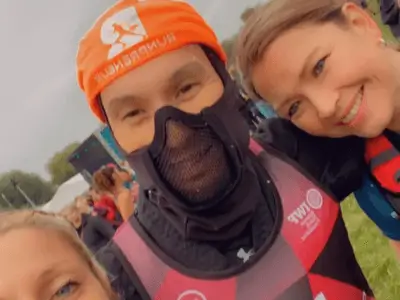
Kevin's 40,075km Challenge: Raising £1 Million for Children
Meet Kevin, a dedicated Runpreneur who embarked on an extraordinary journey to raise £1 million for children in need. Over the course of his 40,075km challenge, Kevin's unwavering determination and passion inspired thousands to join the Runpreneur movement.
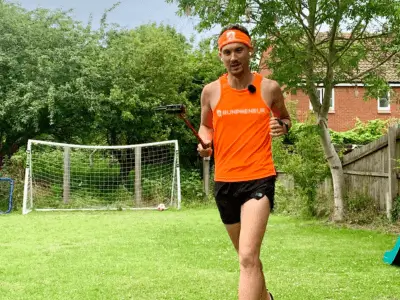
Runpreneur Vlogging: Capturing Kevin's Journey
Experience the Runpreneur challenge through the lens of Kevin's video diary. Witness his ups and downs, the camaraderie of the community, and the transformative power of running for a cause. Dive into the visual stories that capture the essence of the Runpreneur movement.

Empowering Children, One Step at a Time
As Kevin logged every kilometre of his 40,075km challenge, the true purpose behind his journey came into focus. Each step, each bead of sweat, fuelled essential healthcare, education, and nutrition programs for children in need around the world.
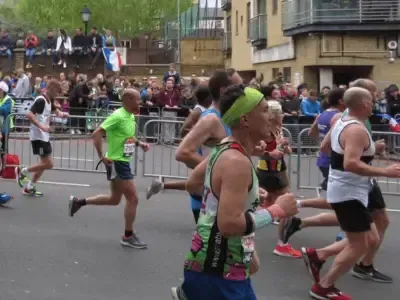
The Transformative 4x4x48 Challenge
Experience the thrill and personal growth of our iconic 48-hour running event. Witness the determination and resilience of Runpreneurs as they push their limits, one mile at a time.
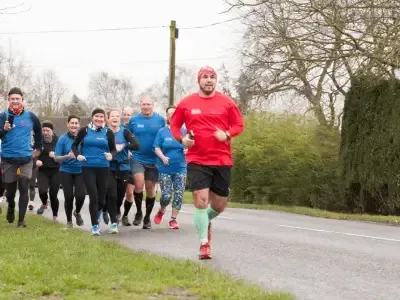
Runpreneur Vlogging: Capturing the Journey
Dive into the visual stories of our Runpreneurs as they document their experiences through engaging video logs. Witness the challenges, triumphs, and moments of camaraderie that define the Runpreneur spirit.
Becoming a Runpreneur: Join the Movement
Learn how you can become a Runpreneur and be part of this global community. Discover the steps to sign up, complete the challenge, and share your journey, all while making a lasting difference.
Connect With Us:



















I am on a mission to raise £1,000,000 for children's causes by daily run-vlogging barefoot-style, covering the total distance of a lap around the world—40,075 km.