
Runpreneur Journey Blog
Embark on an extraordinary journey with the Runpreneur community. Discover inspiring stories, insider tips, and the transformative power of our global challenge. From first-time runners to seasoned athletes, our blog captures the essence of the Runpreneur movement, inspiring others to join the cause.
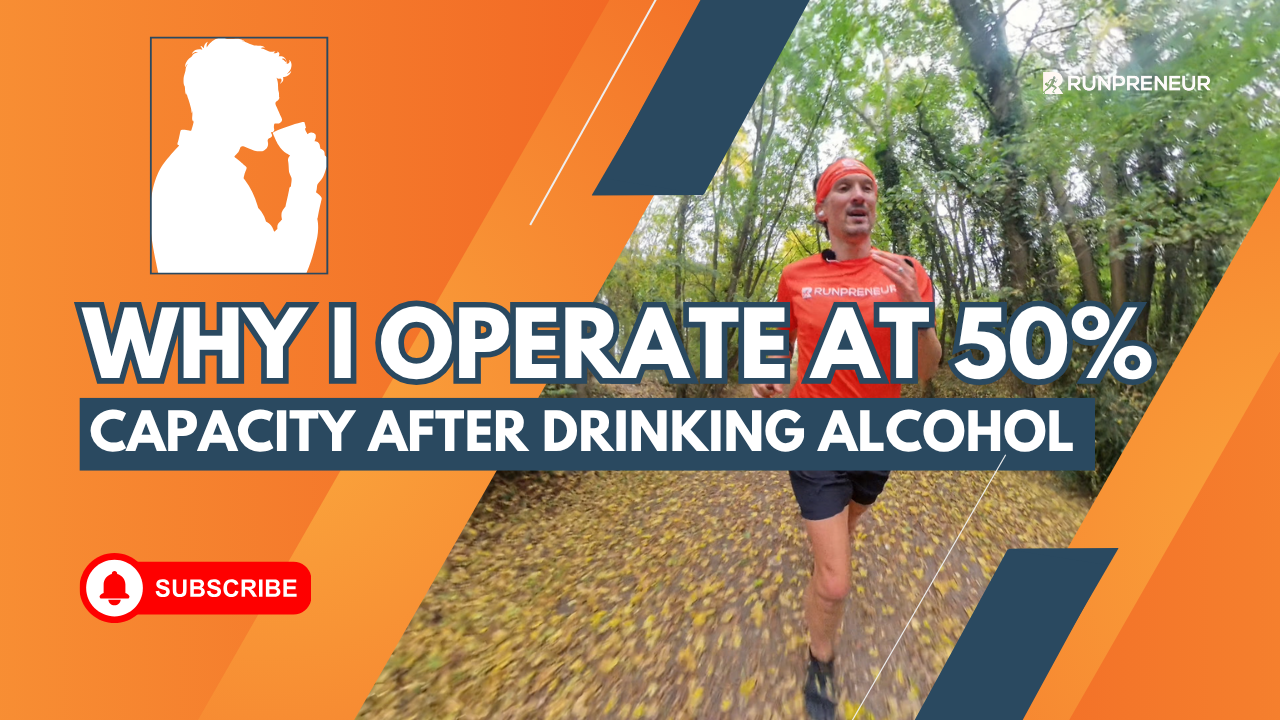
Why I Only Operate at 50% Capacity After Drinking Alcohol - Lessons from Day 1961 of My World-Lap Running Mission
Why I Only Operate at 50% Capacity After Drinking Alcohol - Lessons from Day 1961
Today marks day 1961 of running every single day in barefoot-style shoes, and I'm operating at about 50% capacity. The reason is simple: I had a few social drinks with close friends on Saturday night, and I'm still feeling the effects two days later.
This isn't a story about regret or a cautionary tale about alcohol. It's about understanding how our choices ripple through our performance, especially when we're committed to something bigger than ourselves. When you're 19,610 kilometres into a mission to run the equivalent distance of a lap around the world (40,075km) while raising £1 million for children's causes, every day matters.
The reality is that alcohol affects me significantly more than it used to. Not because I'm getting older necessarily, but because my baseline has shifted. When you're running every single day and your body is finely tuned to consistency, any deviation from your normal routine creates a more pronounced impact.
What struck me most about this weekend wasn't the social drinking itself - it was a genuinely good night with close friends, and I don't regret that at all. What I found interesting was how my awareness of the aftermath has evolved. I could predict with reasonable accuracy that Sunday would see me at about 60-70% capacity, Monday at 50%, Tuesday I'll likely bounce back to 80-85%, and by Wednesday I should be back to 100%.
This predictability comes from years of observation, not just since starting this running streak but from understanding my own patterns. The alcohol creates a temporary high - confidence, happiness, emotional elevation - followed by an inevitable comedown. Unlike caffeine, where you might have a mild crash after a strong coffee, alcohol's impact is more significant and longer-lasting.
The lesson here isn't about avoiding alcohol entirely. It's about conscious planning and honest self-assessment. When I look at my calendar now, I factor in recovery periods. If I have something critical on a Monday - an important presentation, a key business decision, or even just maintaining the quality of my daily running content - I need to consider what happened the Saturday before.
Too many people live entirely in the moment without considering the ripple effects. There's nothing wrong with spontaneity, but when you're building something that requires consistency - whether it's a business, a fitness goal, or a charitable mission - you have to think systemically.
What fascinates me is how this connects to the broader theme of my journey. Running 40,075 kilometres isn't about any single day being perfect. It's about showing up consistently, even when you're operating at 50% capacity. Some days you feel incredible, some days you feel average, and some days - like today - you're running on reduced power. The mission continues regardless.
This is particularly relevant when I think about the children I'm running for. Through Great Ormond Street Hospital and BBC Children in Need, I'm supporting kids who don't have the luxury of operating at reduced capacity. They're fighting for their lives, often while dealing with treatments and conditions that would floor most adults. My temporary 50% capacity pales in comparison to what they face daily.
The discipline comes not from perfection but from persistence. Today's run still happened. The daily content still got created. The kilometres still accumulated. The mission moves forward, even at half-speed.
I've learned to be more strategic about social occasions now. Not because I want to avoid them, but because I want to enjoy them fully while minimising the impact on my commitments. If I know I have a demanding few days ahead, I might choose to skip the drinks and focus on the company. If my calendar is lighter, I can afford the recovery period.
This isn't about being rigid or removing joy from life. It's about being intentional. When you're committed to something that spans years - like a 16-year journey to complete this challenge - you learn to think in systems rather than moments.
The interesting paradox is that this awareness has actually made social occasions more enjoyable, not less. When I do choose to drink, I do so without guilt or worry because I've planned for the consequences. I can be fully present in the moment because I've already accounted for the aftermath.
As I write this on day 1961, with 20,465 kilometres still to go and hundreds of thousands of pounds still to raise, I'm reminded that consistency isn't about perfection. It's about showing up regardless of how you feel, learning from your patterns, and making informed choices that serve your longer-term mission.
Tomorrow I'll be closer to 85% capacity. Wednesday, I'll be back to 100%. But today, at 50%, the work continues. The children I'm running for don't get days off from their challenges. Neither do I.
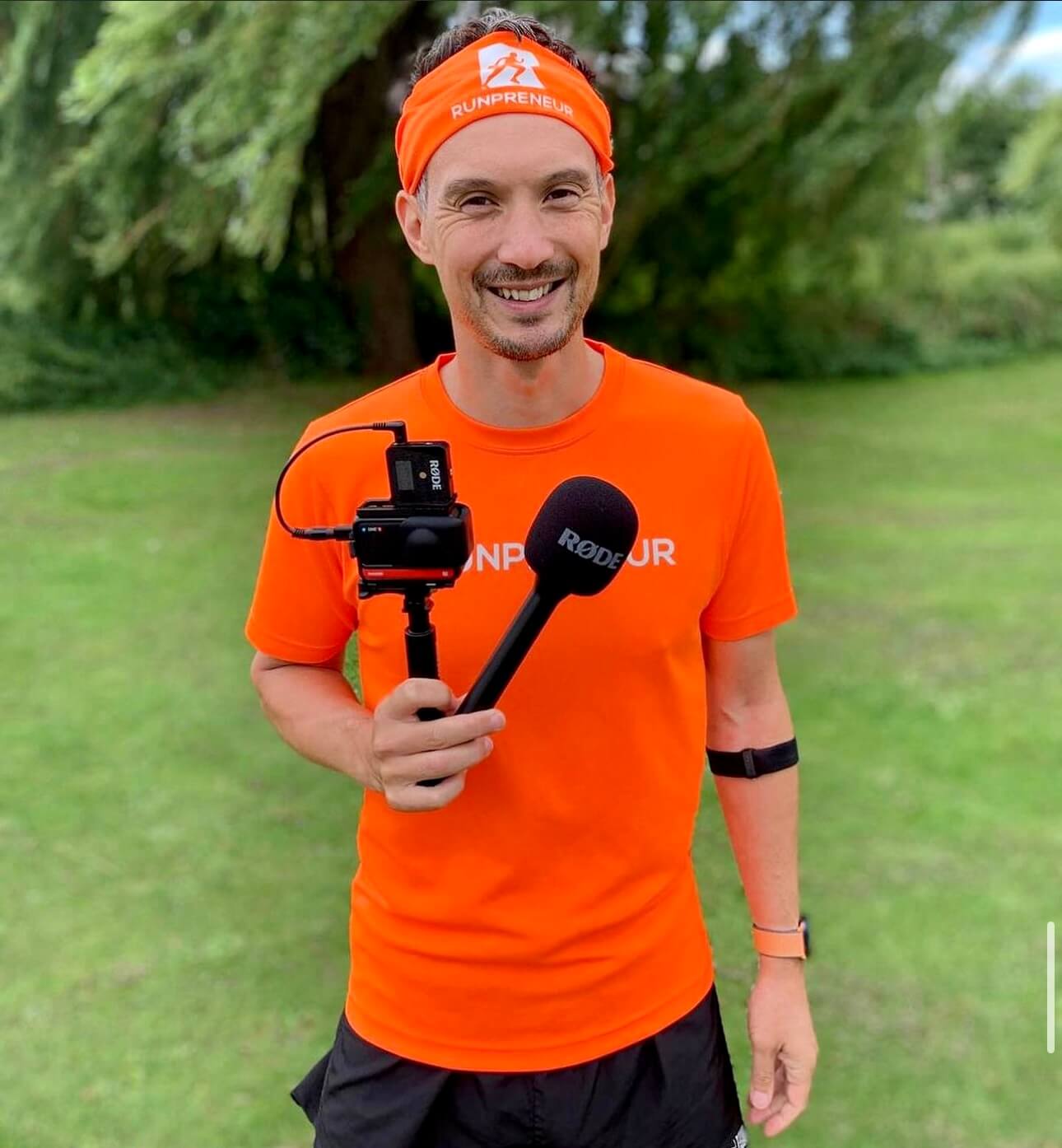
Kevin's 40,075km Challenge: Raising £1 Million for Children
Meet Kevin, a dedicated Runpreneur who embarked on an extraordinary journey to raise £1 million for children in need. Over the course of his 40,075km challenge, Kevin's unwavering determination and passion inspired thousands to join the Runpreneur movement.
Runpreneur Vlogging: Capturing Kevin's Journey
Experience the Runpreneur challenge through the lens of Kevin's video diary. Witness his ups and downs, the camaraderie of the community, and the transformative power of running for a cause. Dive into the visual stories that capture the essence of the Runpreneur movement.

Empowering Children, One Step at a Time
As Kevin logged every kilometre of his 40,075km challenge, the true purpose behind his journey came into focus. Each step, each bead of sweat, fuelled essential healthcare, education, and nutrition programs for children in need around the world.
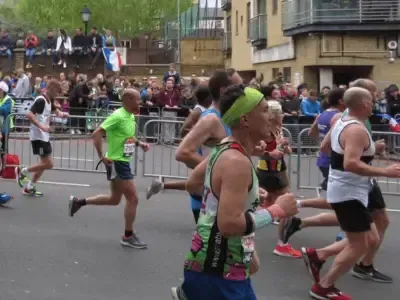
The Transformative 4x4x48 Challenge
Experience the thrill and personal growth of our iconic 48-hour running event. Witness the determination and resilience of Runpreneurs as they push their limits, one mile at a time.
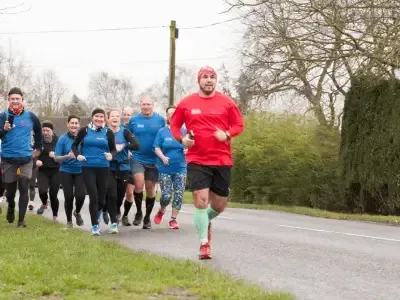
Runpreneur Vlogging: Capturing the Journey
Dive into the visual stories of our Runpreneurs as they document their experiences through engaging video logs. Witness the challenges, triumphs, and moments of camaraderie that define the Runpreneur spirit.
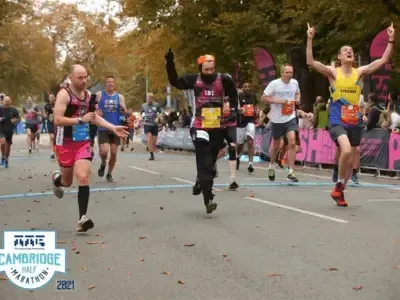
Becoming a Runpreneur: Join the Movement
Learn how you can become a Runpreneur and be part of this global community. Discover the steps to sign up, complete the challenge, and share your journey, all while making a lasting difference.
Connect With Us:



















I am on a mission to raise £1,000,000 for children's causes by daily run-vlogging barefoot-style, covering the total distance of a lap around the world—40,075 km.