
Runpreneur Journey Blog
Embark on an extraordinary journey with the Runpreneur community. Discover inspiring stories, insider tips, and the transformative power of our global challenge. From first-time runners to seasoned athletes, our blog captures the essence of the Runpreneur movement, inspiring others to join the cause.

Why I Ask AI Before Spending a Single Penny - Day 2032 of Running a Lap of the World
Why I Ask AI Before Spending a Single Penny - Day 2032 of Running a Lap of the World
I almost handed over a significant amount of money to a consultant recently. Not because I was careless with it. Not because I hadn't done my research. I was close to agreeing terms, reviewing their materials, and getting ready to sign off on a fairly substantial fee. Then I looked more carefully at what they were actually delivering. It was AI-generated content. Structured well, presented professionally, but at its core — it was output from a large language model dressed up as proprietary expertise. That realisation stopped me in my tracks. Not because I was angry about it. But because it reminded me of a principle I've been building into how I work, and now how my team works too. Ask AI first.
That is the magic question. Not a complex framework. Not a ten-step methodology. Just a simple discipline — before you spend money, before you hire someone, before you commit time or resource to solving a problem, ask AI first.
I want to be clear about what I mean by that. I'm not suggesting AI replaces expertise, replaces human relationships, or replaces sound judgement. What I am saying is that in the current landscape, the gap between what a well-prompted AI can produce and what a high-fee consultant delivers is narrower than most people realise. And if you're a business owner who hasn't yet confronted that honestly, it's worth sitting with that for a moment.
The reason this landed so hard for me during today's run — day 2032, 20,320km into a barefoot-style running streak aimed at completing 40,075km and raising £1 million for children's causes — is that I've been thinking about resource allocation a lot lately. Every pound I waste in the business is a pound that doesn't go where it matters. Every hour I lose to inefficiency is time I can't put back into this mission. That focus sharpens your thinking. It makes you ask harder questions about where money actually goes and what it genuinely returns.
So let me walk through how I actually use AI in a way that's practical and honest.
The first thing I do now, before engaging any external consultant or specialist, is build a project inside my large language model of choice. I have what I call an AI master prompt — a detailed context document that tells the AI how I think, how I operate, what my frameworks are, and what I'm trying to achieve. It's essentially a briefing document that removes ambiguity from the conversation. Once that's in place, I then upload relevant materials from key thinkers in whatever field I'm working in. Business strategy, operations, growth, finance — there's no shortage of well-documented thought leadership available. The AI then draws on that context and those reference points to work with me iteratively.
It takes time. Usually an hour or two of back-and-forth. But at the end of that process, I have a strategy or plan that's genuinely tailored to my situation, built through active dialogue rather than a generic template. Then — and this is the part I find most useful — I ask the AI to reverse-engineer the conversation. To create a prompt that would have given me that output from the very first message. I turn that into a custom GPT. An agent. Something I can return to whenever I need to regenerate that type of thinking, with minor variables, and get a consistent quality of output every time.
That's not a workaround. That's a system.
Now I want to address the mentorship question, because it's slightly different. I do believe that personal relationships with mentors carry a value that AI cannot replicate. When a mentor challenges you face to face, when they read the room, when they hold you accountable through genuine human connection — that has its own worth. I'm not arguing against that. But if you're paying for information transfer, for decision support, for frameworks and processes that don't require a personal dynamic — there's a strong case for building that into an AI context instead. I have an AI mentor that operates within a context informed by the thinkers I respect most. I engage with it regularly. It challenges my thinking. It costs a fraction of what a human equivalent would.
What this also means for teams is significant. When you build the culture of asking AI first — when your team members start developing their own prompting skills, their own AI workflows — the collective output changes. People stop spending time on the 90% of work that can be systematised and start focusing their energy on the 10% that genuinely requires human judgement, creativity, and strategic thinking. That's a meaningful shift in how a business functions.
I believe we're at a point where 90% of operational business activity can be handled by AI and AI agents. That's not a dystopian prediction. It's a practical observation. The question isn't whether that's true. The question is whether you're positioned to benefit from it or whether you're going to keep paying human-rate fees for AI-rate work without realising it.
19,755km still to go. £1 million still to raise. Great Ormond Street Hospital and BBC Children in Need are the beneficiaries of this mission — not as a backdrop, but as the reason I lace up my Vibram FiveFingers every single day and go out regardless of how I feel, what the weather is doing, or what's on my plate. That daily discipline isn't separate from how I think about business. It's the same muscle. Show up. Do the work. Use the best tools available. Don't waste what you have.
Ask AI first. Not because it's a shortcut. Because it's good practice.
If this is useful to you, follow the journey, share it with someone who needs to hear it, and if you believe in what this mission stands for — the children's lives it exists to support — then every view, every share, every conversation helps get us further down the road.
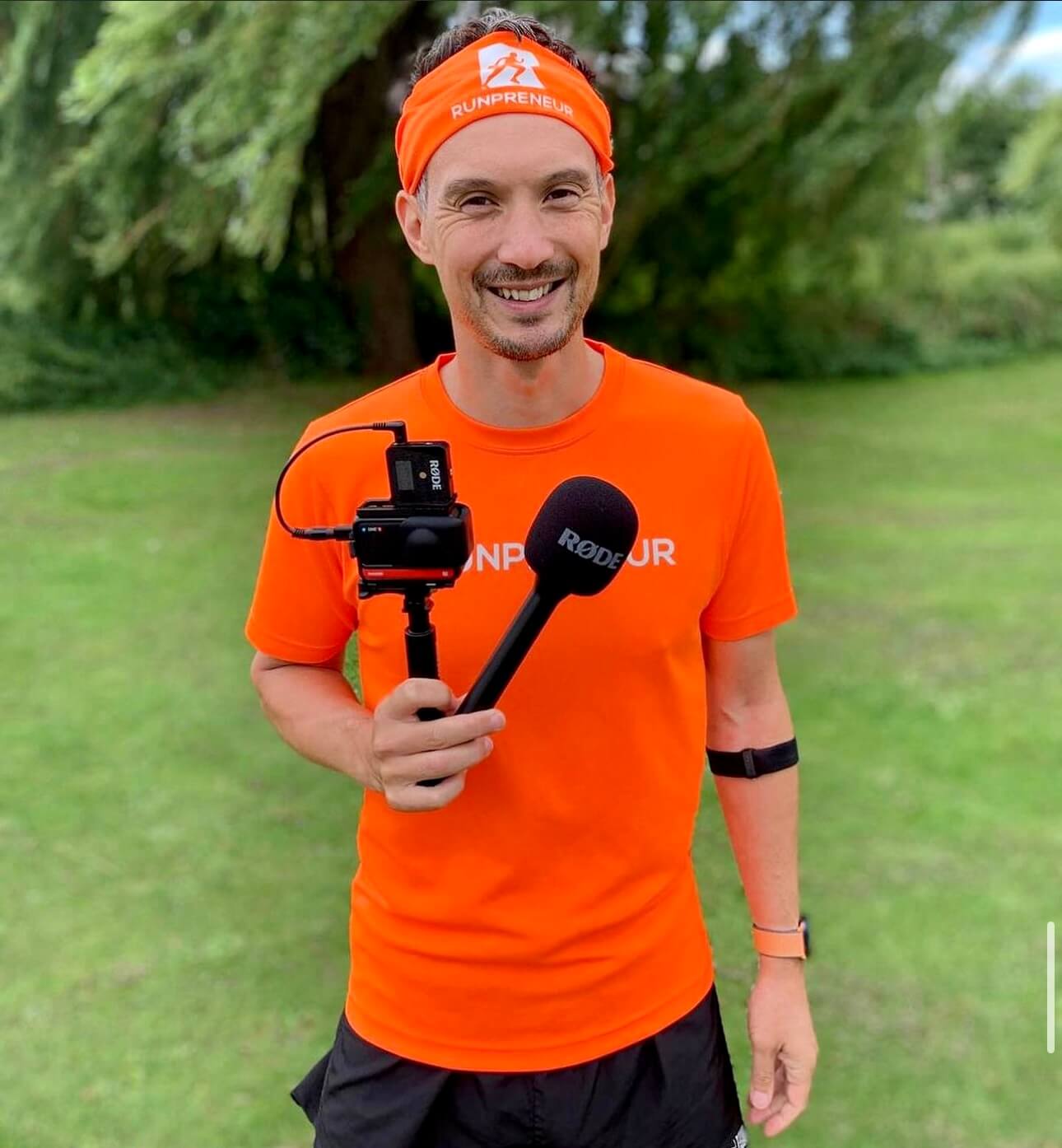
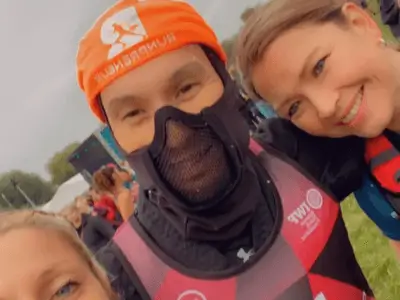
Kevin's 40,075km Challenge: Raising £1 Million for Children
Meet Kevin, a dedicated Runpreneur who embarked on an extraordinary journey to raise £1 million for children in need. Over the course of his 40,075km challenge, Kevin's unwavering determination and passion inspired thousands to join the Runpreneur movement.
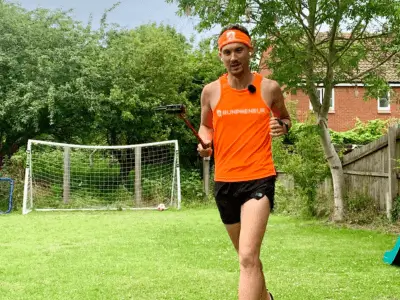
Runpreneur Vlogging: Capturing Kevin's Journey
Experience the Runpreneur challenge through the lens of Kevin's video diary. Witness his ups and downs, the camaraderie of the community, and the transformative power of running for a cause. Dive into the visual stories that capture the essence of the Runpreneur movement.

Empowering Children, One Step at a Time
As Kevin logged every kilometre of his 40,075km challenge, the true purpose behind his journey came into focus. Each step, each bead of sweat, fuelled essential healthcare, education, and nutrition programs for children in need around the world.
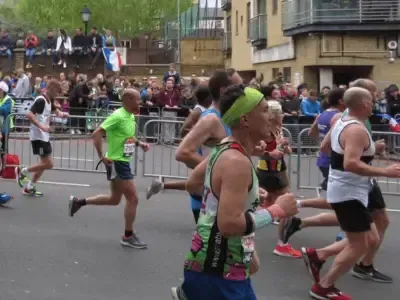
The Transformative 4x4x48 Challenge
Experience the thrill and personal growth of our iconic 48-hour running event. Witness the determination and resilience of Runpreneurs as they push their limits, one mile at a time.
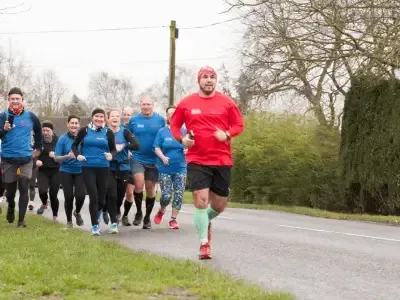
Runpreneur Vlogging: Capturing the Journey
Dive into the visual stories of our Runpreneurs as they document their experiences through engaging video logs. Witness the challenges, triumphs, and moments of camaraderie that define the Runpreneur spirit.
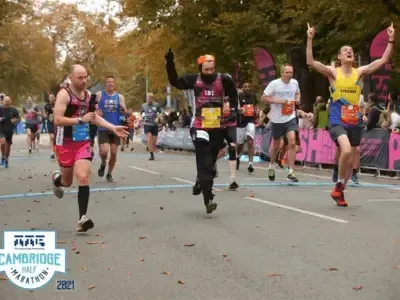
Becoming a Runpreneur: Join the Movement
Learn how you can become a Runpreneur and be part of this global community. Discover the steps to sign up, complete the challenge, and share your journey, all while making a lasting difference.
Connect With Us:



















I am on a mission to raise £1,000,000 for children's causes by daily run-vlogging barefoot-style, covering the total distance of a lap around the world—40,075 km.