
Runpreneur Journey Blog
Embark on an extraordinary journey with the Runpreneur community. Discover inspiring stories, insider tips, and the transformative power of our global challenge. From first-time runners to seasoned athletes, our blog captures the essence of the Runpreneur movement, inspiring others to join the cause.

Why Flat Organisational Structures Work Better for Small Business Lessons from Day 2041
Why Flat Organisational Structures Work Better for Small Business Lessons from Day 2041
I am now 2,041 consecutive days into running in barefoot-style footwear, covering 20,410 cumulative kilometres of a 40,075km mission around the world on foot. I mention that not to draw attention to the streak, but because it is directly relevant to what I want to talk about today structure. Specifically, how the structure you build around a business either enables it to function without you, or quietly creates a dependency that will catch you out.
Today on the run I was thinking about organisational structures. Traditional ones. The kind with a neat hierarchy chart, boxes connected by lines, and job titles that tell you who sits where. Most businesses I have worked with either have one of those charts pinned to a wall somewhere or they assume they should have one. And my honest view, after years of working in business systemisation and operations, is that the traditional org chart is only telling you a fraction of what you actually need to know.
Let me explain what I mean.
When you look at a traditional organisational structure, what you are really looking at is a map of authority. It tells you who reports to whom. That is useful, and I am not going to pretend it is not. People within a team need to understand who they escalate to, who is responsible for what at a leadership level, and how decisions flow. That visibility still matters.
But here is the problem. For most micro and small businesses, the org chart stops there. It shows you the people and the reporting lines, and that is it. What it does not show you is what is actually being done every day, how often it needs doing, which department it belongs to, and critically, who else can do it if the named person is unavailable.
That last point is the one that keeps business owners exposed.
In my work I see this repeatedly. A business owner brings me in to help systemise their operation, and when we start digging into how things actually run, we find that certain tasks are entirely dependent on one individual. That individual might be a key member of staff, a long-standing employee, or sometimes it is the owner themselves. The knowledge lives in one person's head. If they leave, fall ill, or simply go on holiday, the business either stalls or the owner steps back in and fires-fights. Neither is a sustainable position.
This is why I work with something I call a roles and responsibilities grid, alongside whatever basic org chart a business already has or needs.
The concept is straightforward. You map the business by department across the top of a grid. Down the left hand side you list the frequency of tasks — daily, weekly, monthly, quarterly, and so on. Within each cell you list the specific tasks or responsibilities that sit in that department at that frequency. And then, crucially, you assign names or initials to each one. Not just one name. Multiple names. Because having two or more people trained on every task removes the over-reliance on any single individual.
Once you have that grid, a few things happen. First, you can see exactly how many tasks and responsibilities each person is carrying. That gives you a real view of capacity. Not a job title, not a department assumption, but actual workload. Second, you can start to identify where the single points of failure are, and address them systematically by cross-training. Third, and this is one I find businesses find genuinely useful, you can begin to see where AI or automation could realistically take over certain tasks, freeing people up for higher value work.
The grid also forces you to write SOPs — standard operating procedures — for each task. Because once you have named the task and assigned responsibility, the logical next step is to document how it gets done. That is what makes a business genuinely transferable. Not the org chart, not the job titles, but the documented procedures that mean anyone trained on the task can complete it to the required standard, regardless of who the named individual is.
This is where small and micro businesses often struggle with traditional hierarchical thinking. In the early stages of a business, the founder is doing everything. As the team grows, roles blur. Someone might be handling marketing, bookkeeping, and customer service all at once. A rigid org chart does not capture that reality. It actually obscures it, because it implies a clarity of role that does not yet exist.
I said at the start of this episode that I was going to challenge whether org charts are outdated. And then, being honest, I walked that back slightly. Because they are not entirely outdated. There is still a place for a simple, visual representation of reporting lines. People need that clarity. But the org chart is not a business operating system. It is one layer of one document, and treating it as the primary structural tool is where businesses go wrong.
What I am advocating for is a more dynamic approach. One that reflects how businesses actually work, especially small ones that are pivoting, growing, adjusting. The roles and responsibilities grid does that. It is a living document, not a fixed chart. You update it as the business evolves. You add people, remove tasks, note where AI is now handling something that a person used to do. It breathes with the business rather than trying to contain it.
Running 20,410 kilometres across 2,041 consecutive days has taught me a great deal about systems and structure. Not metaphorically — literally. The daily streak exists because I have built a structure around it that does not rely on motivation or inspiration. It relies on a repeatable process that I execute regardless of conditions. That is what good business systems do. They perform consistently, not brilliantly on good days and poorly on bad ones.
I have 19,665 kilometres left of this 40,075km mission, and every one of those kilometres is being run in service of raising £1 million for children's causes including Great Ormond Street Hospital and BBC Children in Need. The more people who watch, listen, and share these episodes, the more we raise. The more we raise, the more children's lives are supported.
If you run a business or manage a team and what I have described today resonates, I would genuinely welcome the conversation. Drop a comment or get in touch. And if you have not subscribed yet, please do. It directly supports the mission.
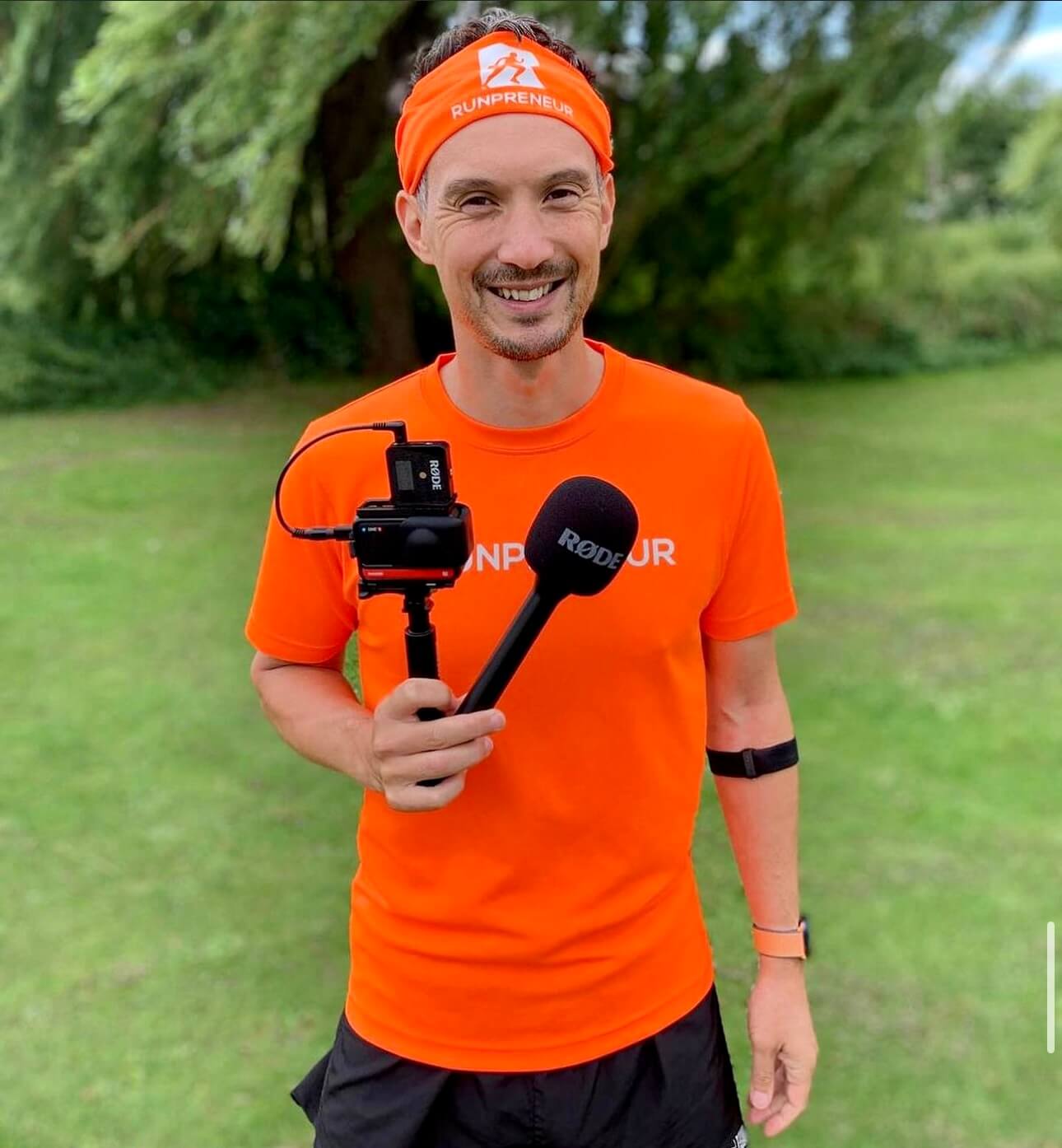
Kevin's 40,075km Challenge: Raising £1 Million for Children
Meet Kevin, a dedicated Runpreneur who embarked on an extraordinary journey to raise £1 million for children in need. Over the course of his 40,075km challenge, Kevin's unwavering determination and passion inspired thousands to join the Runpreneur movement.

Runpreneur Vlogging: Capturing Kevin's Journey
Experience the Runpreneur challenge through the lens of Kevin's video diary. Witness his ups and downs, the camaraderie of the community, and the transformative power of running for a cause. Dive into the visual stories that capture the essence of the Runpreneur movement.

Empowering Children, One Step at a Time
As Kevin logged every kilometre of his 40,075km challenge, the true purpose behind his journey came into focus. Each step, each bead of sweat, fuelled essential healthcare, education, and nutrition programs for children in need around the world.
The Transformative 4x4x48 Challenge
Experience the thrill and personal growth of our iconic 48-hour running event. Witness the determination and resilience of Runpreneurs as they push their limits, one mile at a time.
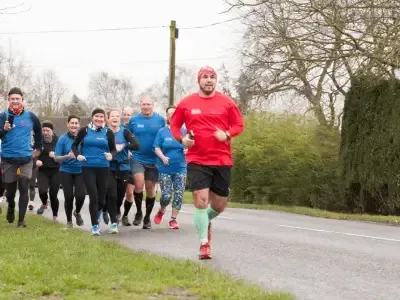
Runpreneur Vlogging: Capturing the Journey
Dive into the visual stories of our Runpreneurs as they document their experiences through engaging video logs. Witness the challenges, triumphs, and moments of camaraderie that define the Runpreneur spirit.

Becoming a Runpreneur: Join the Movement
Learn how you can become a Runpreneur and be part of this global community. Discover the steps to sign up, complete the challenge, and share your journey, all while making a lasting difference.
Connect With Us:



















I am on a mission to raise £1,000,000 for children's causes by daily run-vlogging barefoot-style, covering the total distance of a lap around the world—40,075 km.