
Runpreneur Journey Blog
Embark on an extraordinary journey with the Runpreneur community. Discover inspiring stories, insider tips, and the transformative power of our global challenge. From first-time runners to seasoned athletes, our blog captures the essence of the Runpreneur movement, inspiring others to join the cause.

Why a 12-Month Vision Board Is the Missing Piece in Your Planning Process
Why a 12-Month Vision Board Is the Missing Piece in Your Planning Process
Day 2030. 20,300 kilometres into a run that will eventually cover 40,075km — a full lap of the world on foot. 19,775km still to go. And every single day, before the shoes go on, I sit down at my laptop and the first thing I see is my vision board.
That is not a coincidence. That is a system.
I want to talk about vision boards today, not in the motivational poster sense, not in the abundance mindset influencer sense, but in a practical, grounded, honest sense. Because I think a lot of people either dismiss them entirely or treat them as decorative rather than functional. And that distinction matters.
Let me start with what I actually mean by a vision board in this context. Most of us are reasonably good at planning. We set goals, we break them into steps, we put dates against things. That process is useful. But planning without visualisation can feel abstract. You know what you want to do, but you do not always feel connected to it on a daily basis. That connection is what a vision board provides.
Visualisation is the bridge between a goal on paper and a goal that feels real. When you can see something represented visually — a destination, a milestone, a version of your life you are working toward — it activates something different in how your brain processes that goal. It becomes less of a task and more of a direction.
I have only been doing this properly for around six months. I will be honest about that. I am not coming to you as someone with decades of evidence. What I can tell you is that in those six months, I put a small number of things on a vision board — across work, lifestyle, and personal development — and we have achieved pretty much all of them. I am not claiming the vision board caused that. But I am certain it helped. It kept those goals visible. It kept me returning to the question of why I was doing the things I was doing. And that consistency of reminder has a value that is hard to overstate.
Here is what I actually do, because I think the practical detail matters more than the concept.
I give myself a list of everything I want to achieve or experience in the next twelve months. I do not filter it by category at this stage. Holidays I want to take. Milestones I want to hit in the businesses. Physical targets. Things I want to learn. Relationships I want to invest in. Spiritual or personal development areas I want to explore. I put it all down without editing myself.
Then I use AI to generate a visual representation of that list — a vision board that brings those things to life with imagery and text. What used to take hours of cutting and sticking or designing can now be done in minutes. The technology has made this genuinely accessible for anyone, which is worth acknowledging.
Once I have it, I set it as the desktop background on my laptop. Every time I open the screen, I see it. I am not sitting down to study it. I am not meditating on it. I am simply exposing myself to it repeatedly throughout the day. And that repeated exposure, I believe, keeps the subconscious mind oriented toward those goals even when you are not consciously thinking about them.
Some people prefer to print theirs and put it somewhere physical — a notice board, a wall in the room they work in, somewhere they pass daily. The medium is less important than the visibility. The rule is simple: put it where you will see it every single day without having to make a deliberate effort to look at it.
Now, I want to tie this back to the bigger picture, because everything I do comes back to the mission.
Running 40,075km is not something I can hold in my head in its entirety. It is too large, too distant, too abstract to connect with emotionally on a Tuesday morning in the rain. What I can connect with is today's run. What I can connect with is the number on the screen — 20,300km covered, 19,775km remaining. What I can connect with is the image of a child whose life is different because of what this mission raises. Those are the things that sit on my vision board. Not the full 40,075km, but the pieces of it that feel real right now.
That is the same principle applied to any goal. You do not need to see the whole road. You need to see enough of it to keep moving forward. A vision board helps you maintain sight of those reference points when the day-to-day noise of life tries to drown them out.
The mission I am running for is raising £1 million for children's causes — primarily Great Ormond Street Hospital and BBC Children in Need. That number also sits in my vision. Not as pressure, but as direction. Every kilometre, every episode, every conversation it generates is a step toward that. When I see it daily, I do not feel burdened by how far I still have to go. I feel oriented toward why I am going.
So here is what I would suggest if any of this resonates. Start simply. Write down ten to fifteen things you genuinely want to achieve or experience in the next twelve months. Across all areas of your life. Hand the list to an AI tool and ask it to generate a vision board. Set the result as your desktop background or phone wallpaper or pin it somewhere you will see it without trying.
Then let it do its quiet work.
You will not notice it changing things at first. But over weeks and months, you will find yourself making decisions that align with what you have put on it. Not because of magic, but because you have kept your priorities visible rather than buried under everything else that demands your attention.
That is what day 2030 of this running streak has taught me today. Consistency is not just about physical repetition. It is about keeping the why visible. Every single day.
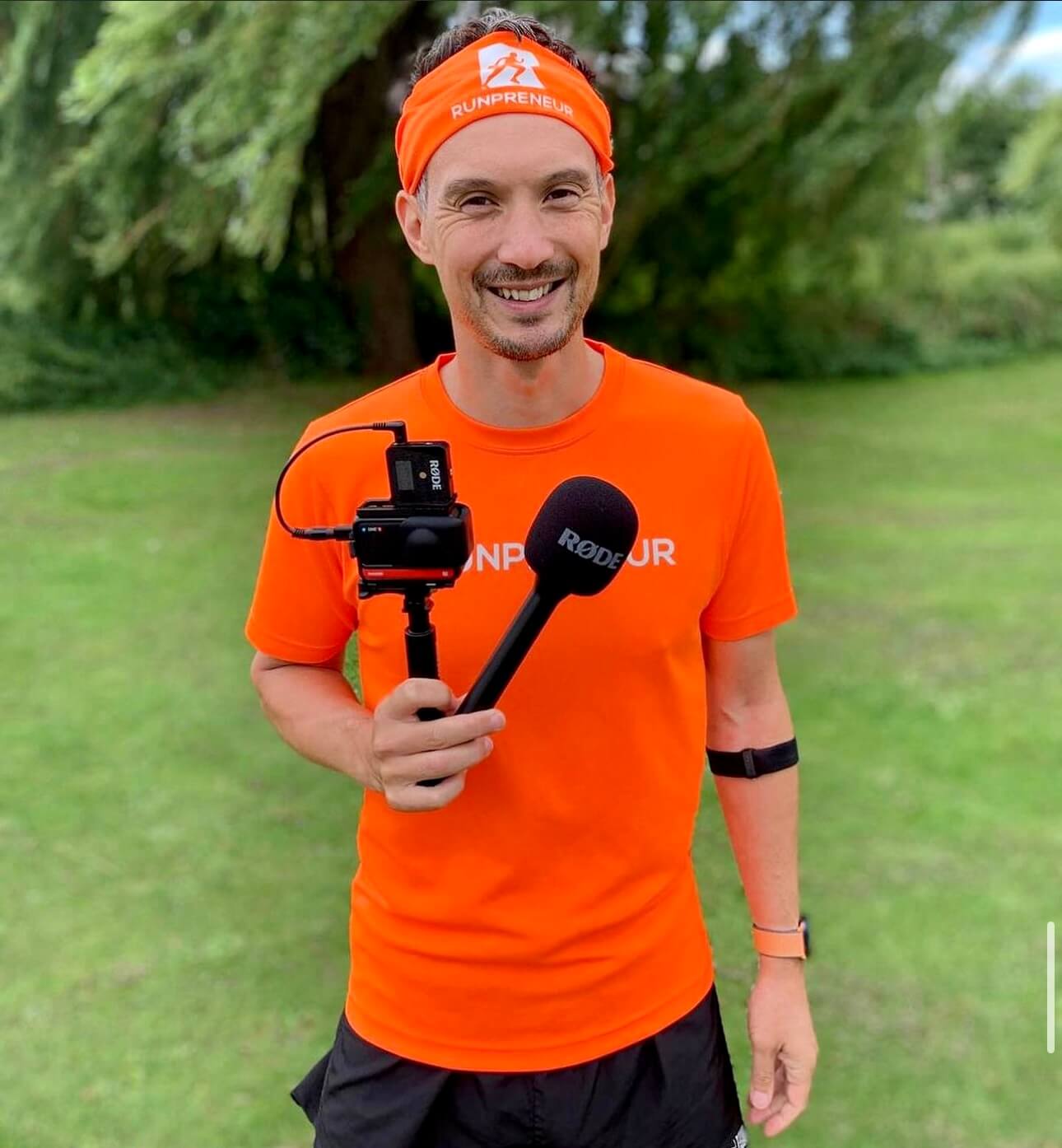
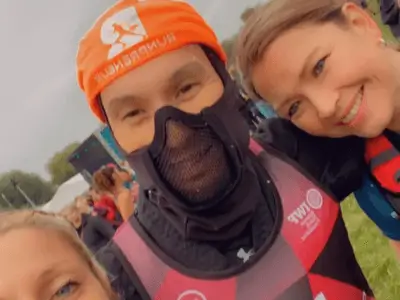
Kevin's 40,075km Challenge: Raising £1 Million for Children
Meet Kevin, a dedicated Runpreneur who embarked on an extraordinary journey to raise £1 million for children in need. Over the course of his 40,075km challenge, Kevin's unwavering determination and passion inspired thousands to join the Runpreneur movement.
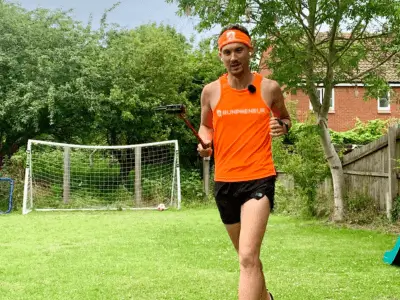
Runpreneur Vlogging: Capturing Kevin's Journey
Experience the Runpreneur challenge through the lens of Kevin's video diary. Witness his ups and downs, the camaraderie of the community, and the transformative power of running for a cause. Dive into the visual stories that capture the essence of the Runpreneur movement.

Empowering Children, One Step at a Time
As Kevin logged every kilometre of his 40,075km challenge, the true purpose behind his journey came into focus. Each step, each bead of sweat, fuelled essential healthcare, education, and nutrition programs for children in need around the world.
The Transformative 4x4x48 Challenge
Experience the thrill and personal growth of our iconic 48-hour running event. Witness the determination and resilience of Runpreneurs as they push their limits, one mile at a time.
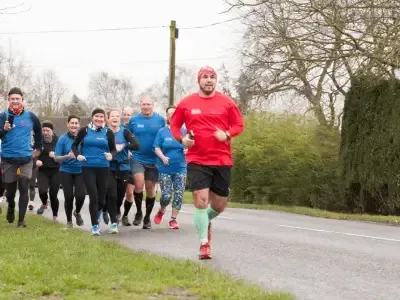
Runpreneur Vlogging: Capturing the Journey
Dive into the visual stories of our Runpreneurs as they document their experiences through engaging video logs. Witness the challenges, triumphs, and moments of camaraderie that define the Runpreneur spirit.
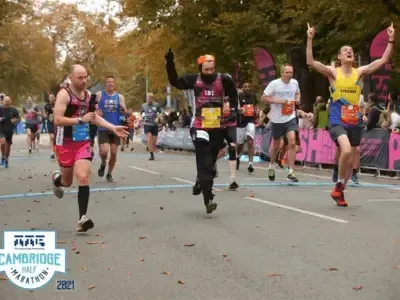
Becoming a Runpreneur: Join the Movement
Learn how you can become a Runpreneur and be part of this global community. Discover the steps to sign up, complete the challenge, and share your journey, all while making a lasting difference.
Connect With Us:

















I am on a mission to raise £1,000,000 for children's causes by daily run-vlogging barefoot-style, covering the total distance of a lap around the world—40,075 km.