
Runpreneur Journey Blog
Embark on an extraordinary journey with the Runpreneur community. Discover inspiring stories, insider tips, and the transformative power of our global challenge. From first-time runners to seasoned athletes, our blog captures the essence of the Runpreneur movement, inspiring others to join the cause.
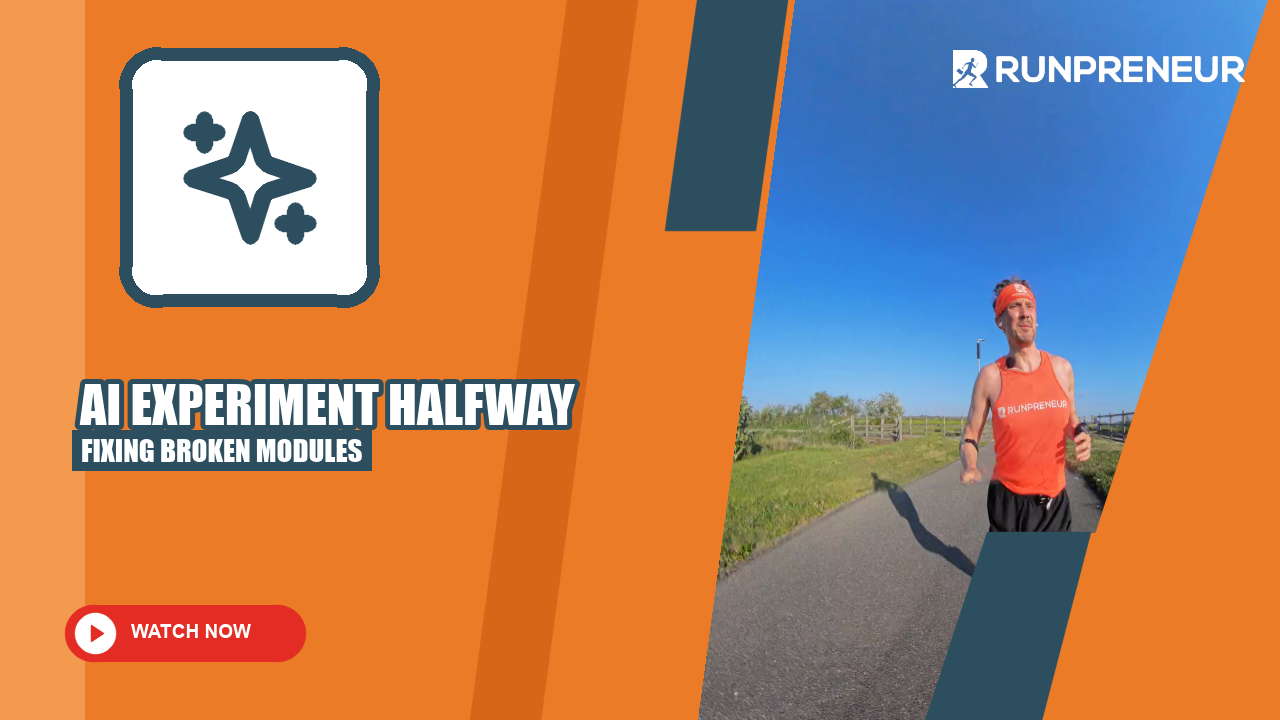
Vibe Coding Bugs: Add a Workflow to Your Prompt
I built no new modules today. Most of day 15 went on fixing bugs in modules I had already finished. The cause is worth explaining, because you fix it before you write the first prompt.
Day 15 is the halfway point of my 30-day AI experiment. The brief is to take a business concept through to profitability in 30 days, with AI doing 90% of the work. Today did not go to plan. Other businesses needed my attention, so the experiment got less focus than on earlier days. The time I did give went on remapping and rebuilding modules which were not fit for the job I needed them to do.
I recorded today's episode on the run, and I was more out of breath than usual. The temperature was 24 degrees. My rule of thumb is that a running body feels about ten degrees hotter than the thermometer says, so I was running in something close to 34, with the sun beating down. The run still happened. Consecutive day 2,161 counts the same as every other day, whatever the weather.
Two kinds of AI request
Some requests to an AI coding tool are easy. Change this field. Swap this formula. One action, one iteration. Vibe coding handles these well, and the output arrives close to what I asked for.
Big modules behave differently. When I scope a full module with several moving parts and data behind it, a loose prompt returns something confident and wrong. I then spend the real time in feedback loops, testing, bug hunting and error fixing. In my experience this stage takes longer than the build itself, especially when you build new software with AI coding.
My prompt structure, and where it fell short
For larger requests I use a structure I created called BILD. The spelling is B, I, L, D.
B is Breakdown. I break down what I am trying to achieve and give the AI context. I is Initiate. I summarise the breakdown into the request, in a couple of sentences. L is Limitations. I state the limits of the setup and the data, including anything missing or not working, so the AI knows before it starts. D is Done for you result. I describe what the finished module looks like when I sign it off.
BILD is consistent, and I believe it beats most vibe coding prompts. Today showed me it still left gaps. The AI got a lot wrong, and I spent a long time giving feedback to reach the result I wanted.
The gap was in the B. I had been talking through the breakdown as a description. A description gives context but no sequence. The AI knew what I wanted but not the order in which the work moves from start to finish.
What a workflow adds
The fix is a simple workflow, written in stages, inside the breakdown. The workflow needs no fine detail. It needs the order of the journey.
Here is a generic example, not one of my modules. Step one, the data arrives. Step two, the rules apply to the data. Step three, the result appears on screen. Step four, a person reviews the result and approves or corrects it. Four lines like these give the AI a sequence to build against, where before it had to guess the order.
When I added a workflow to the breakdown, the output came back noticeably better. My estimate is that this cuts the iteration, testing and bug fixing time by about half. I want to be accurate here. This is an estimate from limited use, not a measurement, and I will keep watching the result over the next 15 days.
The lesson for me
The lesson is about where the effort goes. Time spent on the first prompt comes back later as less fixing, less amending and less error hunting. Quality control testing still has to happen. A better prompt does not remove testing. A better prompt shortens the longest part of the process, and I would rather spend longer at the start than at the end.
The same applies to anyone building with AI, whether you run a small business or you are curious about the tools. Before your next large request, write the stages of the workflow into your breakdown. Then count how many rounds of fixing you needed, and compare with your last build.
The honest cost
Today cost me output. I am behind on my modules per day, and I expect to work part of the weekend to catch up. This frustrates me, and I am recording the frustration as it is, because a plan with a bad day in it is still the plan. I did fix some comprehensive modules, so the day was productive, but not as productive as I need to be.
Consistency rarely looks like progress on the day. Today I missed my build target. I fixed work which was not fit for purpose, and I wrote down what I learned. Days like this keep a streak of 2,161 consecutive days intact. The days are not all good. They all count.
Where this sits in the mission
Day 2,161 takes my total to 16,591.88km. The goal is 40,075km, one lap of the world, run daily in barefoot-style footwear. This leaves 23,483.12km. Alongside the distance sits the aim of raising £1M for children's causes, including Great Ormond Street and BBC Children in Need. The more people who see these episodes, the further the fundraising reaches. I run every day so the mission rests on repetition, not on any single good day.
If you are building with AI, add a short workflow to the breakdown of your next prompt and tell me in the comments what changes. If you believe in the mission, watch the episode, follow along and share the video with someone who might support it.
Watch the full episode: https://youtu.be/Zhqe-LzIME0
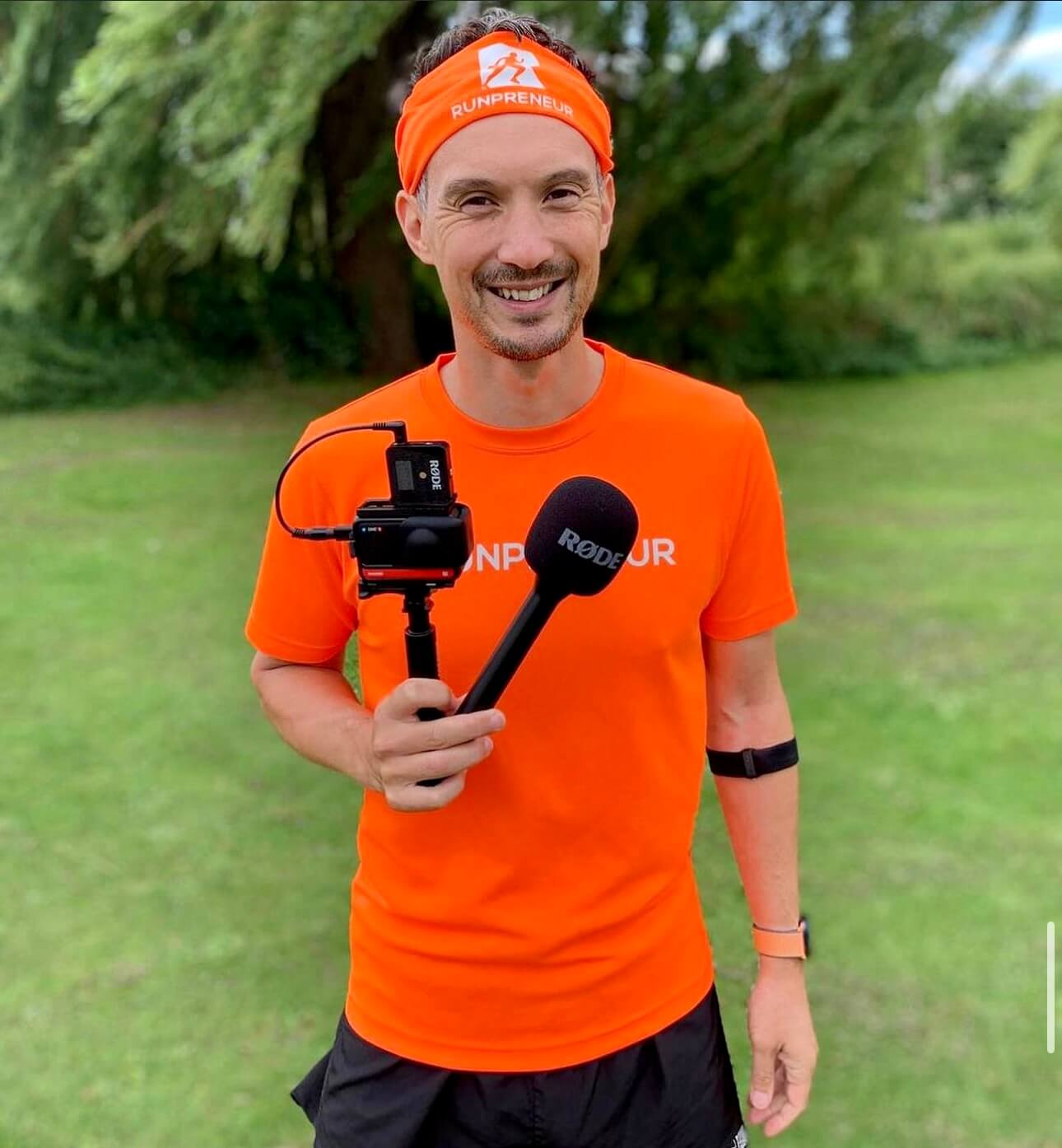
Kevin's 40,075km Challenge: Raising £1 Million for Children
Meet Kevin, a dedicated Runpreneur who embarked on an extraordinary journey to raise £1 million for children in need. Over the course of his 40,075km challenge, Kevin's unwavering determination and passion inspired thousands to join the Runpreneur movement.
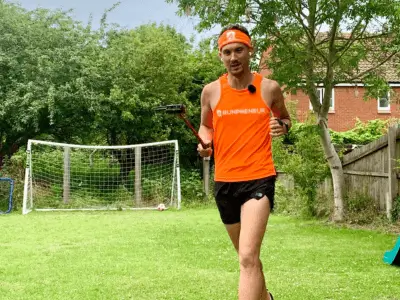
Runpreneur Vlogging: Capturing Kevin's Journey
Experience the Runpreneur challenge through the lens of Kevin's video diary. Witness his ups and downs, the camaraderie of the community, and the transformative power of running for a cause. Dive into the visual stories that capture the essence of the Runpreneur movement.

Empowering Children, One Step at a Time
As Kevin logged every kilometre of his 40,075km challenge, the true purpose behind his journey came into focus. Each step, each bead of sweat, fuelled essential healthcare, education, and nutrition programs for children in need around the world.
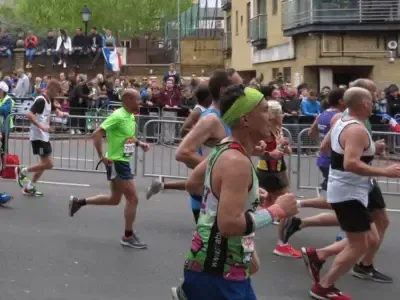
The Transformative 4x4x48 Challenge
Experience the thrill and personal growth of our iconic 48-hour running event. Witness the determination and resilience of Runpreneurs as they push their limits, one mile at a time.
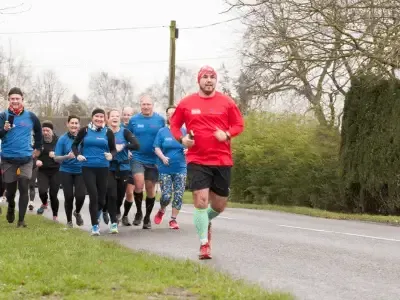
Runpreneur Vlogging: Capturing the Journey
Dive into the visual stories of our Runpreneurs as they document their experiences through engaging video logs. Witness the challenges, triumphs, and moments of camaraderie that define the Runpreneur spirit.
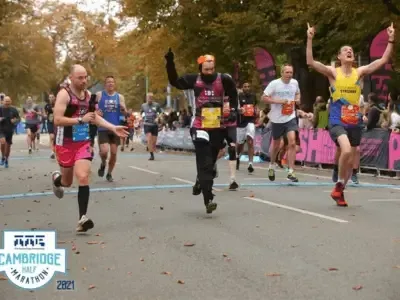
Becoming a Runpreneur: Join the Movement
Learn how you can become a Runpreneur and be part of this global community. Discover the steps to sign up, complete the challenge, and share your journey, all while making a lasting difference.
Connect With Us:



















I am on a mission to raise £1,000,000 for children's causes by daily run-vlogging barefoot-style, covering the total distance of a lap around the world—40,075 km.