
Runpreneur Journey Blog
Embark on an extraordinary journey with the Runpreneur community. Discover inspiring stories, insider tips, and the transformative power of our global challenge. From first-time runners to seasoned athletes, our blog captures the essence of the Runpreneur movement, inspiring others to join the cause.

Value For Money Is Not Cheap: What A £2,000 Renovation Taught Me
Value for money is one of my favourite phrases, and one of the most misunderstood. Most people hear it and think cheap. I don't. For me it means the best return on whatever I put in, whether that is money or time. Bang for buck, return on time. Cheap is only one possible answer, and often the wrong one.
I am on consecutive day 2,201 of my daily run vlog. That is 16,881.65km towards a lap of the world at 40,075km, which leaves 23,193.35km. I recorded today's episode on exactly this topic because of a property we are renovating right now.
What happened
We recently took a property back after a long occupation. I will keep the detail short. The original tenant moved out and gave her father the key. He did not leave when we asked, and I have since learnt he should not have been living on his own. He needed supported living. We did not know that at the time.
We avoided a long legal battle and gave him a tenancy instead. I hold my hands up. Looking back, it was the wrong solution. He stayed around 18 months. Eventually, after working with the council, local authorities and social care providers, he was rehoused, and that outcome matters more to me than the property.
When we went in, the condition was very poor. It needs an industrial clean first, and then we will see whether the kitchen and bathroom need replacing. Beyond that it is carpets, paint, a window pane, a couple of bits of plasterboard, and some sockets and pendants. It had a new boiler within the last year. It is a cosmetic renovation, not a structural one.
The numbers
Contractors have quoted me for this type of work before. They describe many weeks of work and call it a full renovation. For this property the quotes were £15,000 and £25,000. Those are real quotes, and the average is £20,000.
We expect to do the work for about £2,000. If the kitchen needs swapping, I will look at second-hand kitchens online, because plenty are in good condition. If bathrooms need replacing, toilets, baths and showers are not expensive. The worst case is that the budget moves from £2,000 to around £2,500.
Here is how the saving works:
- We buy the materials ourselves through our suppliers, so there is no material markup. - One of my colleagues will spend a week on site, so that labour is free. - We use our preferred contractor for the rest, at preferential rates. - The job does not drag on longer than it needs to. - Once the work is done, we arrange the electrical installation certification, because it has to be compliant.
Against an average quote of £20,000, that is roughly one tenth of the cost. That is value for money.
When it is not value for money
I want to be careful here, because there is a false economy on both sides. Chasing a few pennies here and there is not value for money. Doing something where the saving is too small to justify the effort is not value for money either. The aim is not to find the cheapest way. The aim is to understand the actual saving and decide whether it is worth it.
I also do not object to paying people a margin. The contractor we are bringing in will make good money on his day rate, and that is fair. I am not suggesting anyone works at cost. I am saying it helps to understand where the cost sits.
What I have learnt
I have completed somewhere around 30 or 40 renovations. That is not a huge number, but it is enough to see the true cost of things. I know how to break a job into segments and cost each one. Without that knowledge, you are relying on whoever is quoting. When the job is simple and the quote comes from a larger firm with a team and overheads, the gap between their number and the real cost is easy to miss. I hate being ripped off. It is one of my pet hates, and it usually comes from a gap in knowledge that somebody else is able to use.
I should be fair about the limits. Not everybody has a colleague who is skilled enough to spend a week on site. That is an advantage I have, and I am not suggesting everyone can copy it. The principle still applies. Before you accept a large quote, break the job down, ask what each part costs, and find out what you actually need.
Why this connects to the run
The same thinking applies to the streak. Running every day does not need intensity. It needs consistency, and that is the best return on my time that I know of. The cost of each day is small, and the total is a lap of the world. Knowing what each day costs, and what it produces, is what keeps it going.
It is also why I keep the vlog going daily. The run vlog is part of a fundraiser for children's causes, with a goal of £1M or more. The more people it reaches, the more it can raise. I would rather put effort into something with a clear return than spread it thinly across things that look busy.
If you have a quote in front of you, or a decision about where to put your money or time, write down what you are actually paying for. Then ask whether the return justifies it. If you have a question about renovation costs, leave a comment and I will reply to anything relevant. If you want to support the mission, subscribe, share, or follow along. The more people who see it, the further it goes.
Watch the full episode: https://youtu.be/4-o-bI_TX7Y

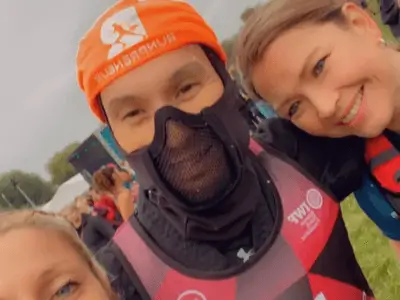
Kevin's 40,075km Challenge: Raising £1 Million for Children
Meet Kevin, a dedicated Runpreneur who embarked on an extraordinary journey to raise £1 million for children in need. Over the course of his 40,075km challenge, Kevin's unwavering determination and passion inspired thousands to join the Runpreneur movement.

Runpreneur Vlogging: Capturing Kevin's Journey
Experience the Runpreneur challenge through the lens of Kevin's video diary. Witness his ups and downs, the camaraderie of the community, and the transformative power of running for a cause. Dive into the visual stories that capture the essence of the Runpreneur movement.

Empowering Children, One Step at a Time
As Kevin logged every kilometre of his 40,075km challenge, the true purpose behind his journey came into focus. Each step, each bead of sweat, fuelled essential healthcare, education, and nutrition programs for children in need around the world.
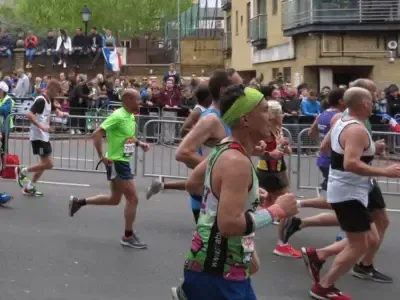
The Transformative 4x4x48 Challenge
Experience the thrill and personal growth of our iconic 48-hour running event. Witness the determination and resilience of Runpreneurs as they push their limits, one mile at a time.

Runpreneur Vlogging: Capturing the Journey
Dive into the visual stories of our Runpreneurs as they document their experiences through engaging video logs. Witness the challenges, triumphs, and moments of camaraderie that define the Runpreneur spirit.
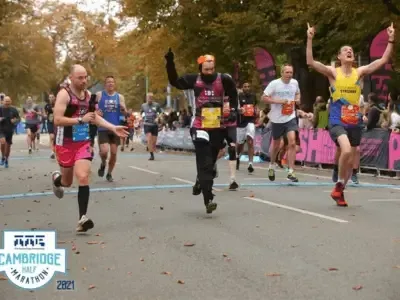
Becoming a Runpreneur: Join the Movement
Learn how you can become a Runpreneur and be part of this global community. Discover the steps to sign up, complete the challenge, and share your journey, all while making a lasting difference.
Connect With Us:



















I am on a mission to raise £1,000,000 for children's causes by daily run-vlogging barefoot-style, covering the total distance of a lap around the world—40,075 km.