
Runpreneur Journey Blog
Embark on an extraordinary journey with the Runpreneur community. Discover inspiring stories, insider tips, and the transformative power of our global challenge. From first-time runners to seasoned athletes, our blog captures the essence of the Runpreneur movement, inspiring others to join the cause.
The Master Prompt Method That Fixed My AI Outputs — Day 2020 of Running a Lap of the World
The Master Prompt Method That Fixed My AI Outputs — Day 2020 of Running a Lap of the World
Day 2020. I am 20,200km into running a lap of the world barefoot style, with 19,875km still to go. Every single day, without exception, I run and I vlog. That consistency is not just about the kilometres — it is about the discipline of showing up, thinking clearly, and building something that compounds over time. The same logic applies to how I use AI in my business.
Today I want to share something that genuinely shifted how I work. Not a tool, not a hack, not a shortcut. A framework. Specifically, the master prompt method — and why getting this right changes almost everything about how useful AI actually is in practice.
Let me be honest about where most people are with AI right now. They open ChatGPT, type a question, get an answer, feel mildly underwhelmed, and close the tab. The output feels generic. It flatters you a bit, misses the nuance, and you end up rewriting most of it anyway. That frustration is real, and I had it too. But the problem is not the AI. The problem is the input.
Here is what I have learned: AI gives you back a reflection of what you give it. If you give it a vague question, you get a vague answer. If you give it context, structure, and clarity about who you are and what you actually need, the output changes completely. That is where the master prompt comes in.
The concept was something I came across through the work of Dan Martell, who I have followed for a while now. His book Buy Back Your Time is one I would recommend to anyone running a business. But this particular framework is about getting AI to genuinely work for you rather than just responding to you.
A master prompt is a comprehensive document — often ten pages or more when done properly — that tells your AI model everything it needs to know about you. Your work, your business, your communication style, your values, how you like things formatted, what you want more of and what you want less of. You generate it by asking the AI itself to build it through a structured interview process. It asks you questions, you answer them — I dictate mine because I can get more across faster when I talk than when I type — and after roughly 45 minutes to an hour of back and forth, you have a version one draft.
You save that as a PDF. That PDF goes into every project folder you set up within your large language model. In ChatGPT, these are called Projects. Every time I work within a project — whether that is marketing, operations, product development, or anything else — that master prompt is in there. The AI already knows the context. It already knows my standards. The output from that first interaction is categorically different to what you get without it.
I also update the personalisation settings within ChatGPT using a condensed version of the master prompt. So even at the base level, before I even open a project, the model has a working understanding of who I am and how I want things done.
The second part of the method is what I think of as the golden question. When you are working on a repetitive task — a standard operating procedure, a client-facing document, a particular type of content — you will go through several iterations before the output is right. Most people give up at this point, or settle for something that is nearly right. What I do instead is keep iterating until it is exactly right, and then I ask: please write me the prompt that would have generated this output from a single interaction.
That prompt becomes an AI agent. A custom GPT built around that specific task. Now every time that task needs doing, anyone on my team can use that agent and get the same quality output, consistently, without needing to think through the whole process again. Over time, you build an entire system of these agents — one for each repetitive function in the business. That is how you get to a position where AI is genuinely handling 90% of the workload, with a small number of people overseeing quality and making the judgment calls that still need human input.
I want to be clear about something. This is not about replacing people or cutting corners. It is about directing human energy towards the work that actually requires human thinking. The same principle underpins why I run every single day. I am not running hard every day. I am running consistently every day. The effort is directed. The easy kilometres still count. The habit is the foundation everything else is built on.
The same is true in business. Most of the work is repetitive. Most of the decisions are ones you have made before. If AI can handle that layer reliably and to a consistent standard, the people on your team can focus on the 10% that genuinely needs them. That is where the leverage is.
I use ChatGPT for most of my AI work, though I also use GenSpark, which has the useful ability to query multiple large language models simultaneously and synthesise the outputs. For different tasks, different models may have an edge — Claude is often recommended for marketing copy, for instance — but I apply the 80/20 principle here. The marginal gain from switching models constantly is not worth the time it would take to rebuild everything. I focus on getting the most from what I am already embedded in.
Day 2020 of this streak. 20,200km run. 19,875km to go. Every step is part of a mission to raise £1 million for children's causes — including Great Ormond Street Hospital and BBC Children in Need. The vlog runs alongside the running. Both are built on the same foundation: consistency, structure, and showing up every single day regardless of how you feel.
If you found this useful, I would ask you to share it. The more people this reaches, the more awareness builds, and the more we can raise for children who genuinely need it. If you have questions on the master prompt method or want to know more about how I have built this into my business, drop them in the comments. I will respond to anything relevant.
See you tomorrow.
Kevin's 40,075km Challenge: Raising £1 Million for Children
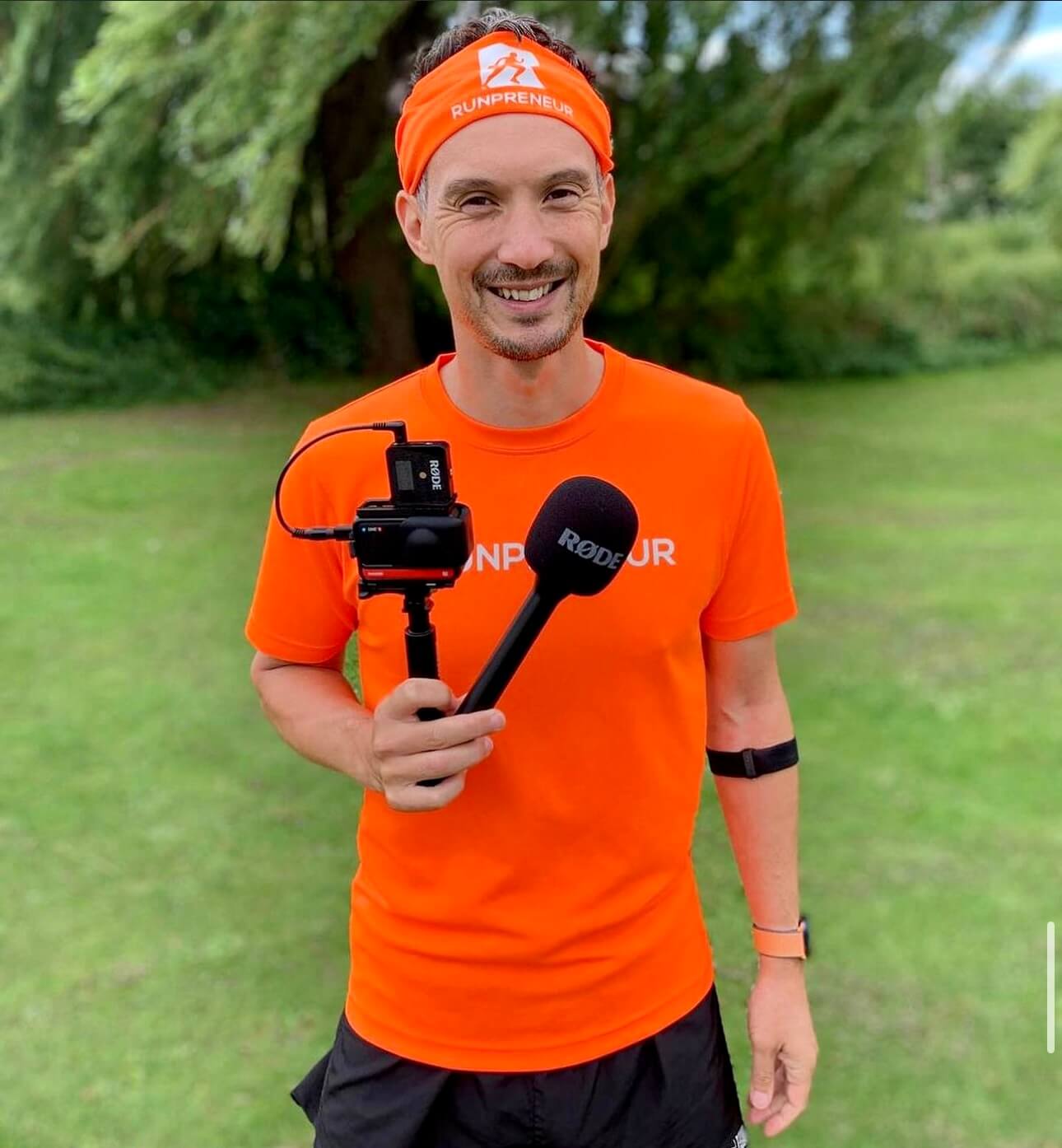
Meet Kevin, a dedicated Runpreneur who embarked on an extraordinary journey to raise £1 million for children in need. Over the course of his 40,075km challenge, Kevin's unwavering determination and passion inspired thousands to join the Runpreneur movement.
Runpreneur Vlogging: Capturing Kevin's Journey
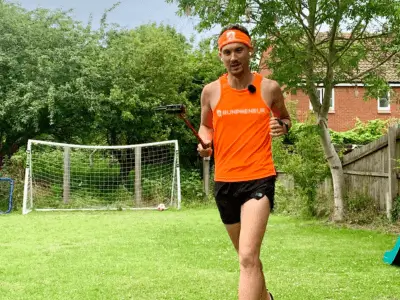
Experience the Runpreneur challenge through the lens of Kevin's video diary. Witness his ups and downs, the camaraderie of the community, and the transformative power of running for a cause. Dive into the visual stories that capture the essence of the Runpreneur movement.

Empowering Children, One Step at a Time
As Kevin logged every kilometre of his 40,075km challenge, the true purpose behind his journey came into focus. Each step, each bead of sweat, fuelled essential healthcare, education, and nutrition programs for children in need around the world.
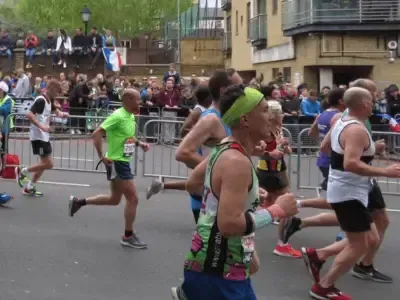
The Transformative 4x4x48 Challenge
Experience the thrill and personal growth of our iconic 48-hour running event. Witness the determination and resilience of Runpreneurs as they push their limits, one mile at a time.
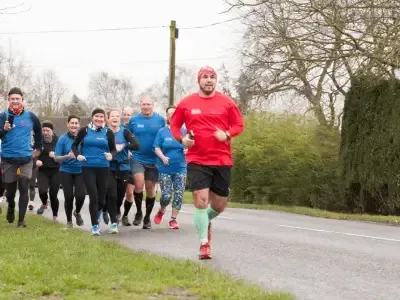
Runpreneur Vlogging: Capturing the Journey
Dive into the visual stories of our Runpreneurs as they document their experiences through engaging video logs. Witness the challenges, triumphs, and moments of camaraderie that define the Runpreneur spirit.
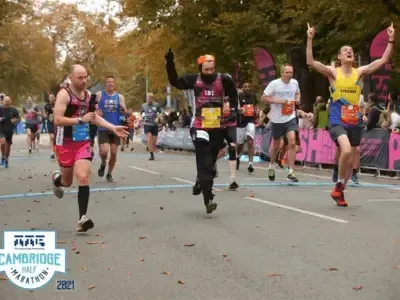
Becoming a Runpreneur: Join the Movement
Learn how you can become a Runpreneur and be part of this global community. Discover the steps to sign up, complete the challenge, and share your journey, all while making a lasting difference.
Connect With Us:



















I am on a mission to raise £1,000,000 for children's causes by daily run-vlogging barefoot-style, covering the total distance of a lap around the world—40,075 km.