
Runpreneur Journey Blog
Embark on an extraordinary journey with the Runpreneur community. Discover inspiring stories, insider tips, and the transformative power of our global challenge. From first-time runners to seasoned athletes, our blog captures the essence of the Runpreneur movement, inspiring others to join the cause.
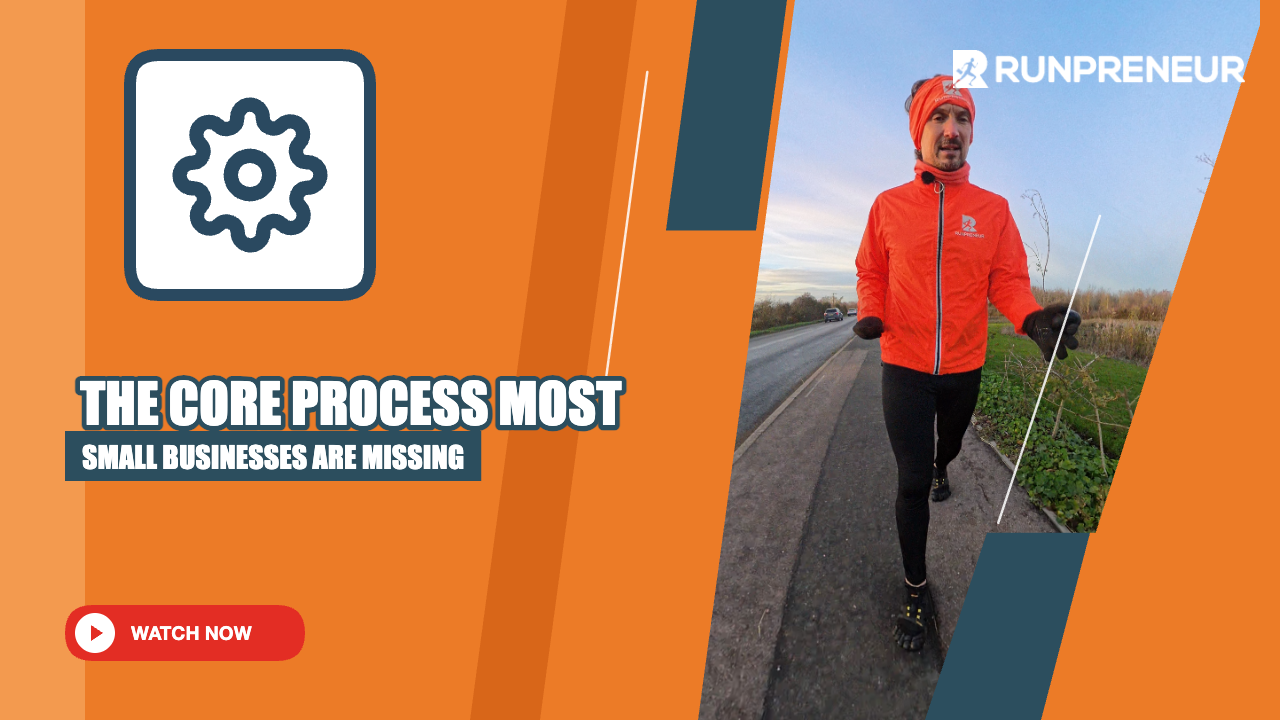
The Core Process Most Small Businesses Are Missing — Lessons From Day 2005 of My Running Streak
The Core Process Most Small Businesses Are Missing — Lessons From Day 2005 of My Running Streak
Day 2005. 20,050km covered. 20,025km still to go. And somewhere between the run and the reflection, I figured out something that had been sitting at the back of my mind for a while — the reason a lot of small businesses stay stuck is not because they lack ambition or effort. It is because they cannot clearly explain what they actually do, in a structured, repeatable, memorable way.
Today I want to talk about the core process. The flywheel. The thing that, when working properly, turns prospects into clients and clients into results. Most small business owners are working incredibly hard inside their business without ever stepping back to map the journey they take their customers through. I know this because I have been that person.
I spent today creating a framework for Operations Director that I am genuinely proud of. Not because it is perfect — I only built it today and I know it will need tweaking — but because for the first time it gave me a clear, communicable map of exactly what we do and how we do it. And that matters more than most business owners realise.
The framework I built follows the acronym OPTIMISE. Each letter represents a stage in the journey a business owner goes through when they work with us. It starts with Objectives, where we define the long-term vision and reverse engineer it back to today. Then Team, because having the right people in the right seats with the right skills and values is non-negotiable. Then Process, which is where we document everything — the methods, the SOPs, the workflows that make the business run without relying entirely on the owner.
From there it moves into Intelligence, which is where we take those documented processes and start converting them into AI-led workflows and agents. This is not a trend I am chasing — it is a logical extension of good process work. If you have a clear, documented process, you can systematise it. And if you can systematise it, you can start to automate meaningful parts of it.
Then we get to Scoreboards, which is one of the sections I feel most strongly about. You cannot improve what you do not measure. Once the foundations are in place, you need data that tells you whether the system is working, where efficiency is improving, and what the operating model is actually delivering in quantifiable terms. Then finally E is for Exit — not because every business owner should be planning to sell, but because every business should be built to a standard where that option exists. Exit readiness is really just another way of saying your business is structured, scalable, and not entirely dependent on you.
The reason this matters to me, and the reason I am sharing it today rather than waiting until it is polished, is that I spent years working without a clear framework like this. I was working in the business, not on it. And the lesson I keep coming back to — in business and in running — is that without a clear process, you are working on effort alone. Effort is necessary. But it is not sufficient.
When I started this running streak on day one, I had no real map. I just knew I was going to run every day, in barefoot-style footwear, until I had covered the circumference of the earth — 40,075km. That mission gave me direction. But what has kept the streak alive through 2005 consecutive days is not motivation. It is process. It is the decisions I made early on about how I would show up regardless of weather, injury, travel, fatigue, or circumstance. The process became the protection.
That is exactly what a core business framework does. It protects you from chaos. It gives your team clarity. It gives your clients confidence. And it gives you the mental headspace to actually work on what matters rather than firefighting every day.
I am not suggesting the OPTIMISE framework is the only way to think about this. It is the one that makes sense for what we do at Operations Director. What I am suggesting is that if you cannot clearly articulate — in a few minutes, to a new client or a new team member — the exact journey you take someone through from first contact to delivered result, then you have a gap. Not a failure. A gap. And gaps can be closed.
The question I would ask you to sit with today is this: do you have a core process? Not a sales pitch. Not a mission statement. A real, mapped, repeatable sequence of steps that your business follows every time it onboards and delivers for a client. If you do not, that is where to start. Take the path of least resistance. Think about the key stages your customer goes through from the moment they find you to the moment they get the result they came for. Write it down. Name it if that helps you remember it. Then share it with your team.
Running 20,050km in barefoot-style shoes across 2005 consecutive days has taught me that the distance does not defeat you — the lack of a system does. The same is true in business.
The 40,075km target still has 20,025km to go. The £1M fundraising goal for children's causes, including Great Ormond Street Hospital and BBC Children in Need, is still being built. Both of those missions require exactly what I described today — a clear framework, consistently applied, over a very long period of time.
That is not glamorous. But it is what works.
If any of this resonates with where you are in your business right now, I would encourage you to watch the full episode or reach out directly. And if you want to support the fundraising mission behind all of this, you can find the link in the description.
See you on day 2006.
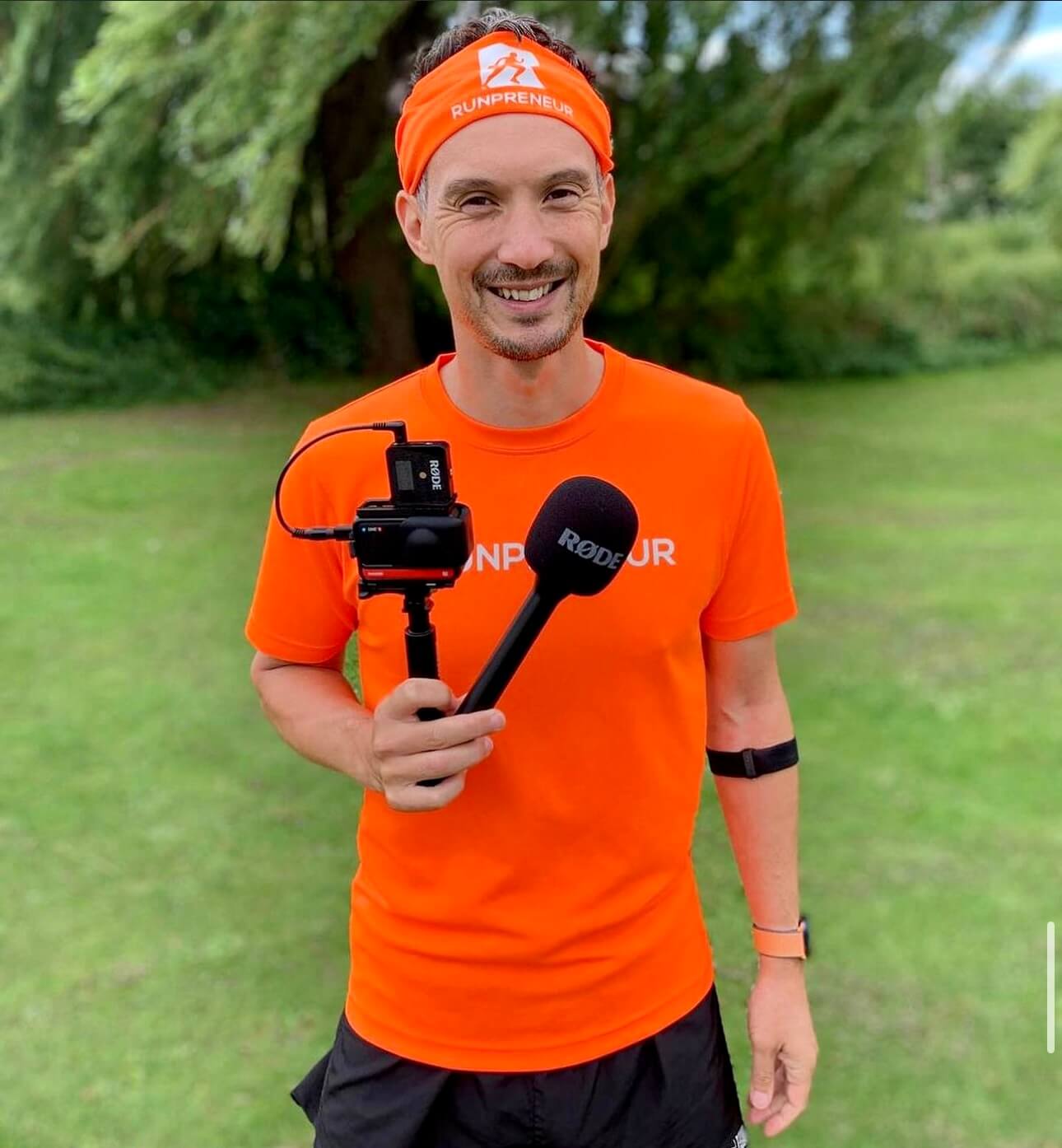
Kevin's 40,075km Challenge: Raising £1 Million for Children
Meet Kevin, a dedicated Runpreneur who embarked on an extraordinary journey to raise £1 million for children in need. Over the course of his 40,075km challenge, Kevin's unwavering determination and passion inspired thousands to join the Runpreneur movement.
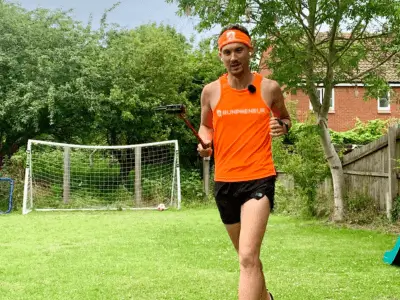
Runpreneur Vlogging: Capturing Kevin's Journey
Experience the Runpreneur challenge through the lens of Kevin's video diary. Witness his ups and downs, the camaraderie of the community, and the transformative power of running for a cause. Dive into the visual stories that capture the essence of the Runpreneur movement.

Empowering Children, One Step at a Time
As Kevin logged every kilometre of his 40,075km challenge, the true purpose behind his journey came into focus. Each step, each bead of sweat, fuelled essential healthcare, education, and nutrition programs for children in need around the world.
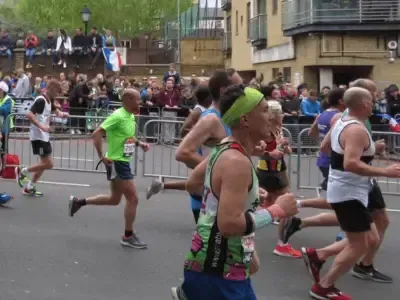
The Transformative 4x4x48 Challenge
Experience the thrill and personal growth of our iconic 48-hour running event. Witness the determination and resilience of Runpreneurs as they push their limits, one mile at a time.
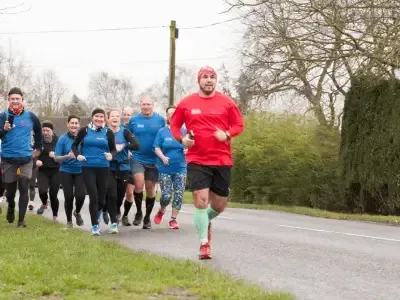
Runpreneur Vlogging: Capturing the Journey
Dive into the visual stories of our Runpreneurs as they document their experiences through engaging video logs. Witness the challenges, triumphs, and moments of camaraderie that define the Runpreneur spirit.
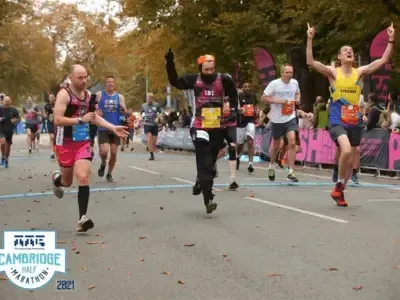
Becoming a Runpreneur: Join the Movement
Learn how you can become a Runpreneur and be part of this global community. Discover the steps to sign up, complete the challenge, and share your journey, all while making a lasting difference.
Connect With Us:

















I am on a mission to raise £1,000,000 for children's causes by daily run-vlogging barefoot-style, covering the total distance of a lap around the world—40,075 km.