
Runpreneur Journey Blog
Embark on an extraordinary journey with the Runpreneur community. Discover inspiring stories, insider tips, and the transformative power of our global challenge. From first-time runners to seasoned athletes, our blog captures the essence of the Runpreneur movement, inspiring others to join the cause.

The 51% Rule: A Simple Decision-Making Framework That Compounds Over Time
The 51% Rule: A Simple Decision-Making Framework That Compounds Over Time
I was at a village pool tournament with about sixteen dads from our local group. Annual event, four groups of four, top two go through. I am not a great pool player. I know that. But something happened that night that stuck with me in a way I did not expect.
I started playing the percentages.
Not in a complicated way. Not with some sophisticated analytical system. Just a simple question before every shot: what is the percentage probability that this has a positive outcome? If the answer was 51% or better in my favour, I played it. If it was 50% or lower, I took a defensive approach. I played to not leave my opponent anything easy rather than force a shot I had no real business attempting.
I ended up winning the tournament. And there were better pool players in that group than me.
That is what I reflected on during today's run — Day 2023 of my daily running streak, with 20,230km accumulated of the 40,075km I am working through to raise £1 million for children's causes, including Great Ormond Street Hospital and BBC Children in Need. 19,845km still to go.
The 51% rule is something I have been developing as part of a broader decision-making framework I use within my business and with my team. The idea behind it is straightforward. We make hundreds of decisions every day. Some of them are significant. Most of them are small. And it is easy to let those small ones get driven by emotion, by the excitement of the moment, by optimism bias, or simply by not pausing to think at all.
What I realised playing pool that night is that the principle transfers directly into life and business. When I stripped away the emotion of wanting to win and just asked myself that single question — is this better than 50/50 in my favour? — my decision-making became noticeably cleaner. I was not overthinking. I was not paralysed by analysis. I was just applying a consistent framework.
And consistency is the whole point.
The 51% rule does not guarantee you get every decision right. I missed shots that evening. I will make calls in business that do not work out. That is inevitable. What the framework does is shift the probability over time. If you are consistently making decisions where the odds are at least slightly in your favour, and doing that hundreds of times a week, those decisions compound. The cumulative effect of slightly better choices, made repeatedly over months and years, is genuinely significant. It is not dramatic. It does not feel like a transformation in the moment. But when you look back over time, the trajectory changes.
This is something I think about a lot in the context of running every day in Vibram FiveFingers barefoot-style footwear. Every morning I make a decision. It is rarely a dramatic one. Most days I do not feel inspired. I just ask myself the simple version of the same question: is going out better than not going out? The answer is almost always yes. Not because running is always enjoyable. Not because I feel brilliant at the end of every session. But because the probability of it contributing positively to my physical and mental state, to the mission, to the fundraising progress, to the streak — that probability is reliably above 51%.
Day after day. That compounds.
When I built the decision-making framework for my team at Operations Director and Runpreneur, I wanted them to feel empowered to make decisions without constantly coming to me. The 51% rule is one piece of that. It gives people a practical anchor. Instead of second-guessing themselves or waiting for certainty that will never arrive, they can ask the question, apply the threshold, and move forward. Most decisions do not need more than that.
For bigger decisions, of course there are additional layers to consider. Risk, timing, reversibility, impact on others. But for the volume of decisions that fill an ordinary day, a simple probabilistic framework cuts through the noise.
I think the broader lesson from the pool tournament is about removing yourself from the emotional state of a situation before deciding. The emotion in that room was about wanting to win, about pride in front of people from the village, about the competitive instinct. None of that is a good basis for decision-making. The moment I separated the emotional pull from the probability assessment, I started playing differently. Not harder. Just better.
That shift is something I try to apply every day on the road. 20,230km into this journey, there are days where emotion could derail the decision to go out. Tiredness. Cold. Work pressure. Doubt about whether it matters. But I have a framework. The question is always whether the positive probability is above the threshold. And it always is.
That is what keeps the streak alive. Not willpower. Not motivation. A framework.
19,845km still to go before I complete a lap of the world on foot. £1 million still to raise for children who need it. Both of those goals feel large. But they are made up of individual decisions, made one at a time, each one just needing to be 51% in the right direction.
If you are working on building better habits, running your own business, or just trying to make more consistent progress in any area of life, I would encourage you to try this. Before your next significant decision, strip away the emotion as best you can, and ask yourself honestly: is the probability of a positive outcome above 51%? If yes, move forward. If not, play defensively.
Over time, those decisions compound.
Watch the full episode on YouTube. Follow the journey on Strava. If the mission connects with you, any support towards the £1 million fundraising target for children's causes is genuinely appreciated. Links are in the description.
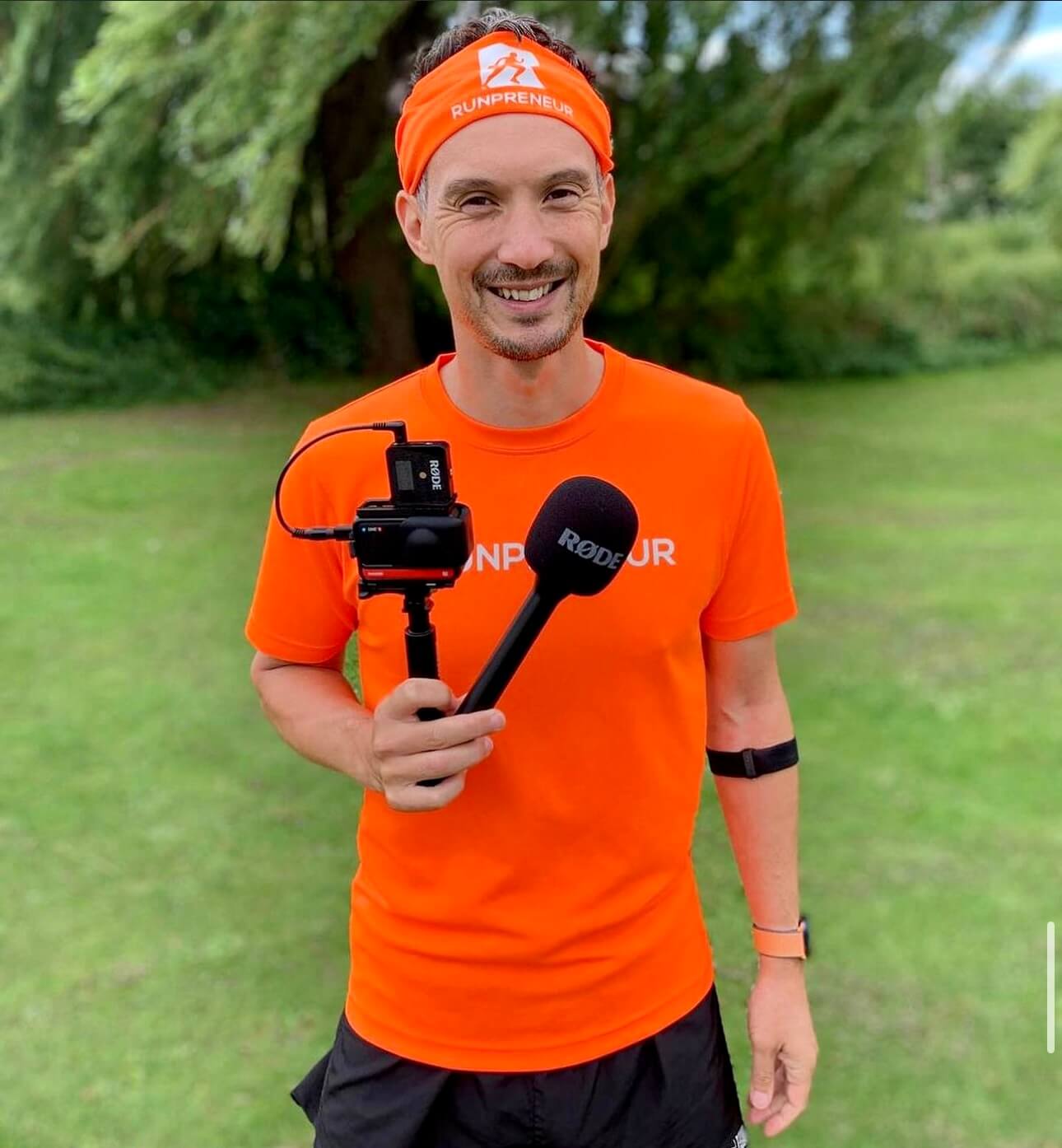
Kevin's 40,075km Challenge: Raising £1 Million for Children
Meet Kevin, a dedicated Runpreneur who embarked on an extraordinary journey to raise £1 million for children in need. Over the course of his 40,075km challenge, Kevin's unwavering determination and passion inspired thousands to join the Runpreneur movement.
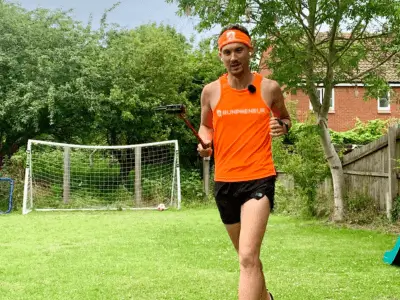
Runpreneur Vlogging: Capturing Kevin's Journey
Experience the Runpreneur challenge through the lens of Kevin's video diary. Witness his ups and downs, the camaraderie of the community, and the transformative power of running for a cause. Dive into the visual stories that capture the essence of the Runpreneur movement.

Empowering Children, One Step at a Time
As Kevin logged every kilometre of his 40,075km challenge, the true purpose behind his journey came into focus. Each step, each bead of sweat, fuelled essential healthcare, education, and nutrition programs for children in need around the world.
The Transformative 4x4x48 Challenge
Experience the thrill and personal growth of our iconic 48-hour running event. Witness the determination and resilience of Runpreneurs as they push their limits, one mile at a time.
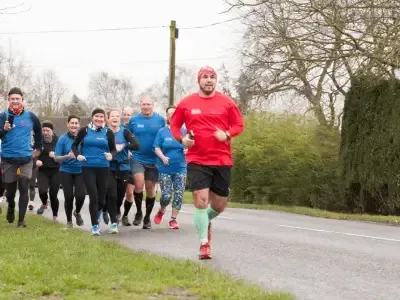
Runpreneur Vlogging: Capturing the Journey
Dive into the visual stories of our Runpreneurs as they document their experiences through engaging video logs. Witness the challenges, triumphs, and moments of camaraderie that define the Runpreneur spirit.
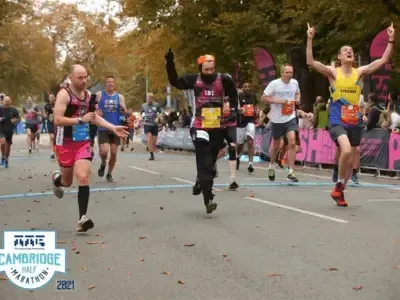
Becoming a Runpreneur: Join the Movement
Learn how you can become a Runpreneur and be part of this global community. Discover the steps to sign up, complete the challenge, and share your journey, all while making a lasting difference.
Connect With Us:



















I am on a mission to raise £1,000,000 for children's causes by daily run-vlogging barefoot-style, covering the total distance of a lap around the world—40,075 km.