
Runpreneur Journey Blog
Embark on an extraordinary journey with the Runpreneur community. Discover inspiring stories, insider tips, and the transformative power of our global challenge. From first-time runners to seasoned athletes, our blog captures the essence of the Runpreneur movement, inspiring others to join the cause.
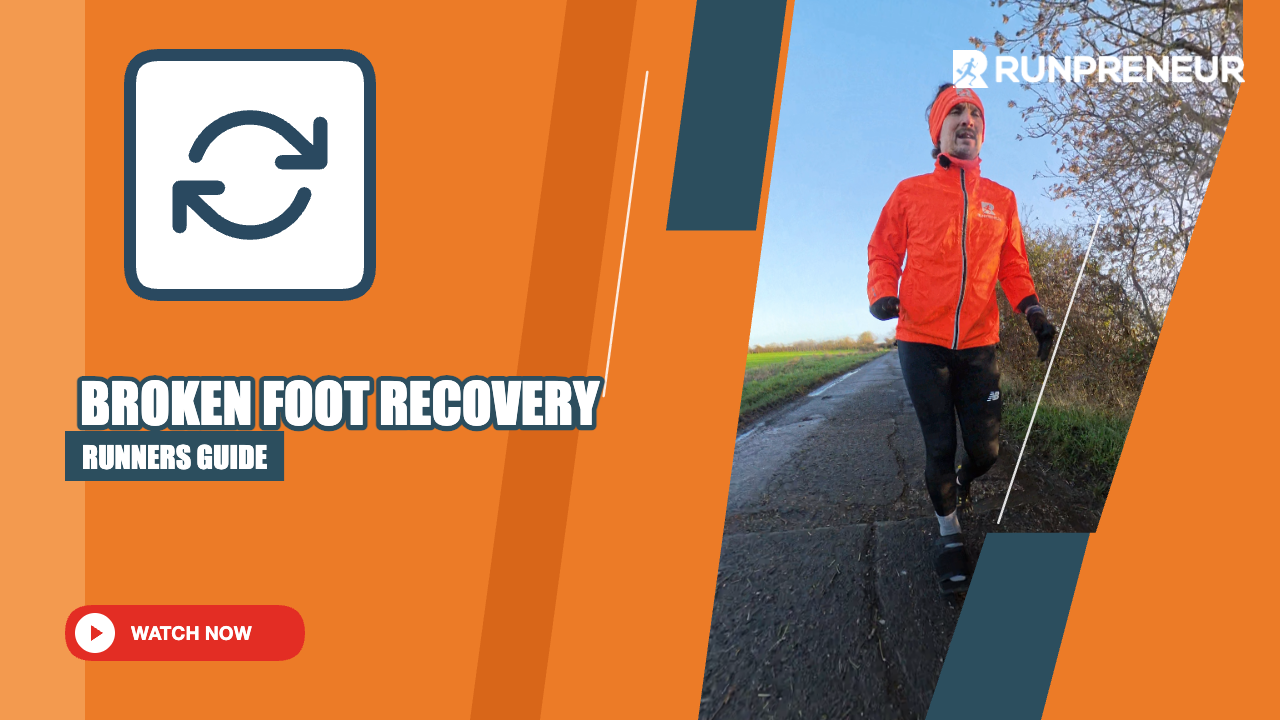
Stress Fracture vs Full Fracture: What I Learned Running Through a Broken Foot on Day 2019
Stress Fracture vs Full Fracture: What I Learned Running Through a Broken Foot on Day 2019
I am going to be honest with you. Running on a broken foot is not something I would recommend to anyone. But here I am, day 2019 of a consecutive daily running streak, 20,190 kilometres into a 40,075km lap of the world barefoot style, and I have spent several weeks doing exactly that.
This episode is not a heroic story. It is a practical one. A cautionary one, if anything. Because if I had known what I now know about recovering from a stress fracture or full fracture of the foot, I could have shaved four weeks off this recovery. That matters when you are running every single day to raise money for children's causes including Great Ormond Street Hospital and BBC Children in Need.
So let me share what I have learned, not as a medical professional, but as someone who has lived it.
What Actually Happened
I had been experiencing pain in my foot for several weeks before I got a confirmed diagnosis. Initially, my podiatrist and the clinicians at minor injuries thought it might be nerve damage, possibly related to corns and calluses from years of barefoot-style running in Vibram FiveFingers. It sounded worse than it was, genuinely. My feet are in reasonable condition given the mileage I put through them.
The problem was that a stress fracture, if that is what it starts as, does not show on an X-ray for three to four weeks. So the NHS process, quite understandably from a resource perspective, is to wait. Come back in a few weeks. See if it resolves.
It did not resolve. When the X-ray eventually came through, it was a full fracture of my third metatarsal. A complete break. What had likely started as a stress fracture had progressed because I kept walking and running on it. Four weeks without the right support had turned a manageable injury into a more serious one.
The Mistake I Made and How You Can Avoid It
The single biggest lesson from this experience is straightforward. Get the boot early.
If you have any suspicion at all that you might have a stress fracture in your foot, get yourself a metatarsal fracture boot. You can find them on Amazon by searching for stress fracture foot boot or metatarsal fracture support. They are not expensive. They are not attractive. But what they do is shift the weight loading away from the ball of your foot and your metatarsals, putting it through the heel instead.
I was not given one of these boots until four weeks after my injury first presented. That was four weeks of walking and power walking on a fractured foot, likely worsening the damage with every step. Had I got a boot straight away, even as a precaution, I would not be looking at a sixteen-week recovery. I would be looking at twelve.
Please do not make the same mistake I did. The medical teams are not going to rush to give you one. The system here in the UK is stretched and understandably cautious about cost. So take the initiative yourself.
What the Recovery Actually Looks Like
Once you have the boot and a confirmed diagnosis, the fracture clinic advised me to wear it around 95 percent of the time. Off when sleeping, off when showering, off when sitting still. On for everything else. That continues for a minimum of five to six weeks.
In those first two to four weeks, icing the injured area two to three times a day for fifteen to twenty minutes helps reduce inflammation and supports healing. The inflammation from a metatarsal fracture can be subtle. Mine looked like a slightly puffy area rather than a dramatic swollen foot, but it was there.
After five weeks solid in the boot, the sixth week becomes about transition. Gradually reintroducing normal footwear, listening carefully to whether there is any pain. If pain returns, the boot goes back on and the timeline extends.
Then comes the rehabilitation phase, which is just as important as the rest period. This is where I think a lot of runners go wrong. They feel better, they want to get back to it, and they push too soon. The bone may feel healed before it fully is, and if you load it prematurely you risk the fracture reoccurring.
My approach, guided by the medical advice I have received, is to start with walking only and then introduce running in incremental kilometres each week. Week one of running, one kilometre of running alongside four kilometres of walking. Week two, two kilometres running. Week three, three. Building up week by week until I am back to my normal daily distance. That process alone takes six weeks. Rushed, it could undo everything.
For me, given I lost four weeks at the start without the boot, I am looking at a sixteen-week full recovery before I am back to running my regular seven kilometres per day. That is the honest reality.
Keeping the Streak Alive
I will not pretend that maintaining my daily minimum of five kilometres through this injury has been straightforward. There have been days that were genuinely painful. I am not saying that to be dramatic. I am saying it because it is true, and because I think it is important to be transparent about the cost of keeping a streak like this going.
At the same time, the streak is not vanity. It is the mechanism through which this mission works. Every day of content is another day of reach. The more people who find this diary, the more awareness grows around the fundraising goal of raising £1 million for children's causes. That is why I kept moving, carefully and within the limits of what the medical team agreed I could do.
I am currently at 20,190 kilometres of the 40,075km total. There are 19,885 kilometres still to run. A broken foot is a setback in that journey. It is not the end of it.
The Lesson That Matters Most
Consistency over time is the principle I come back to on this mission every single day. It is not about speed or volume. It is about showing up. But showing up wisely. What this injury has taught me is that protecting the long-term streak means making smart short-term decisions. Getting the boot earlier would have been a smart decision. I did not make it. You can.
If you are a runner and you suspect a stress fracture, do not wait for the health system to act. Get expert advice as early as possible and get that boot on your foot. It might feel like an overreaction. It is not.
Please note this is not medical advice. I am sharing my experience and what I have been told by the clinicians treating me. Always consult a qualified medical professional about your own situation.

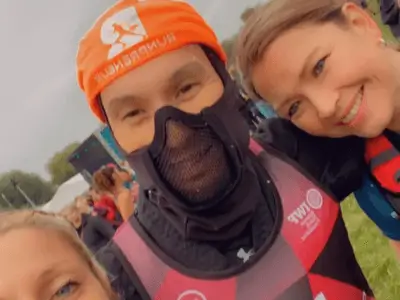
Kevin's 40,075km Challenge: Raising £1 Million for Children
Meet Kevin, a dedicated Runpreneur who embarked on an extraordinary journey to raise £1 million for children in need. Over the course of his 40,075km challenge, Kevin's unwavering determination and passion inspired thousands to join the Runpreneur movement.

Runpreneur Vlogging: Capturing Kevin's Journey
Experience the Runpreneur challenge through the lens of Kevin's video diary. Witness his ups and downs, the camaraderie of the community, and the transformative power of running for a cause. Dive into the visual stories that capture the essence of the Runpreneur movement.

Empowering Children, One Step at a Time
As Kevin logged every kilometre of his 40,075km challenge, the true purpose behind his journey came into focus. Each step, each bead of sweat, fuelled essential healthcare, education, and nutrition programs for children in need around the world.

The Transformative 4x4x48 Challenge
Experience the thrill and personal growth of our iconic 48-hour running event. Witness the determination and resilience of Runpreneurs as they push their limits, one mile at a time.
Runpreneur Vlogging: Capturing the Journey
Dive into the visual stories of our Runpreneurs as they document their experiences through engaging video logs. Witness the challenges, triumphs, and moments of camaraderie that define the Runpreneur spirit.
Becoming a Runpreneur: Join the Movement
Learn how you can become a Runpreneur and be part of this global community. Discover the steps to sign up, complete the challenge, and share your journey, all while making a lasting difference.
Connect With Us:



















I am on a mission to raise £1,000,000 for children's causes by daily run-vlogging barefoot-style, covering the total distance of a lap around the world—40,075 km.