
Runpreneur Journey Blog
Embark on an extraordinary journey with the Runpreneur community. Discover inspiring stories, insider tips, and the transformative power of our global challenge. From first-time runners to seasoned athletes, our blog captures the essence of the Runpreneur movement, inspiring others to join the cause.
Stop Micromanaging AI Agents: The Next Step in AI Evolution
Today is Day 2125 of my daily barefoot-style running streak. Total distance is 16,333.49km, which leaves 23,741.51km of the 40,075km lap of the world. Today's vlog was not about the run itself. It was about a decision I have been avoiding in my work: stop micromanaging AI and give an agent an outcome instead.
Where I am with AI today
I now spend most of my working time instructing AI to do things or build things for me. If I am honest, it is about 90% prompting and 10% doing the work myself. That is a large change from how I worked a few years ago, and it has made me far more productive than I ever was.
There is a catch, though. Nearly all of that work is still micromanaged. I write detailed prompts. I supply context. I describe exactly what I expect, and then I check the output. The AI does the work, but I am still the one steering every step.
The four stages as I see them
Looking back, my AI evolution has had distinct stages.
Stage one is familiarisation. You talk to the models, test them, ask questions and learn what they get right and wrong.
Stage two is connection. You link the AI to the software you use, the documents, the folders and the projects, so it works with your real information rather than generic answers.
Stage three is instruction. You ask it to complete tasks on your behalf and you test whether it does them properly.
Stage four is ownership. The AI agent has a role. You give it an outcome or an objective, the tools it needs and the information it needs, and you let it decide how to get there.
I am comfortable with the first three. I have built AI agents to do work. I have scheduled them to run on their own on the odd occasion. What I have not done yet is hand over a standing responsibility and trust the agent to run it.
Why this feels uncomfortable
I am a control freak by nature. I have spent years building systems, and the idea of letting an agent loose across them makes me nervous. That is a fair reaction, so I am not going to pretend otherwise.
Prompting an agent step by step feels safe because I see every decision. Giving it a goal means I accept that it will make choices I did not specify. It might do things differently from how I would. It might get something wrong. The only way to find out how much to trust it is to test it, in a small and low-risk area first.
The first test: my task list
I have stopped using my task list. A lot of it is out of date, and much of it belongs to past businesses I no longer run. It has become noise.
So the first outcome I am giving an agent is simple. Monitor the task list every day, clear out what is no longer needed, action what can be actioned, and bring only the high-level items to my attention. If that goes well, the second step is to have it build me a daily schedule, a bit like an executive assistant would.
I chose this because the cost of a mistake is low. If the agent misjudges a task, I can spot it and correct it. I have not run this yet, so I do not know how it will go. I will report back on the real results over the next few days, whatever they are.
What running has taught me about trust
Running every day has taught me that you do not become comfortable with something by thinking about it. You become comfortable by repeating it. The first run of a streak is not hard because of the distance. It is hard because it is unfamiliar. By Day 2125, the daily run is a routine I do not negotiate with.
I expect delegating to an agent to follow the same pattern. The first handover will feel uneasy. The fifth will feel more normal. The point is to start small, watch what happens, and widen the responsibility only when the evidence supports it.
It also matches how I approach distance. Nobody runs 40,075km in one go. You run today's kilometres, then tomorrow's. Trust in an AI agent is built the same way, one small outcome at a time.
Why this matters beyond my own workload
The reason I am chasing this is not productivity for its own sake. Time is the one resource I cannot manufacture. If agents handle repeatable work properly, I get more time to run, more time to film, and more time to put into the mission behind this vlog.
That mission is to complete a lap of the world by running every day, and to raise £1M for children's causes. Every episode is part of that. The more of my working day I can free from routine admin, the more consistent I can be with the thing that matters most. I am planning this on a 16.5-year view, so small improvements in how I work compound over a very long time.
What you can take from this
If you are using AI already, ask yourself which stage you are at. If you are stuck at stage three, giving instructions every time, consider choosing one small, low-risk area and giving an agent an outcome instead of a prompt. Define the goal, list the tools and information it can use, and set a way for you to review what it has done.
Start small. Check the results honestly. Expand only if the work holds up.
I will update you on how the task list experiment goes. If you have tried handing work to an AI agent, I would like to hear what you learned, so leave a comment on the video.
If you believe in the mission to save children's lives through this ultra-marathon of run vlogging, please subscribe, share, like and comment. It helps this reach more people, and that supports the £1M goal for children's causes. I will see you tomorrow for Day 2126.
Watch the full episode: https://youtu.be/oot5To2nA70
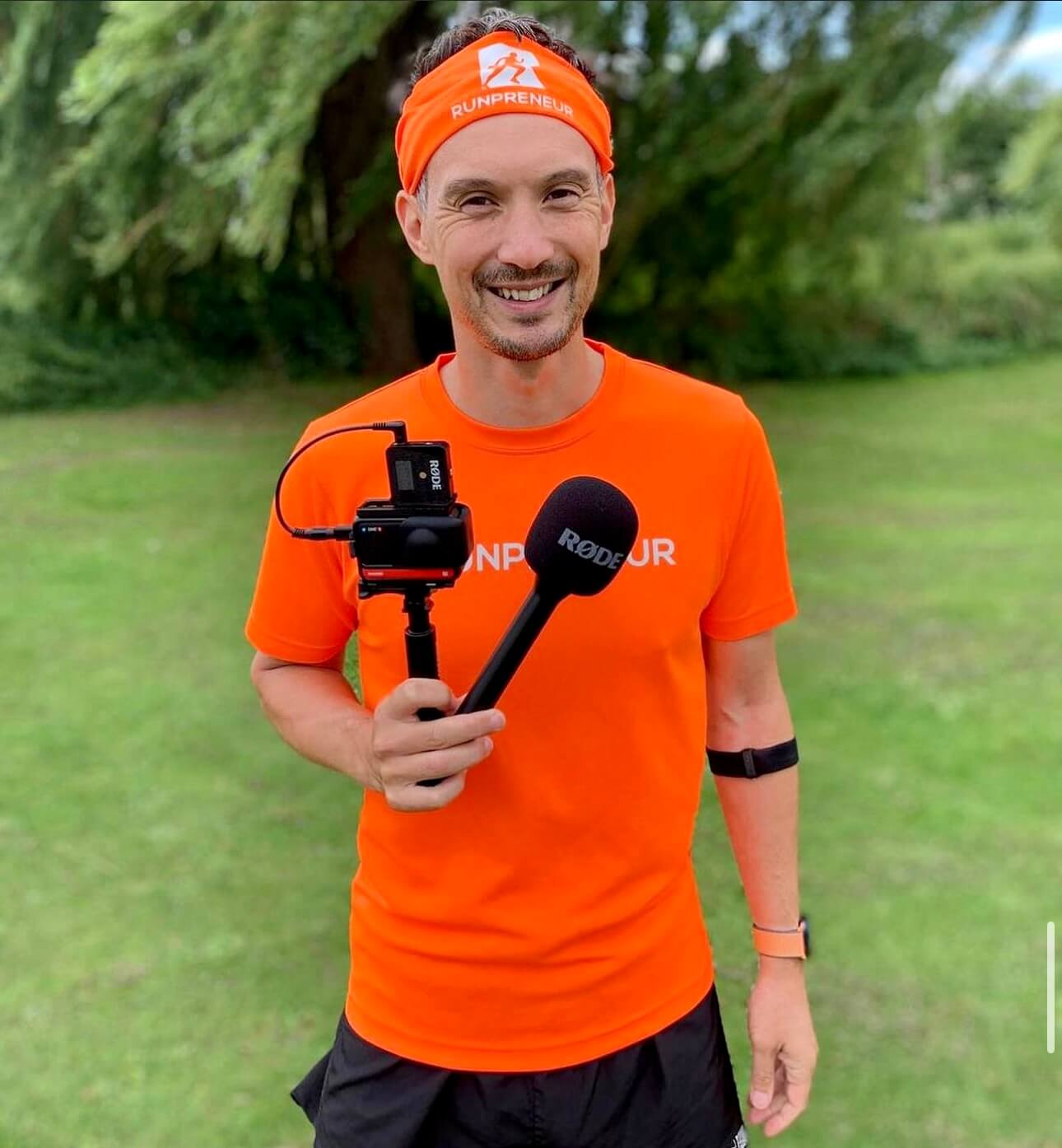
Kevin's 40,075km Challenge: Raising £1 Million for Children
Meet Kevin, a dedicated Runpreneur who embarked on an extraordinary journey to raise £1 million for children in need. Over the course of his 40,075km challenge, Kevin's unwavering determination and passion inspired thousands to join the Runpreneur movement.
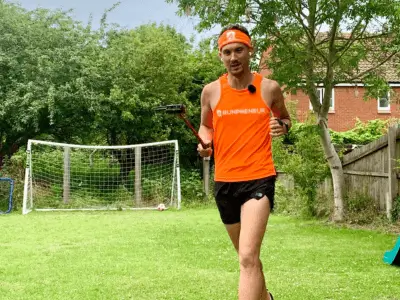
Runpreneur Vlogging: Capturing Kevin's Journey
Experience the Runpreneur challenge through the lens of Kevin's video diary. Witness his ups and downs, the camaraderie of the community, and the transformative power of running for a cause. Dive into the visual stories that capture the essence of the Runpreneur movement.

Empowering Children, One Step at a Time
As Kevin logged every kilometre of his 40,075km challenge, the true purpose behind his journey came into focus. Each step, each bead of sweat, fuelled essential healthcare, education, and nutrition programs for children in need around the world.
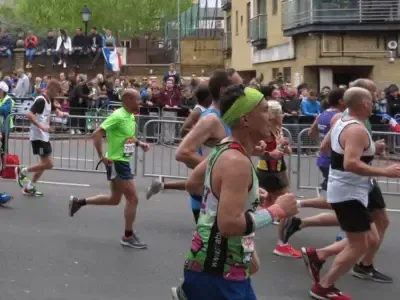
The Transformative 4x4x48 Challenge
Experience the thrill and personal growth of our iconic 48-hour running event. Witness the determination and resilience of Runpreneurs as they push their limits, one mile at a time.
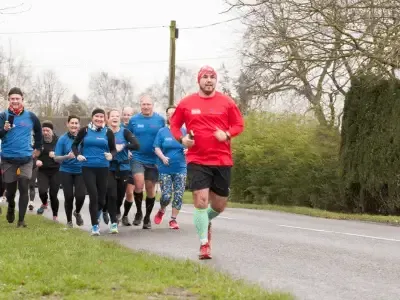
Runpreneur Vlogging: Capturing the Journey
Dive into the visual stories of our Runpreneurs as they document their experiences through engaging video logs. Witness the challenges, triumphs, and moments of camaraderie that define the Runpreneur spirit.
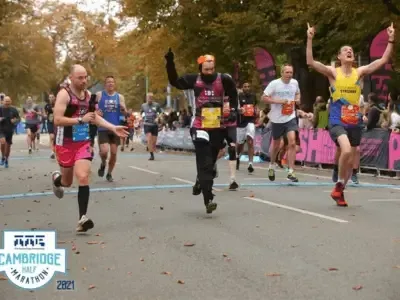
Becoming a Runpreneur: Join the Movement
Learn how you can become a Runpreneur and be part of this global community. Discover the steps to sign up, complete the challenge, and share your journey, all while making a lasting difference.
Connect With Us:



















I am on a mission to raise £1,000,000 for children's causes by daily run-vlogging barefoot-style, covering the total distance of a lap around the world—40,075 km.