
Runpreneur Journey Blog
Embark on an extraordinary journey with the Runpreneur community. Discover inspiring stories, insider tips, and the transformative power of our global challenge. From first-time runners to seasoned athletes, our blog captures the essence of the Runpreneur movement, inspiring others to join the cause.
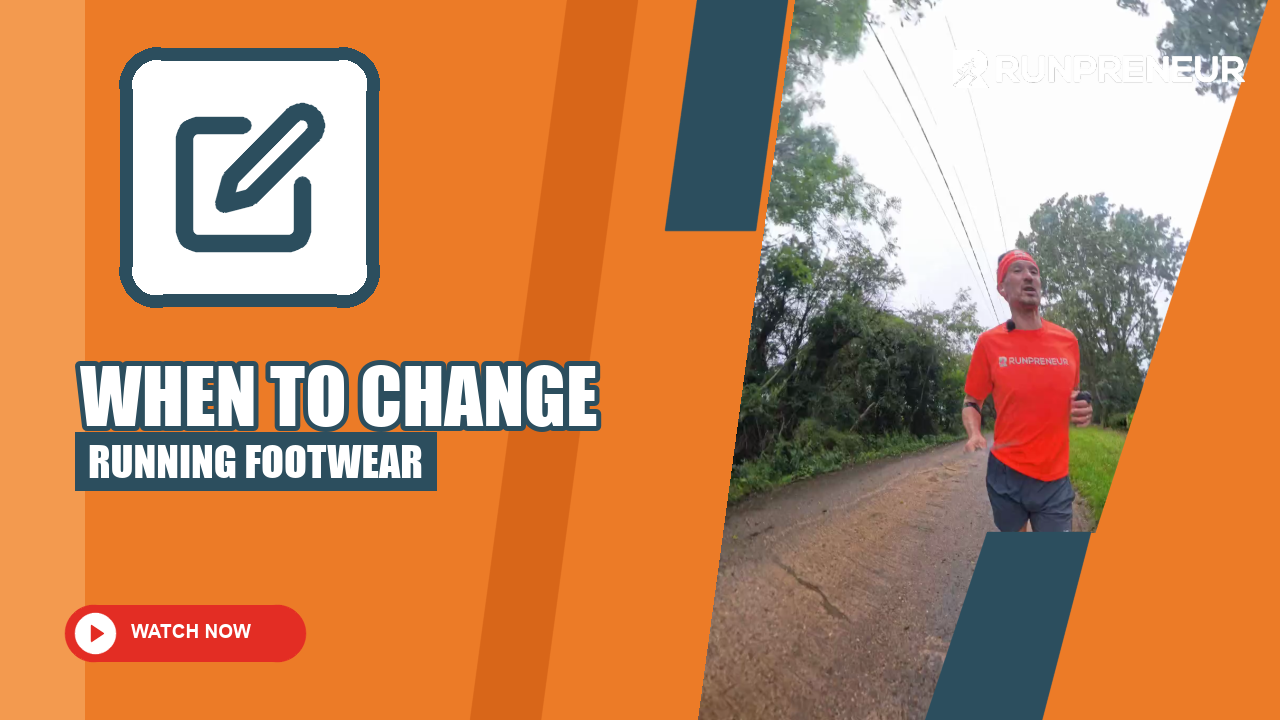
Running Footwear: When To Change Yours Before Injury Starts (Day 2202)
Today is the last day I will wear this pair of Vibram FiveFingers V-Run. A new pair arrived, and I start in them tomorrow. Swapping footwear is a small event in a running streak, but it is one many runners get wrong, and the cost of getting it wrong is sometimes an injury.
This is day 2202 of running every day. My total stands at 16,888.27km, which leaves 23,186.73km of the 40,075km lap of the world. I run barefoot style, I film it as a vlog, and the whole thing raises money for children's causes, with a target of £1M. None of that works if I am injured. So when to change running footwear is a practical question for me, not a side topic.
What happened on today's run
Nothing dramatic. I ran in a pair of shoes I have worn for around nine months, and I looked at the soles. Where the grip has worn away, the surface is thinner. In a couple of places, the sole is so thin I could almost tear it. That is the signal I look for, and it is why the swap happens now.
The general guidance I follow
For regular runners, the general rule is to change running footwear every six to nine months. The exact figure depends on how often you run and how far. If you run two or three times a week as a minimum, six to nine months is the window to work within. If you run less than that, you will probably stretch a pair to about a year.
I change mine roughly every nine months. People ask why it is not six, given I run every day. The answer is that barefoot style footwear wears more slowly. There is far less foam and padding to break down. If I wore traditional cushioned running shoes with the mileage I do, I would be replacing them around the six month mark. That is part of why running is an expensive hobby if you are not paying attention.
The sole tells you the truth
Time and distance are guides. The sole is the evidence. Look at the bottom of your running footwear and ask whether the wear is significant enough to change the shape of the shoe.
This matters because most runners do not land flat. Very few people hit the ground perpendicular. Most land more on one side of the foot than the other. In a cushioned shoe, that repeated landing wears one side of the sole down faster than the other. The shoe slowly tilts. You are then landing with less support on one side, step after step.
Running is a repetition sport. A small imbalance is multiplied by thousands of steps a week. Left long enough, your running form shifts to compensate for a shoe that no longer holds its shape. That is how a worn sole becomes a form problem, and a form problem becomes an injury.
My own version of this is much simpler because I run with very little between me and the ground. I look for worn grip and weak spots. If I see them, the shoe is done. A runner in thick cushioned shoes has less obvious signals, which is why checking the sole on a regular basis matters more for them, not less.
The lesson for me
The learning from my diary today is about attention. I do not wait for pain to tell me something is wrong. Pain arrives late. A worn sole shows up earlier, and it costs nothing to look.
I keep coming back to this in the streak. Consistency depends on boring checks done early. I look at my footwear, I look at how I land, and I act while the problem is small. A daily run for 2202 days is not built on one big decision. It is built on many small ones, like swapping a pair of shoes before they cause harm.
There is a cost side too. Footwear is a recurring expense, and I would rather replace a pair on schedule than pay for an injury through lost running, physio, or stopping altogether. For a runner with a streak to protect, the new pair is cheap insurance.
A simple check you can do this week
- Turn your running footwear over and look at the sole. - Look for uneven wear, with one side lower than the other. - Look for thin or weak spots, or grip that has gone. - Think about how long you have had them and how often you run. - If the shape has changed, replace them. Do not wait for a six or nine month date.
If you run two or three times a week, put a reminder in your diary for six months from the day you bought your last pair. If you run less often, set it for a year and still check the sole in between.
How this ties to the mission
The point of running every day is to cover a lap of the world, 40,075km, and to raise £1M for children's causes. Each episode is a chance to put the vlog in front of more people, and the more people who see it, the more support the fundraising gets. That only continues if I stay healthy. A new pair of shoes tomorrow is part of keeping the streak going towards the 16.5 year vision, one day at a time.
If you run regularly, check your soles this week. If this was useful, tell me what you look for in your own footwear, and follow along with the vlog. Tomorrow I will be in the new pair, and I will see you then.
Watch the full episode: https://youtu.be/Cmhujs2titY

Kevin's 40,075km Challenge: Raising £1 Million for Children
Meet Kevin, a dedicated Runpreneur who embarked on an extraordinary journey to raise £1 million for children in need. Over the course of his 40,075km challenge, Kevin's unwavering determination and passion inspired thousands to join the Runpreneur movement.

Runpreneur Vlogging: Capturing Kevin's Journey
Experience the Runpreneur challenge through the lens of Kevin's video diary. Witness his ups and downs, the camaraderie of the community, and the transformative power of running for a cause. Dive into the visual stories that capture the essence of the Runpreneur movement.

Empowering Children, One Step at a Time
As Kevin logged every kilometre of his 40,075km challenge, the true purpose behind his journey came into focus. Each step, each bead of sweat, fuelled essential healthcare, education, and nutrition programs for children in need around the world.

The Transformative 4x4x48 Challenge
Experience the thrill and personal growth of our iconic 48-hour running event. Witness the determination and resilience of Runpreneurs as they push their limits, one mile at a time.
Runpreneur Vlogging: Capturing the Journey
Dive into the visual stories of our Runpreneurs as they document their experiences through engaging video logs. Witness the challenges, triumphs, and moments of camaraderie that define the Runpreneur spirit.
Becoming a Runpreneur: Join the Movement
Learn how you can become a Runpreneur and be part of this global community. Discover the steps to sign up, complete the challenge, and share your journey, all while making a lasting difference.
Connect With Us:



















I am on a mission to raise £1,000,000 for children's causes by daily run-vlogging barefoot-style, covering the total distance of a lap around the world—40,075 km.