
Runpreneur Journey Blog
Embark on an extraordinary journey with the Runpreneur community. Discover inspiring stories, insider tips, and the transformative power of our global challenge. From first-time runners to seasoned athletes, our blog captures the essence of the Runpreneur movement, inspiring others to join the cause.

Reduce Entrepreneurial Anxiety: Why Fixed Income Matters More Than Chasing Sales
Today is consecutive day 2156 of my daily barefoot-style running streak. I have now covered 16,555.97km of the 40,075km I need to complete a lap of the world, which leaves 23,519.03km. Today's episode was not about running. It was about how to reduce entrepreneurial anxiety and entrepreneurial fear, a subject I know well from the inside.
If you run a start-up or an established business, you will know the feeling. It is the 3am version of your business, where every number looks worse than it does in daylight. I have had plenty of those nights. I have also learned that most of the fear comes down to one thing.
Where the fear comes from
Business is hard. The figure usually quoted is that around nine in ten businesses fail, which gives anyone a reason to feel uneasy. In my experience, though, the fear is not spread evenly across every part of a business.
I mostly work with and think about micro and small businesses, with turnover under £1m and fewer than five people. In those businesses the biggest source of worry is cash. Is there enough to keep going? Will we make enough this month? Are we profitable?
I have noticed that entrepreneurs who say they feel none of this are usually either financially secure enough for it not to matter, or not being fully honest. I am not saying that to be harsh. I am saying it because pretending the fear is absent makes it harder to deal with.
Nobody has a magic pill that produces more income. What I have found is a way to look at income that takes pressure off.
Fixed income and variable income
I split business income into two types.
Fixed income is recurring. It arrives on a schedule, in the same amount, from the same source. A subscription is the clearest example.
Variable income is sporadic. It depends on making a sale. You get paid, then you may not get paid again until you make the next sale.
Both have a place. Variable income often arrives in bigger chunks, especially if you sell high-ticket items. But a business built only on variable income needs you to keep chasing the next sale, month after month, just to stay level.
Match fixed income to fixed overheads
The idea I come back to most is matching fixed income to fixed costs.
By fixed overheads I do not mean cost of goods sold. I mean the costs that go out every month in the same amount, whatever you earn. Rent, rates, mortgage payments, council tax, fixed-tariff utilities and fixed salaries are the usual ones.
Those costs are what hurt a business in a quiet month. If your fixed income covers them, a quiet month on sales is an inconvenience. If it does not, a quiet month is a threat.
Fixed income does not remove all anxiety. It does remove a large share of it, and it makes a business far more stable.
What my own businesses showed me
When I look back over the businesses I have run, the pattern is clear. The ones that failed, and failed fast, relied on variable income. My cafe is the example I know best. It had a large overhead and depended on making sales every single day. Each day started from zero, and I was always chasing the next sale.
My property business has lasted. Rent comes in every month, and more often than not it covers the fixed overheads, such as mortgage payments and council tax. Things change, and I am not claiming it is risk-free. But it is far more stable than a business with a big overhead and a constant need to chase revenue.
Some people are excellent at the chase. I am not one of them. For me it is too stressful.
That is why the business I am building now is geared around subscription income. I follow annual recurring revenue and monthly recurring revenue closely. They matter for stability, and they matter if you ever want to exit, because a multiple of annual recurring revenue is a common way to value a subscription business.
The lesson for me
If you are a business owner, or want to be one, look at your income in these two categories. Work out how much fixed income you need to cover your fixed overheads. Then treat variable sales as the part you do not have to rely on.
Once fixed income covers the overhead, anything you make on top is profit. You stop chasing sales out of fear and start choosing which sales are worth having. That is a calmer way to run a business, and a calmer founder tends to make better decisions.
How this connects to the streak
I think the same logic applies to my running. A daily streak is fixed income of a kind. It is a small, repeatable deposit made every day, whatever the weather or my mood. Day 2156 does not feel dramatic. It feels steady, and the steadiness is the point.
Consistency reduces anxiety in running for the same reason subscriptions do in business. You stop depending on a big day to make things work. The small, regular input carries the load.
The mission behind it
This vlog is part of a fundraiser. I am running every day, barefoot-style, towards 40,075km, the distance of a lap of the world, with a target of raising £1M for children's causes, including Great Ormond Street and BBC Children in Need. The streak is built to run for around 16.5 years. A goal that long only works if the daily input is sustainable, and the same is true of a business.
If you are carrying entrepreneurial anxiety at the moment, start with one question. How much of my income is fixed, and how much of my overhead is fixed? The gap between those two numbers is a good place to begin.
If you would like to support the mission, watch the episodes, follow along, share them and leave a comment. The more people who see the vlog, the more support the fundraiser gets. I will be back tomorrow with day 2157.
Watch the full episode: https://youtu.be/0aLDEi2H6h8

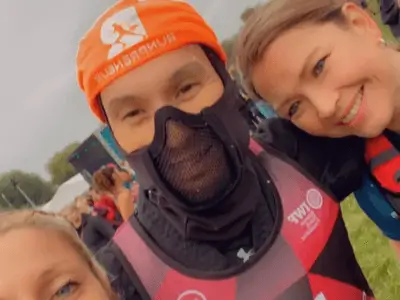
Kevin's 40,075km Challenge: Raising £1 Million for Children
Meet Kevin, a dedicated Runpreneur who embarked on an extraordinary journey to raise £1 million for children in need. Over the course of his 40,075km challenge, Kevin's unwavering determination and passion inspired thousands to join the Runpreneur movement.

Runpreneur Vlogging: Capturing Kevin's Journey
Experience the Runpreneur challenge through the lens of Kevin's video diary. Witness his ups and downs, the camaraderie of the community, and the transformative power of running for a cause. Dive into the visual stories that capture the essence of the Runpreneur movement.

Empowering Children, One Step at a Time
As Kevin logged every kilometre of his 40,075km challenge, the true purpose behind his journey came into focus. Each step, each bead of sweat, fuelled essential healthcare, education, and nutrition programs for children in need around the world.

The Transformative 4x4x48 Challenge
Experience the thrill and personal growth of our iconic 48-hour running event. Witness the determination and resilience of Runpreneurs as they push their limits, one mile at a time.

Runpreneur Vlogging: Capturing the Journey
Dive into the visual stories of our Runpreneurs as they document their experiences through engaging video logs. Witness the challenges, triumphs, and moments of camaraderie that define the Runpreneur spirit.

Becoming a Runpreneur: Join the Movement
Learn how you can become a Runpreneur and be part of this global community. Discover the steps to sign up, complete the challenge, and share your journey, all while making a lasting difference.
Connect With Us:



















I am on a mission to raise £1,000,000 for children's causes by daily run-vlogging barefoot-style, covering the total distance of a lap around the world—40,075 km.