
Runpreneur Journey Blog
Embark on an extraordinary journey with the Runpreneur community. Discover inspiring stories, insider tips, and the transformative power of our global challenge. From first-time runners to seasoned athletes, our blog captures the essence of the Runpreneur movement, inspiring others to join the cause.

How to Actually Make Yourself Feel Grateful Lessons From Day 2034 of Running Around the World
How to Actually Make Yourself Feel Grateful Lessons From Day 2034 of Running Around the World
Day 2034. I am out running in the cold this morning and I mean properly cold. My face is numb, my speech is slowing down, and I am trying to articulate something that has genuinely shifted the way I see my life this past year. Gratitude. Not the word. Not the concept that gets thrown around on social media posts with a sunrise and a motivational quote underneath. I mean the actual practice of it. The real, daily discipline of choosing to notice what you have rather than cataloguing what you have not.
Because here is the thing: saying "just be grateful" is about as useful as saying "just be happier." It tells you nothing about the mechanism. And for me, understanding the mechanism has been one of the most quietly significant things I have worked on in the last twelve months.
I am currently on day 2034 of a consecutive daily running streak in barefoot-style footwear. 20,340 kilometres covered so far. 19,735 kilometres still to go before I complete the equivalent of a lap of the world — 40,075 kilometres in total — raising £1 million for children's causes including Great Ormond Street Hospital and BBC Children in Need. I do not say that to impress anyone. I say it because a mission of that scale, sustained over more than five and a half years, requires a particular relationship with your own thinking. And gratitude is a significant part of that.
So. How do you actually make yourself feel it?
The first thing I have come to understand is that every situation in life carries both a positive and a negative side. Every single one. Even the situations that feel objectively terrible. I used the example this morning of losing someone close to you. Grief is real. The loss is real. But even within that, there is often something — maybe they are no longer suffering, maybe the legacy they left you is something you carry forward. I am not dismissing pain. I am saying that the mind tends to default to the negative interpretation of events, and most of us do not even notice that is a choice we are making. Shifting that focus, even slightly, changes what you experience.
The second thing that has genuinely reframed how I think came from reading Stephen Covey's Seven Habits of Highly Effective People. The 90/10 principle. The idea that 10 percent of what happens in your life is outside your control entirely — it just happens. But 90 percent of your life is determined by how you respond to that 10 percent. When I sat with that properly, it was striking. The vast majority of my experience is shaped not by what happens to me but by what I do with it. That is not a small thing. Compound that over weeks, months, years — the difference between responding positively and negatively to the unavoidable difficulties of life becomes enormous.
And then there is the comparison problem. We live now in a world where social media creates a curated version of reality. People share what they want you to see — usually the highlights, occasionally the extreme lows. What we rarely see is the ordinary middle ground, which is where most of life actually lives. And when we use those curated highlights as our benchmark, we measure our own lives against something that is not real. We end up feeling like we are behind, or less, or not enough. And that is a direct route to ingratitude.
The counter to that is not to avoid all comparison — it is to use realistic comparisons. I mentioned this morning a statistic that stuck with me around Christmas: approximately 5 percent of pensioners spend Christmas Day entirely alone. One in twenty. When I think about that alongside all the other people dealing with grief, illness, financial hardship, trauma — the proportion of people facing genuinely difficult circumstances at any given time is significant. I am not saying that to manufacture guilt. I am saying it because a realistic view of the world, rather than one built on social media highlights, actually makes it easier to recognise what you have. And to be genuinely grateful for it.
Health. Relationships. The ability to step outside and move. These things are not small, and they are not guaranteed. I know that from this streak. There have been mornings where everything in me wanted to stop — illness, injury, weather, exhaustion. And on those mornings, what has kept me moving is partly discipline, but partly something simpler: the knowledge that the children we are running for would give almost anything for the health and freedom I am choosing to use right now. That reframe works every time.
The gratitude ritual I operate each day is not complicated. It is simply a deliberate pause to acknowledge what is present and good, rather than defaulting to what is absent or difficult. Over time, that pause becomes a habit. And habits compound.
Living in the present matters here too. It is easy to be so focused on the future — on the 19,735 kilometres still ahead of me, on the £1 million target, on what comes next — that I miss the run I am actually on. The miles I am actually covering. But the future, when I get there, will be now. It will be the present. So the discipline of gratitude is really the discipline of presence. Of noticing where you actually are.
I am not suggesting any of this is easy or that a mindset shift resolves genuine hardship. But I do think that for many people — including a version of me from a few years ago — the gap between how life feels and how life actually is comes down to where attention is directed. And attention is trainable.
Day 2034. 20,340 kilometres covered. 19,735 to go. The mission continues, one run at a time. If you want to follow the journey or support the children's causes we are raising funds for, the links are below. Thank you for reading.
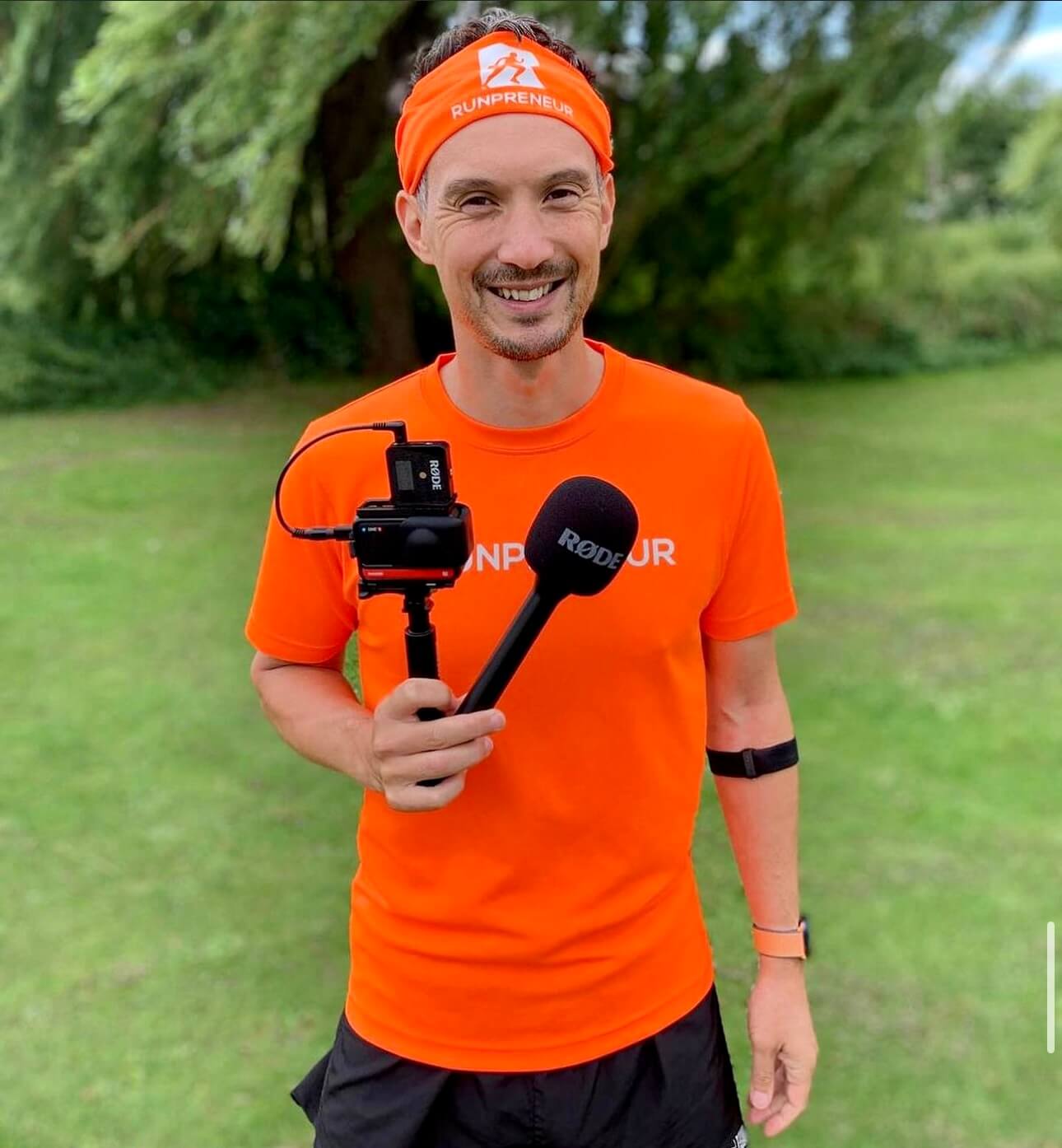
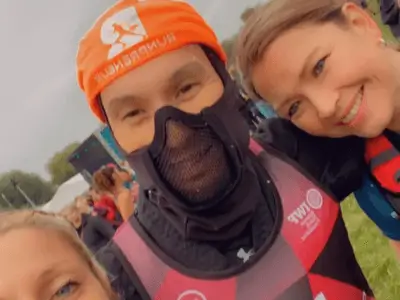
Kevin's 40,075km Challenge: Raising £1 Million for Children
Meet Kevin, a dedicated Runpreneur who embarked on an extraordinary journey to raise £1 million for children in need. Over the course of his 40,075km challenge, Kevin's unwavering determination and passion inspired thousands to join the Runpreneur movement.
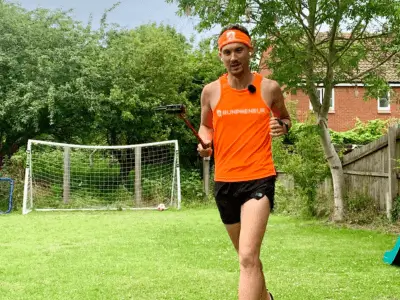
Runpreneur Vlogging: Capturing Kevin's Journey
Experience the Runpreneur challenge through the lens of Kevin's video diary. Witness his ups and downs, the camaraderie of the community, and the transformative power of running for a cause. Dive into the visual stories that capture the essence of the Runpreneur movement.

Empowering Children, One Step at a Time
As Kevin logged every kilometre of his 40,075km challenge, the true purpose behind his journey came into focus. Each step, each bead of sweat, fuelled essential healthcare, education, and nutrition programs for children in need around the world.
The Transformative 4x4x48 Challenge
Experience the thrill and personal growth of our iconic 48-hour running event. Witness the determination and resilience of Runpreneurs as they push their limits, one mile at a time.
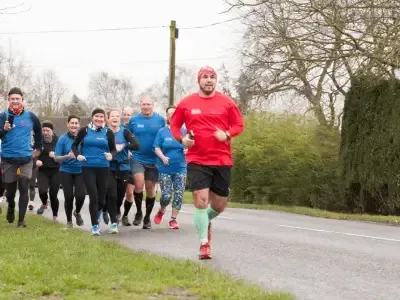
Runpreneur Vlogging: Capturing the Journey
Dive into the visual stories of our Runpreneurs as they document their experiences through engaging video logs. Witness the challenges, triumphs, and moments of camaraderie that define the Runpreneur spirit.
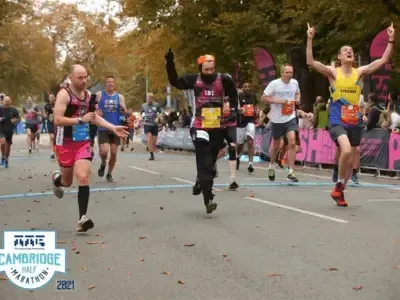
Becoming a Runpreneur: Join the Movement
Learn how you can become a Runpreneur and be part of this global community. Discover the steps to sign up, complete the challenge, and share your journey, all while making a lasting difference.
Connect With Us:



















I am on a mission to raise £1,000,000 for children's causes by daily run-vlogging barefoot-style, covering the total distance of a lap around the world—40,075 km.