
Runpreneur Journey Blog
Embark on an extraordinary journey with the Runpreneur community. Discover inspiring stories, insider tips, and the transformative power of our global challenge. From first-time runners to seasoned athletes, our blog captures the essence of the Runpreneur movement, inspiring others to join the cause.
Marketing Is a Numbers Game What Day 2051 Taught Me About Simplifying Lead Generation
Marketing Is a Numbers Game What Day 2051 Taught Me About Simplifying Lead Generation
I am not a natural marketer. I want to be completely honest about that from the outset, because I think too many people in business pretend otherwise. I understand the theory behind marketing strategies. I can follow the logic. But when it comes to the creative instinct that some people just seem to be born with the ability to craft a campaign that stops people mid-scroll that is not me. It never has been. And for a long time, that frustrated me more than almost anything else in running a business.
Today is Day 2051 of my consecutive daily running streak. I am 20,510km into a 40,075km mission to lap the world on foot, barefoot style, raising £1 million for children's causes including Great Ormond Street Hospital and BBC Children in Need. I have 19,565km left to cover. Every day I run, every episode I post, every person I reach matters because reach translates directly into funds raised, and funds raised translates directly into children's lives supported. Which means marketing is not optional for me. It is part of the mission.
So when I came across a piece of content from Daniel Priestley an entrepreneur I genuinely respect for his ability to simplify complex ideas it hit me in a way I did not expect. He made a straightforward observation. Even in some of his most successful businesses, they need more than 60 leads to generate a single sale. Sixty leads. One sale. When you hear that figure, your first instinct might be to call that a failure. But sit with it for a moment, because I think it is actually the most reassuring thing I have heard about marketing in years.
Here is what I took from it. If one of the sharpest marketing minds in the UK is working with conversion rates that low, then the reason most of us feel like we are failing at marketing is not because we are bad at it. It is because we are measuring ourselves against an unrealistic standard or worse, not measuring anything at all and just assuming we are doing it wrong.
What Priestley talks about is a framework he calls LAPS. Leads, Appointments, Presentations, Sales. It is a straightforward four-stage funnel, and the benchmarks he sets are equally straightforward. Around 20 percent of your leads should convert into appointments. Of those appointments, roughly 80 percent should actually show up to a presentation. And from those presentations, around 20 percent will buy. When you work backwards through those numbers, you quickly understand why 60 leads produces one sale. The maths is not broken. The maths is the reality of how buying decisions work.
What this framework gave me was something I have been looking for a long time permission to stop overcomplicating it. I tend towards procrastination when a task feels too complex or too far outside my natural ability. Marketing has always been that task for me. I would spend more time thinking about the strategy than actually executing it, and the result was predictably poor. Low output, low leads, low conversion.
But when I started looking at marketing as a measurement exercise rather than a creative exercise, something shifted. It is the same principle I apply to running. I do not need every run to be perfect. I do not need to be the fastest or the most technically gifted. What I need to do is show up every single day and track what is happening. Two thousand and fifty-one days in a row. That consistency is what moves me closer to 40,075km. The same logic applies to lead generation.
If I post consistently, if I offer something of genuine value, if I ask people to engage — even something as simple as commenting or sending a direct message in response to a clear offer — I will generate leads. Not always. Not in huge volumes. But consistently, over time, that flow builds. Then the job becomes converting those leads into conversations, those conversations into appointments, those appointments into presentations, and those presentations into sales. Track each stage. Adjust where the drop-off is greatest. Keep going.
The parallel to my running mission is not a forced one. It is genuinely the same operating principle. Forty thousand kilometres does not happen in a single run. It happens in 2,051 runs and counting, each one logged, each one building on the last. A million pounds raised for children does not come from one viral moment. It comes from consistent daily output, steady reach growth, and the compound effect of showing up when nobody is watching.
I think one of the most damaging things in business — and in fundraising — is the comparison trap. I look at marketers who produce genuinely creative, compelling content and I know I am not at their level. But comparing my conversion rates to their output without understanding their volume, their budget, their team, their tools — that comparison is meaningless. What matters is whether my numbers are moving in the right direction. Are more people finding out about this mission? Are more people choosing to support children's causes because of what I am doing? Those are my metrics.
The LAPS framework gave me a practical way to think about that. And it reminded me that simplicity, applied consistently, will always outperform complexity that never gets implemented.
So if you are a business owner, an entrepreneur, or someone who finds marketing genuinely overwhelming, I would offer this: stop comparing your output to experts and start measuring your own funnel. How many leads did you generate this week? How many of those became conversations? How many conversations became real opportunities? How many of those closed? Even rough answers to those four questions will tell you more about where to focus than any course, any strategy session, or any comparison to someone else's highlight reel.
That is what Day 2051 taught me. The run was the prompt. The reflection was the lesson. And tomorrow, Day 2052, I will go out and do it again — 10 more kilometres closer to 40,075.
If you want to follow the mission, subscribe to the channel, share what you find useful, and if you are able to, support the fundraiser. Every person who finds this content is another step towards raising £1 million for children who need it most.
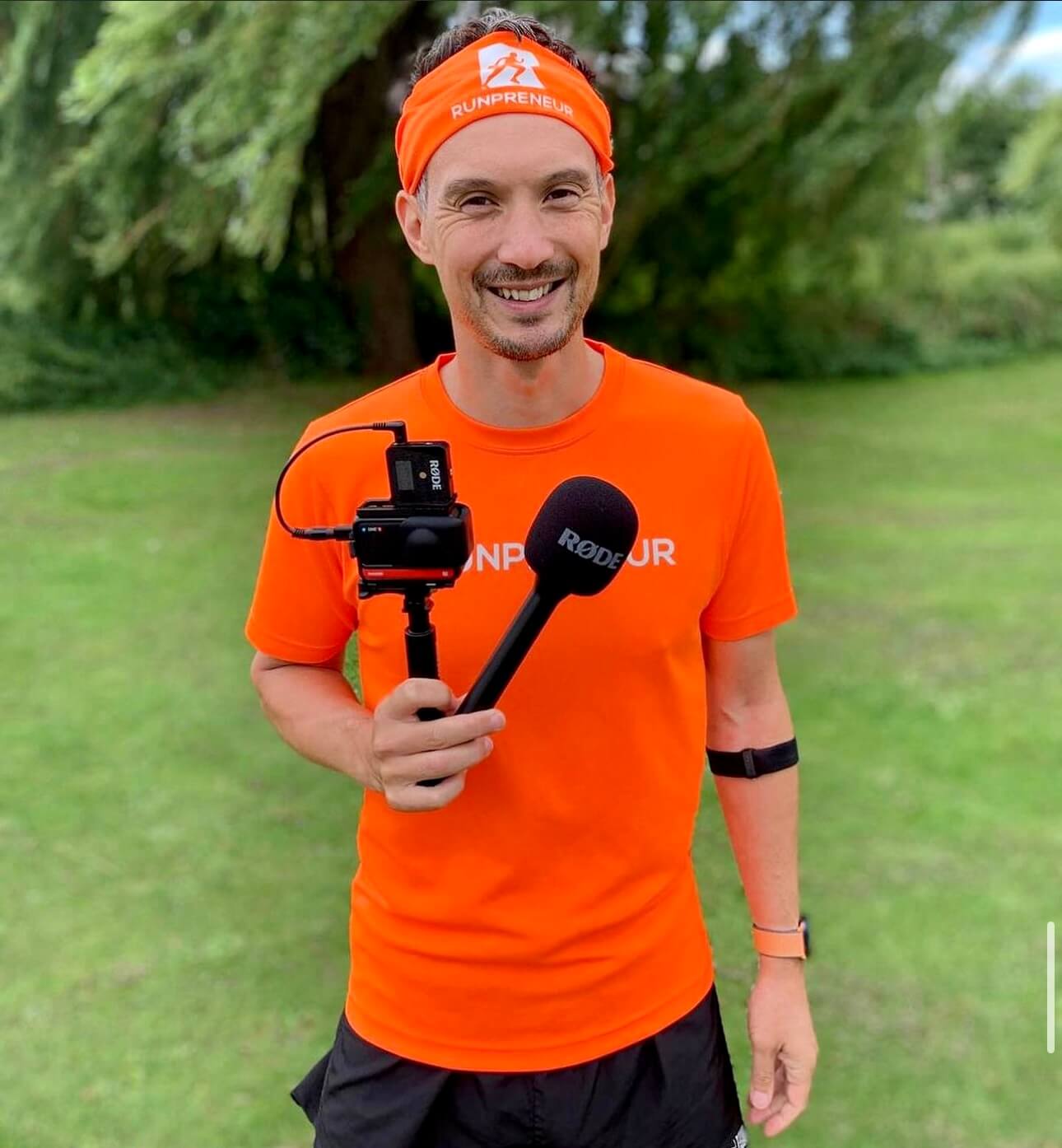
Kevin's 40,075km Challenge: Raising £1 Million for Children
Meet Kevin, a dedicated Runpreneur who embarked on an extraordinary journey to raise £1 million for children in need. Over the course of his 40,075km challenge, Kevin's unwavering determination and passion inspired thousands to join the Runpreneur movement.
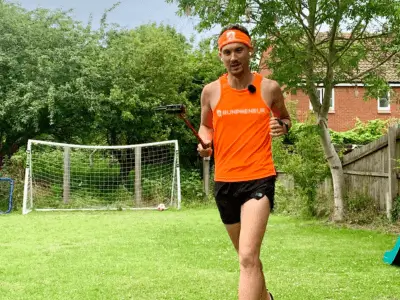
Runpreneur Vlogging: Capturing Kevin's Journey
Experience the Runpreneur challenge through the lens of Kevin's video diary. Witness his ups and downs, the camaraderie of the community, and the transformative power of running for a cause. Dive into the visual stories that capture the essence of the Runpreneur movement.

Empowering Children, One Step at a Time
As Kevin logged every kilometre of his 40,075km challenge, the true purpose behind his journey came into focus. Each step, each bead of sweat, fuelled essential healthcare, education, and nutrition programs for children in need around the world.
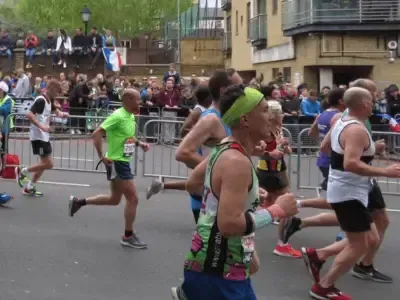
The Transformative 4x4x48 Challenge
Experience the thrill and personal growth of our iconic 48-hour running event. Witness the determination and resilience of Runpreneurs as they push their limits, one mile at a time.
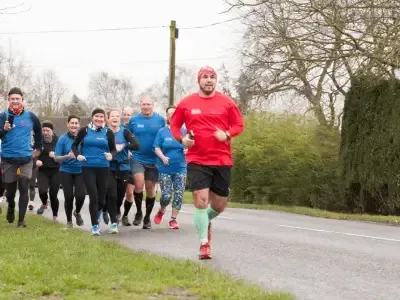
Runpreneur Vlogging: Capturing the Journey
Dive into the visual stories of our Runpreneurs as they document their experiences through engaging video logs. Witness the challenges, triumphs, and moments of camaraderie that define the Runpreneur spirit.
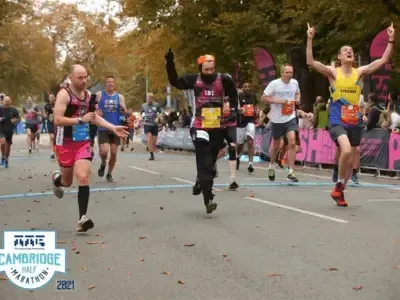
Becoming a Runpreneur: Join the Movement
Learn how you can become a Runpreneur and be part of this global community. Discover the steps to sign up, complete the challenge, and share your journey, all while making a lasting difference.
Connect With Us:



















I am on a mission to raise £1,000,000 for children's causes by daily run-vlogging barefoot-style, covering the total distance of a lap around the world—40,075 km.