
Runpreneur Journey Blog
Embark on an extraordinary journey with the Runpreneur community. Discover inspiring stories, insider tips, and the transformative power of our global challenge. From first-time runners to seasoned athletes, our blog captures the essence of the Runpreneur movement, inspiring others to join the cause.
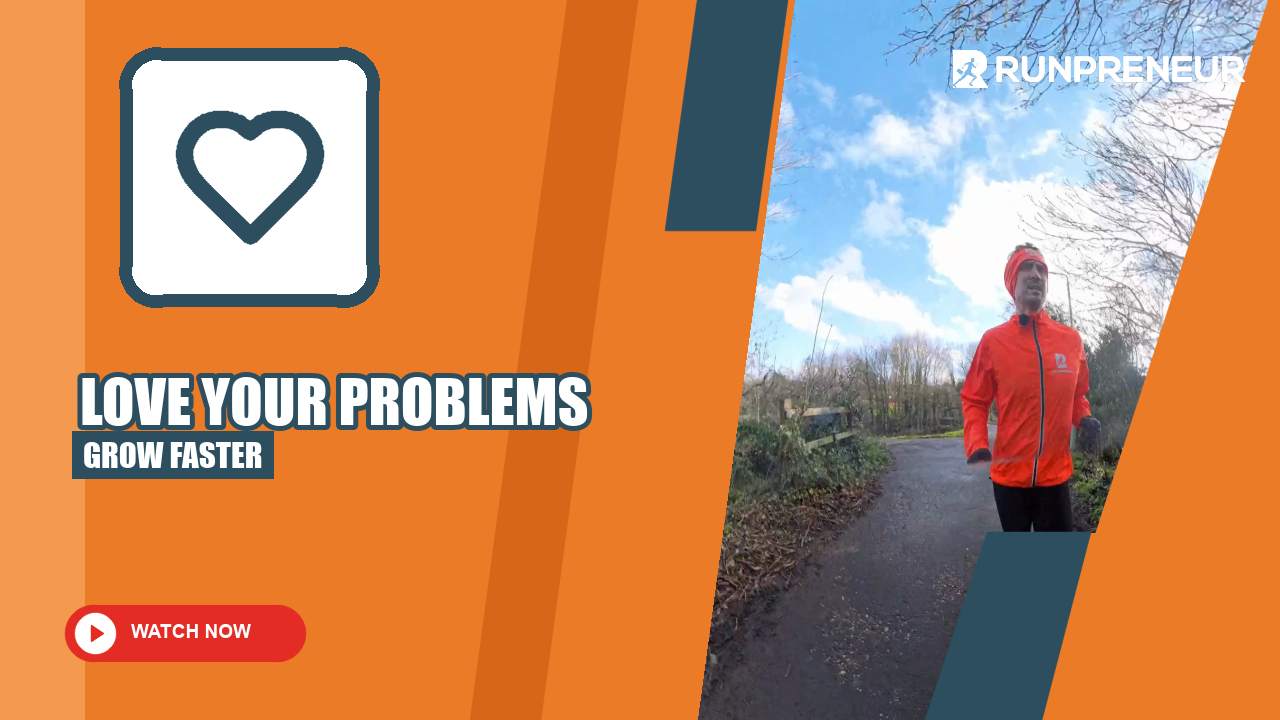
Learning to Love Problems: The OCHE Framework That Keeps Me Moving
Day 2060. 15,930.92km into a barefoot-style run around the world. 24,144.08km to go.
This morning, mid-run, my mind went to problems. Not any specific one. The reality of them. The fact they never stop arriving, no matter how well you prepare, no matter how disciplined your routine, no matter how clear your goals are.
Problems come. That is the deal.
I have been running every single day for 2,060 consecutive days. In that time the problems have been relentless. Injury scares. Difficult weather. Life complications landing at the worst moments. Nights where I have genuinely wondered whether the next morning would end the streak. And yet here I am. Still going. Still lacing up the Vibram FiveFingers. Still covering ground toward 40,075km and £1 million raised for children who need it most, including Great Ormond Street and BBC Children in Need.
The streak has taught me many things. One of the most practical is this: problems are not interruptions to the plan. They are the plan.
The emotional hit is real
When a problem arrives, my first response is not calm or philosophical. My first response is closer to: can I not get a break?
There is a low-level dread that lands. The world feels heavier than it did ten minutes earlier. I catastrophise. Sometimes I feel it physically.
If you know that feeling, you are not unusual.
And here is the distinction I have had to learn: the emotion itself is not the problem. The problem is when emotion becomes the decision-maker. Until I found a way to create a gap between the feeling and the response, problems were costing me far more than they needed to. Time. Energy. Mental clarity. All of it burned up in the emotional spiral before I had even started solving anything.
The OCHE framework
A few years ago I started using a framework I named OCHE, after the throwing line in darts. The oche is the line you stand behind when you aim at the board. Problem-solving works the same way. You are at a known position. The target is a solution. The framework is a four-step sequence I run through every time something goes wrong.
O is for Opportunity. Before anything else, ask: what is the opportunity here? Every problem contains one. A failing system points to a weak process. A difficult conversation points to a relationship needing attention. A physical setback on a run points to something about recovery or preparation. The problem is the signal. The opportunity is what the signal points toward. Reframing the problem this way is not wishful thinking. It is a deliberate shift that changes where your mind goes next.
C is for Control. Once I have reframed the problem as an opportunity, I ask: what is within my control? Not what I wish were controllable. Not what is making me anxious. What is genuinely within my reach right now? That list is almost always smaller than I expect, and almost always enough to act on. Focusing only on what I can influence stops me wasting energy on things I never had any say over to begin with.
H is for Have a plan. With the controllable elements identified, I build a plan around them only. Not a plan to solve everything at once. A plan addressing what I can address today. Forward motion, even small forward motion, breaks the spiral. The moment I have a next step, the problem loses some of its weight.
E is for Emotion. This is the step that changes everything. After going through O, C and H, I deliberately remove emotion from the situation. Not suppress it. Not pretend the feeling is not there. But at this stage in the process, emotion is not a useful input. Logic is. Evidence is. Action is. Following that sequence moves me from everything is falling apart to here is my next step in a fraction of the time it would otherwise take.
Parkinson's Law applied to problems
Most people know Parkinson's Law in the context of time: work expands to fill the time available. There is a broader version of the principle that applies to problems. The longer you live, the more problems you accumulate.
This is not pessimistic. It is accurate. A longer life means more decisions, more relationships, more responsibilities, more moving parts. More moving parts means more goes wrong. The person with no problems is either not paying attention or not doing anything of consequence.
The people who build things, lead things, raise children, run businesses, pursue goals worth pursuing: those people carry a lot of problems. Not because something is wrong with them. Because something is happening.
Once I accepted that fully, the emotional impact of a new problem arriving got smaller. Not gone. Smaller. Because the arrival of a problem stopped being a surprise and started being a confirmation: something is happening here, and this is part of the cost of doing it.
What this looks like over 2,060 days
I am 15,930.92km into a run around the world. 24,144.08km remains. Every single day I add to that total. Some days the running is straightforward. Most days, something adds friction. Across 2,060 consecutive days, I have had problems on the run that no amount of planning would have predicted. The OCHE framework has been the constant throughout.
The mission is not the distance alone. The mission is raising £1 million for children's causes. Great Ormond Street. BBC Children in Need. Children whose problems are not a framework exercise. They are a daily reality deserving real resources and real attention.
Running every day, in all weather, in barefoot-style footwear, is my way of staying accountable to that mission. The streak is the evidence that consistency, not intensity, builds distance over time.
Learning to work with problems rather than against their existence is a large part of what keeps that streak alive.
One takeaway
Problems are not the enemy of progress. They are the texture of it.
Use the OCHE framework if useful. Find your own if not. But stop treating problems as evidence something has gone wrong. They are evidence something is happening.
That is a better place to start from.
If this episode was useful, subscribe and share. The more people who see this vlog, the more we raise, and the more children's lives we change. That is why I show up every single day.
Watch the full episode: https://youtu.be/naMKHmExqco
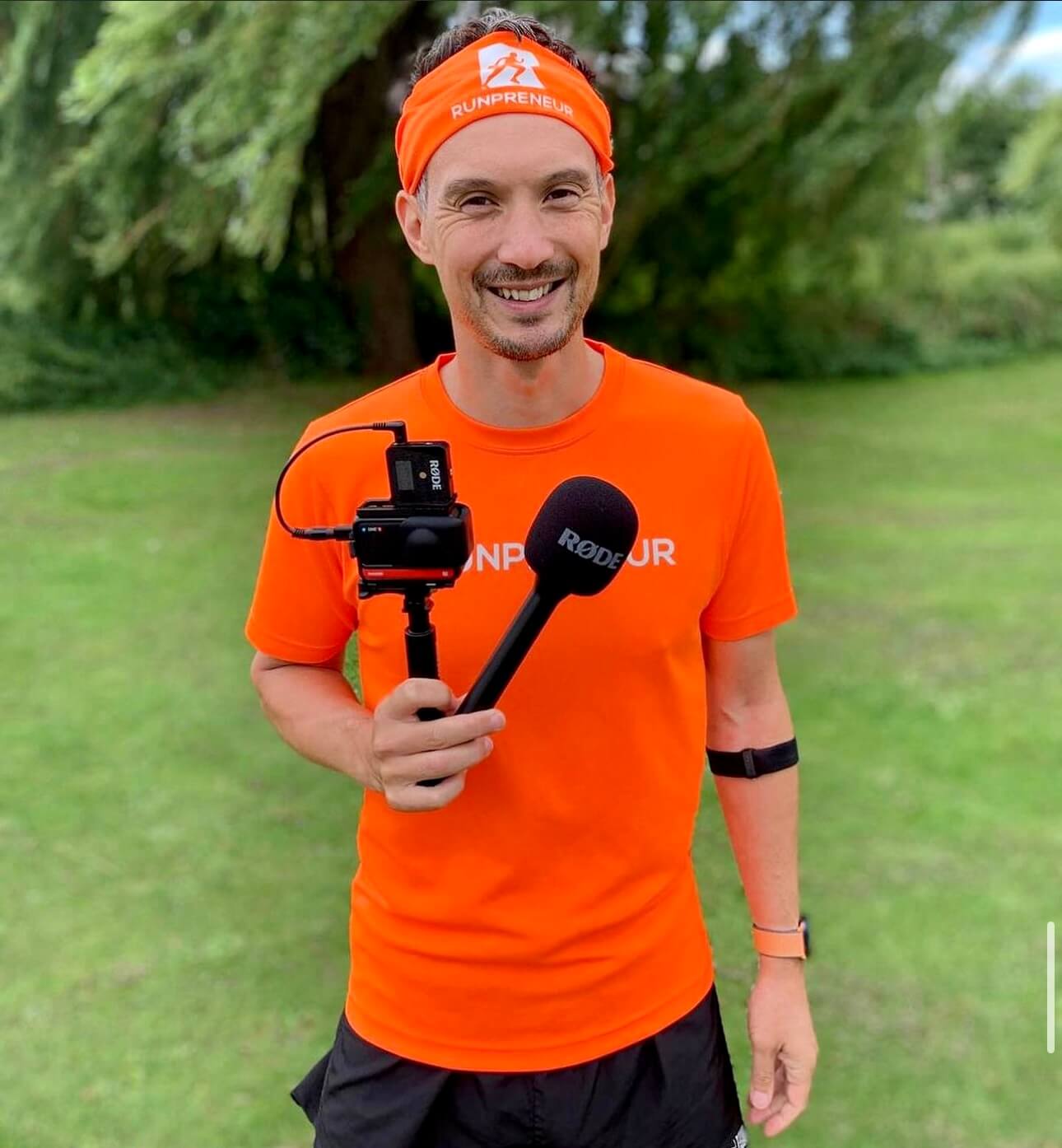
Kevin's 40,075km Challenge: Raising £1 Million for Children
Meet Kevin, a dedicated Runpreneur who embarked on an extraordinary journey to raise £1 million for children in need. Over the course of his 40,075km challenge, Kevin's unwavering determination and passion inspired thousands to join the Runpreneur movement.
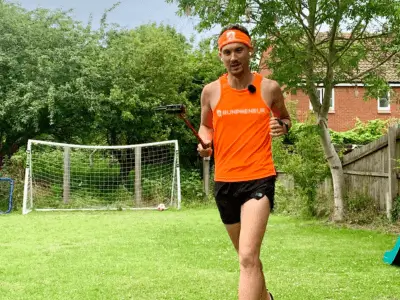
Runpreneur Vlogging: Capturing Kevin's Journey
Experience the Runpreneur challenge through the lens of Kevin's video diary. Witness his ups and downs, the camaraderie of the community, and the transformative power of running for a cause. Dive into the visual stories that capture the essence of the Runpreneur movement.

Empowering Children, One Step at a Time
As Kevin logged every kilometre of his 40,075km challenge, the true purpose behind his journey came into focus. Each step, each bead of sweat, fuelled essential healthcare, education, and nutrition programs for children in need around the world.
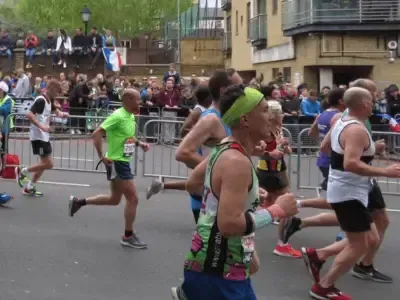
The Transformative 4x4x48 Challenge
Experience the thrill and personal growth of our iconic 48-hour running event. Witness the determination and resilience of Runpreneurs as they push their limits, one mile at a time.
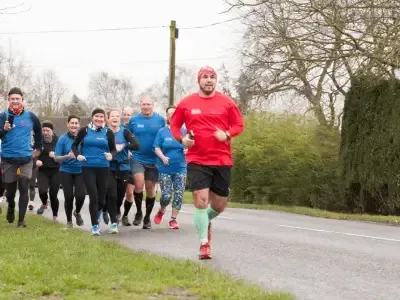
Runpreneur Vlogging: Capturing the Journey
Dive into the visual stories of our Runpreneurs as they document their experiences through engaging video logs. Witness the challenges, triumphs, and moments of camaraderie that define the Runpreneur spirit.
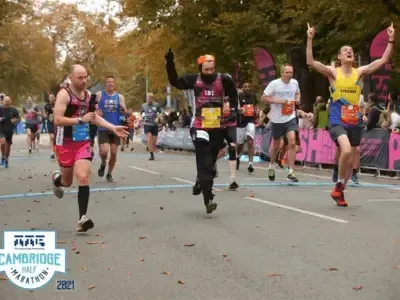
Becoming a Runpreneur: Join the Movement
Learn how you can become a Runpreneur and be part of this global community. Discover the steps to sign up, complete the challenge, and share your journey, all while making a lasting difference.
Connect With Us:



















I am on a mission to raise £1,000,000 for children's causes by daily run-vlogging barefoot-style, covering the total distance of a lap around the world—40,075 km.