
Runpreneur Journey Blog
Embark on an extraordinary journey with the Runpreneur community. Discover inspiring stories, insider tips, and the transformative power of our global challenge. From first-time runners to seasoned athletes, our blog captures the essence of the Runpreneur movement, inspiring others to join the cause.
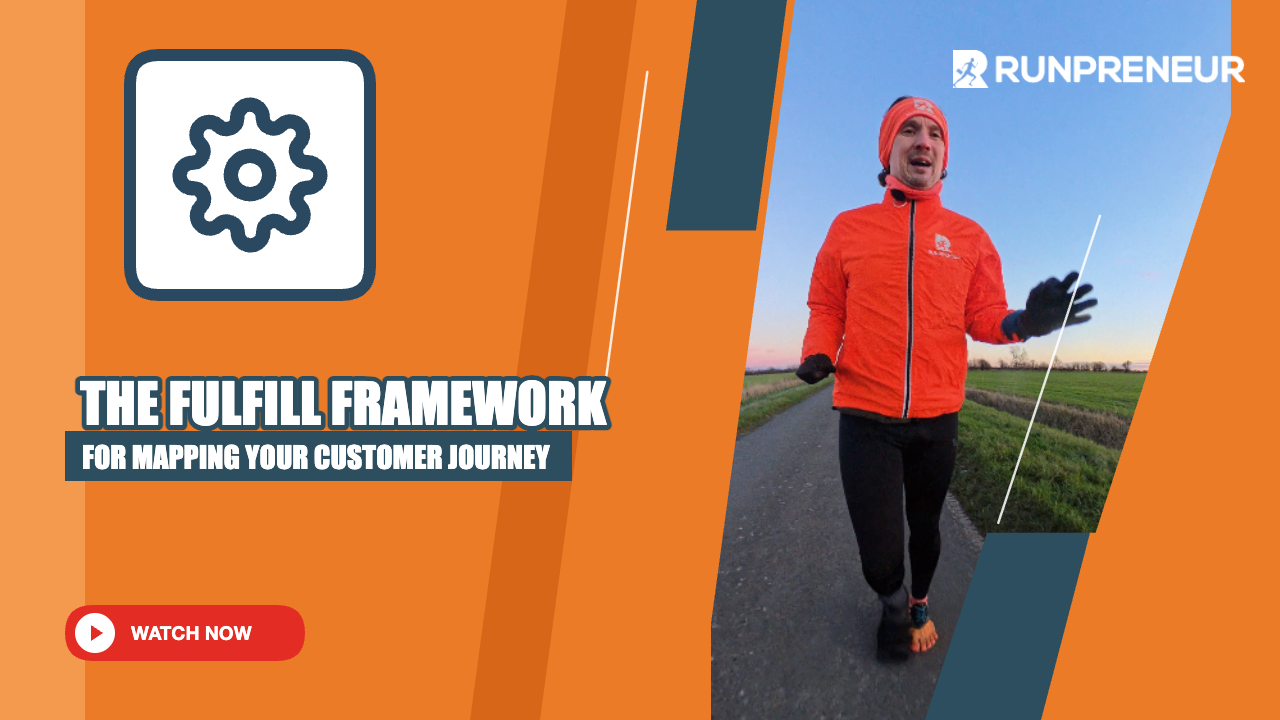
How to Systemise Your Business: Start With the Customer Journey and Your Main Method
How to Systemise Your Business: Start With the Customer Journey and Your Main Method
Day 2043. 20,430 kilometres into a barefoot-style running streak that will not stop until I've covered 40,075km a full lap of the world. Every single day I lace up my Vibram FiveFingers and go. And every single day I record what I'm thinking about, what I'm working on, and what I've learned.
Today's run was about systemisation. Specifically, where you actually start when you decide to build systems into your business.
I've been on this journey for a long time now. Getting the right people into the right seats, building processes that don't depend on me personally showing up and manually running everything, creating the kind of business that can operate independently. It matters to me because the more efficiently my businesses run, the more time and resource I can direct toward what this whole streak is actually about raising £1 million for children's causes, including Great Ormond Street Hospital and BBC Children in Need.
So systemisation isn't abstract for me. It has a direct connection to the mission.
Here's what I've learned about where to start.
When most people decide to systemise a business, they try to document everything at once. Every single task. Every peripheral process. Every bit of admin that keeps the lights on. And what happens? They spend months building a library of standard operating procedures that nobody reads, and they never actually feel the benefit. The whole thing stalls before it gets going.
The smarter approach and this is what I've tested and refined through my own businesses and through Operations Director is to focus first on the 20% of your business that generates 80% of the value. The 80/20 principle is well documented. What's less discussed is how to identify which 20% to go after in a business context.
For me, it comes down to two frameworks.
The first is universal. It applies to every business regardless of sector, size, or structure. It's the customer journey. I've built an acronym around this called FULFILL, and it maps the stages every customer moves through from the moment they first encounter you to the point where they're coming back repeatedly and referring others.
F is for Find and grab attention — how does your target market discover you?
U is for Understand and inquire — how do they learn what you do and take the first step?
L is for Lead to sale — what converts a warm lead into a paying customer?
F is for Finance received — how does the payment actually happen, and how frictionless is it?
I is for Initiate onboarding — what happens the moment someone becomes a customer?
L is for Launch delivery — how do you deliver what you promised?
L is for Loyalty programme — how do you keep them coming back and generate referrals?
Seven stages. That's the skeleton of every business. And once you map what actually happens at each of those stages, you can begin to identify the operational systems underneath them. Not all at once. Just the ones that matter most right now.
The second framework is unique to your business. It's what I call your main method the specific way you deliver your product or service. Your proven process. The thing that makes what you do distinctly yours. It should be five to ten steps maximum, ideally structured as a cycle rather than a one-way flow.
As an example, in Operations Director we use a process called OPTIMISE. It works through Objectives, Priorities, Team, Income, Main Method, Intelligence (which now incorporates AI and automation), Scoreboards, and Exit readiness. That's the framework we use with business owners to extract and document how their business actually works at its core.
The key insight here is this: you don't start by trying to document the whole business. You start by identifying the operational systems that sit underneath the FULFILL stages and your main method. For most businesses, that's somewhere between ten and twenty core systems. Not two hundred. Not fifty. Ten to twenty.
Once you've identified those, you build the standard operating procedures for those first. Get them documented, train your team on them, delegate them. That alone will take you 80% of the way toward a business that doesn't depend entirely on you.
The remaining 80% of your SOPs the bookkeeping processes, the peripheral admin, the compliance documentation those still need to exist. But they can be built over time at a far slower pace, because they don't carry the same weight in terms of operational impact.
I came to a lot of this through reading and following people who've done serious work in this space. Michael Gerber's E-Myth was the starting point for me the McDonald's principle, the idea that systems create consistent outcomes regardless of who's operating them. Dave Jenkins and his Systemology work gave me more practical implementation steps. John Lamerton's marginal gains philosophy improving by 1% a week and letting the compounding effects do the work shaped how I think about the pace of the journey. Sam Carpenter, Dan Martell I've consumed a lot in this space and taken what's useful from all of it.
But ultimately, what I keep coming back to is the same thing I come back to on every run. Start with the most important thing. Do it consistently. Build from there.
2043 consecutive days of running has not happened because I had a perfect plan from day one. It's happened because I kept identifying the next thing that mattered and doing it. 19,645 kilometres still to go. The mission continues. Every subscriber, every share, every engagement helps raise the visibility of what this is actually about and the more visible it becomes, the more we raise for the children who need it.
If you're thinking about systemising your business, I hope this has given you a clearer starting point. Two frameworks. Seven stages. Five to ten steps. Start there.
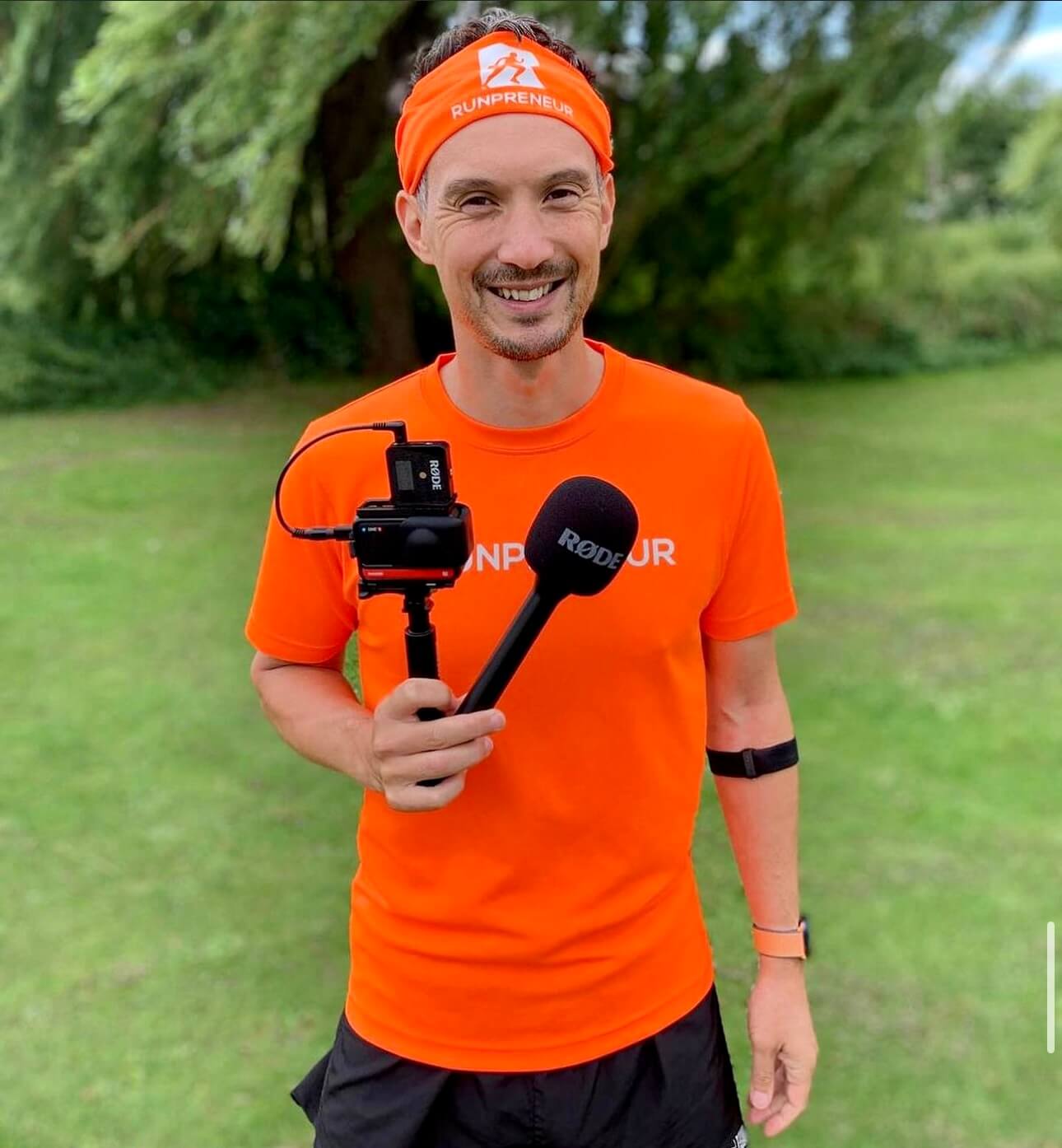
Kevin's 40,075km Challenge: Raising £1 Million for Children
Meet Kevin, a dedicated Runpreneur who embarked on an extraordinary journey to raise £1 million for children in need. Over the course of his 40,075km challenge, Kevin's unwavering determination and passion inspired thousands to join the Runpreneur movement.
Runpreneur Vlogging: Capturing Kevin's Journey
Experience the Runpreneur challenge through the lens of Kevin's video diary. Witness his ups and downs, the camaraderie of the community, and the transformative power of running for a cause. Dive into the visual stories that capture the essence of the Runpreneur movement.

Empowering Children, One Step at a Time
As Kevin logged every kilometre of his 40,075km challenge, the true purpose behind his journey came into focus. Each step, each bead of sweat, fuelled essential healthcare, education, and nutrition programs for children in need around the world.
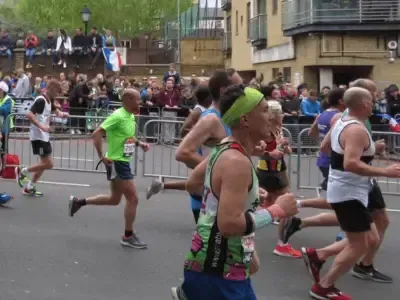
The Transformative 4x4x48 Challenge
Experience the thrill and personal growth of our iconic 48-hour running event. Witness the determination and resilience of Runpreneurs as they push their limits, one mile at a time.
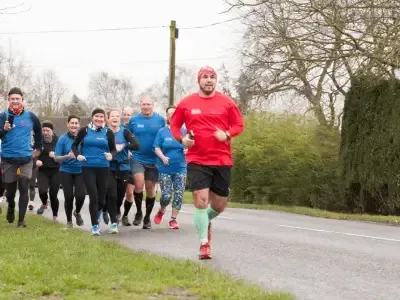
Runpreneur Vlogging: Capturing the Journey
Dive into the visual stories of our Runpreneurs as they document their experiences through engaging video logs. Witness the challenges, triumphs, and moments of camaraderie that define the Runpreneur spirit.
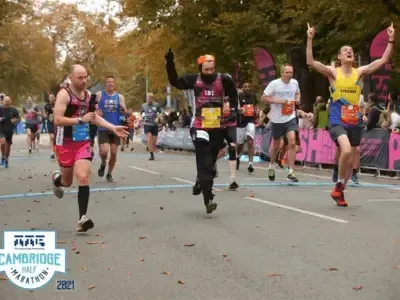
Becoming a Runpreneur: Join the Movement
Learn how you can become a Runpreneur and be part of this global community. Discover the steps to sign up, complete the challenge, and share your journey, all while making a lasting difference.
Connect With Us:



















I am on a mission to raise £1,000,000 for children's causes by daily run-vlogging barefoot-style, covering the total distance of a lap around the world—40,075 km.