
Runpreneur Journey Blog
Embark on an extraordinary journey with the Runpreneur community. Discover inspiring stories, insider tips, and the transformative power of our global challenge. From first-time runners to seasoned athletes, our blog captures the essence of the Runpreneur movement, inspiring others to join the cause.
How to Build a Vision Board Using AI Tools - Lessons from Day 2047 of My Running Streak
How to Build a Vision Board Using AI Tools - Lessons from Day 2047 of My Running Streak
I have never been someone who cuts pictures out of magazines and sticks them to a cork board. That whole process always felt like a lot of effort for something I was not convinced would actually move the needle. So for years, I dismissed vision boards entirely. Too fiddly. Too abstract. Not really for me.
Then things changed. Not because I had some sudden revelation, but because the tools available to create them changed so dramatically that the friction disappeared. And once the friction disappeared, I gave it a proper go. What happened next surprised me.
Today is Day 2047 of my consecutive daily running streak. I have covered 20,470 kilometres in barefoot-style footwear as part of my attempt to run the equivalent of a lap of the world 40,075 kilometres to raise £1 million for children's causes, including Great Ormond Street Hospital and BBC Children in Need. There are 19,605 kilometres still to go. That is not a small number. And keeping that kind of long-range goal alive in your daily awareness, without it becoming overwhelming, is something I think about a great deal.
That is exactly where vision boards come in. And more specifically, where building a vision board using AI tools has made a genuine difference to how I plan and track progress.
Let me explain how I actually use them.
The old approach to vision boards required physical materials, time, and a level of creative effort that most people myself included were unlikely to sustain. The newer approach, using AI image generation tools, removes almost all of that. I use a combination of Gemini as a language model and Nano Banana as the image generation layer. Together, they allow me to describe what I want to achieve visually, specifically, in plain language and produce a clean, well-designed digital image that represents those goals.
The key is in the prompting. Early AI image generation was unreliable, especially when you tried to combine images with readable text. That has improved considerably, but it still takes a bit of iteration to get right. What I found works well is using Gemini to help me refine my descriptions, generate the individual visual elements of each goal, and then once I have an output I am happy with, I ask Gemini to write me a single consolidated prompt that would reproduce that result in one go. I then turn that into a custom AI agent. From that point forward, updating or regenerating my vision board takes minutes rather than hours.
That matters. Because the value of a vision board is not in the creation it is in the repeated exposure.
I keep my vision board as a screensaver on my MacBook. Every time I step away from my desk and come back, there it is. Not as a reminder that I have set some aspirational goals. As a quiet, consistent prompt to my subconscious about what I am working towards. There is real evidence behind this. Visual cues that sit within your regular environment keep your objectives in the foreground of your thinking, even when you are not consciously focused on them. Your brain works on problems in the background. Give it something to work on.
What I have also built in and this is the part that has made the biggest practical difference — is a visual progress mechanism. Every time I achieve one of the goals on my board, I ask the AI agent to regenerate the image with a tick over that item. It sounds simple. It is simple. But seeing completed goals marked off on something you look at every day is genuinely motivating in a grounded, factual way. It is not celebration for its own sake. It is evidence that the process is working.
My youngest son now has his own vision board, built the same way. My eldest is working on one. Colleagues have started doing the same. When something practical and useful spreads like that, without me pushing it, I take that as a reasonable signal that it is worth sharing more widely.
Now, why am I talking about this on a running vlog?
Because the same principle that makes vision boards effective is the same principle behind what I do every single day on this streak. Consistency of intention. Repeated exposure to the goal. Small, daily actions that accumulate into something significant over time. I am not running 40,075 kilometres in a week. I am running every single day, covering ground steadily, marking progress, and staying anchored to the reason I started.
The vision board is the same logic applied to your broader goals. You are not achieving everything on it tomorrow. You are keeping it in front of you, thinking about it regularly, making small decisions each day that gradually move you towards it. That is the mechanism. It is not mystical. It is just consistent, intentional attention directed towards things that matter to you.
For me, one of those things the biggest of them is the £1 million fundraising goal for children's causes. Every kilometre I run, every episode I publish, every person who subscribes or shares this content brings that goal closer. The more people I reach, the more money we raise. The more money we raise, the more children's lives we can support.
If you are thinking about building a vision board and not sure where to start, my suggestion is this. Write down the five to ten things you genuinely want to achieve in the next twelve months. Be specific. Then use Gemini with a Nano Banana integration and describe each goal clearly. Iterate until the images reflect what you actually mean. Ask Gemini to consolidate that into a master prompt. Save it as a custom agent. Set the final image as your laptop screensaver. Look at it every day. Update it when you achieve something.
That is it. No cork boards. No magazine cutouts. No hour-long craft projects on a Sunday afternoon.
The tools are better now. Use them.
If you have found this useful or have questions about how I set mine up, drop a comment below. And if you believe in what I am doing running every day, barefoot-style, towards a lap of the world, for children who need it please subscribe, share, and keep watching. Every view genuinely matters.
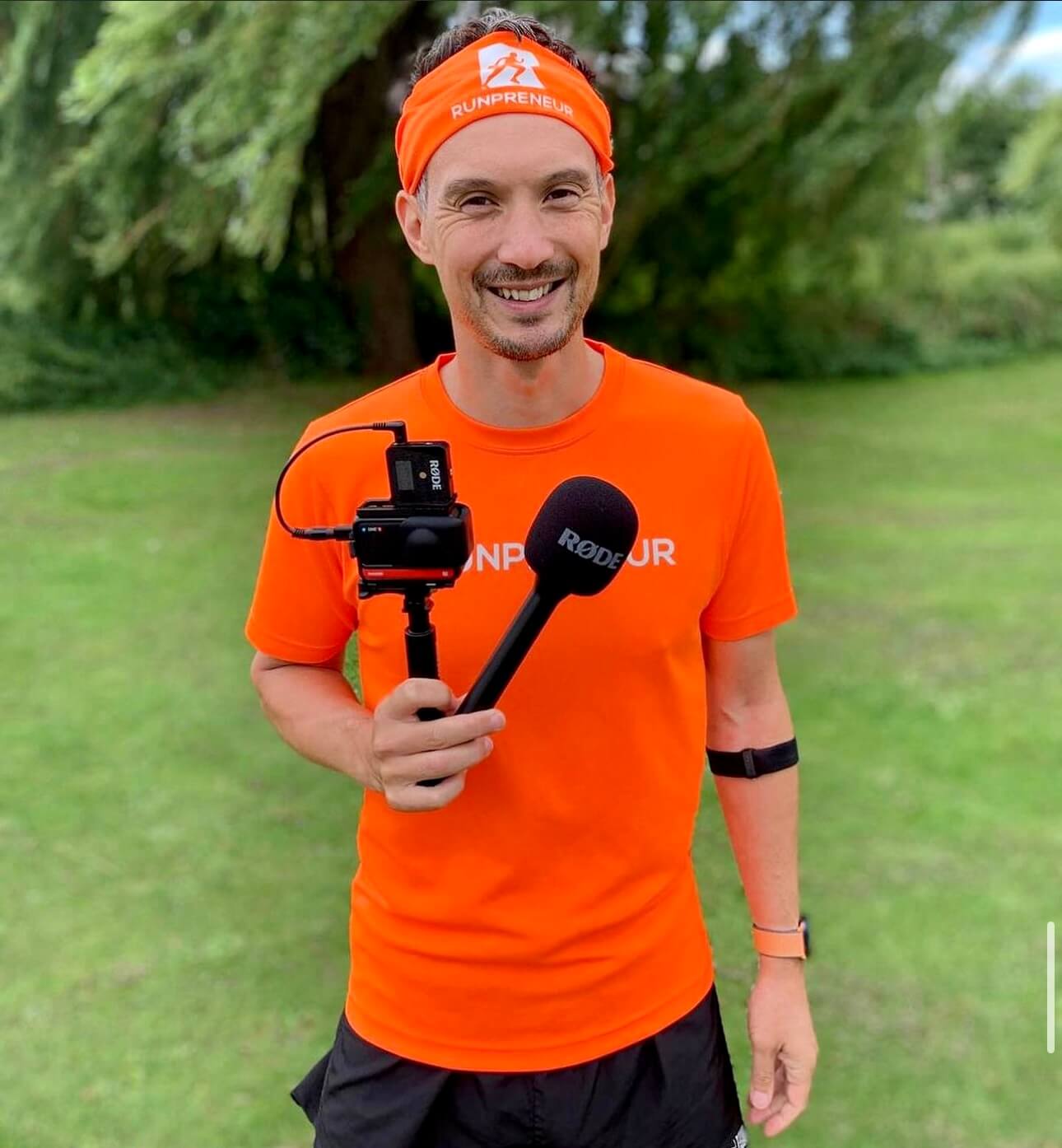
Kevin's 40,075km Challenge: Raising £1 Million for Children
Meet Kevin, a dedicated Runpreneur who embarked on an extraordinary journey to raise £1 million for children in need. Over the course of his 40,075km challenge, Kevin's unwavering determination and passion inspired thousands to join the Runpreneur movement.
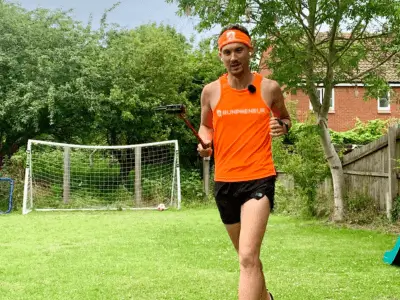
Runpreneur Vlogging: Capturing Kevin's Journey
Experience the Runpreneur challenge through the lens of Kevin's video diary. Witness his ups and downs, the camaraderie of the community, and the transformative power of running for a cause. Dive into the visual stories that capture the essence of the Runpreneur movement.
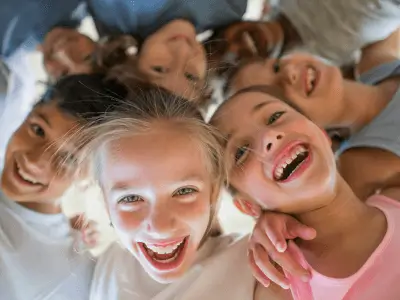
Empowering Children, One Step at a Time
As Kevin logged every kilometre of his 40,075km challenge, the true purpose behind his journey came into focus. Each step, each bead of sweat, fuelled essential healthcare, education, and nutrition programs for children in need around the world.
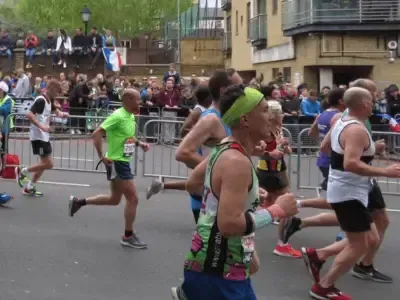
The Transformative 4x4x48 Challenge
Experience the thrill and personal growth of our iconic 48-hour running event. Witness the determination and resilience of Runpreneurs as they push their limits, one mile at a time.
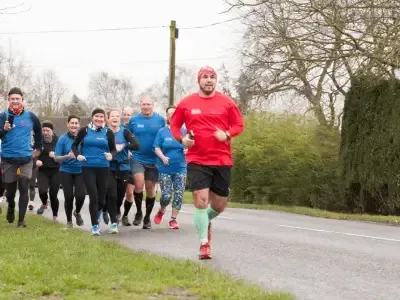
Runpreneur Vlogging: Capturing the Journey
Dive into the visual stories of our Runpreneurs as they document their experiences through engaging video logs. Witness the challenges, triumphs, and moments of camaraderie that define the Runpreneur spirit.
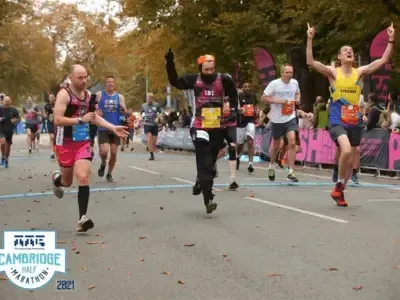
Becoming a Runpreneur: Join the Movement
Learn how you can become a Runpreneur and be part of this global community. Discover the steps to sign up, complete the challenge, and share your journey, all while making a lasting difference.
Connect With Us:















I am on a mission to raise £1,000,000 for children's causes by daily run-vlogging barefoot-style, covering the total distance of a lap around the world—40,075 km.