
Runpreneur Journey Blog
Embark on an extraordinary journey with the Runpreneur community. Discover inspiring stories, insider tips, and the transformative power of our global challenge. From first-time runners to seasoned athletes, our blog captures the essence of the Runpreneur movement, inspiring others to join the cause.

How I Use Gaming to Beat Procrastination — Lessons from Day 2024 of My Running Streak
How I Use Gaming to Beat Procrastination — Lessons from Day 2024 of My Running Streak
I am on day 2024 of a consecutive daily running streak. I have covered 20,240km in barefoot-style footwear. I still have 19,835km left to run to complete the equivalent of one lap of the earth. And somewhere in between the miles, the early mornings, the tired legs, and the long working days, I have had to figure out how to actually get things done.
Today I want to talk about something that might surprise you. Gaming.
Not the twelve-hour binge kind. Not the escape-from-everything kind. I am talking about using gaming deliberately, specifically, and in a measured way, as a tool to interrupt procrastination and get yourself back into a productive state of mind.
Let me give you some context first.
I run every single day. That is not negotiable. The streak is the streak. But running is only one part of what I do. I am also building businesses, managing investments, developing systems, and working towards raising £1 million for children's causes — including Great Ormond Street Hospital and BBC Children in Need. That means there are days when I sit down to work and my brain simply does not cooperate. I stare at a task. I move it around. I open a browser tab I do not need. I make a cup of tea I do not want. Sound familiar?
That is procrastination. And for years, I treated it as a personal failing. Something to push through by sheer willpower. What I have come to understand, though, is that procrastination is usually a signal — not a character flaw. It is often telling me that my mind needs a small, structured reset before it can engage properly with something demanding.
That is where gaming comes in. And I want to be precise about what I mean, because this is not a licence to disappear into a game for three hours and call it productivity.
I use puzzle games. Short, contained, mentally engaging puzzle games. The kind where each round takes two to five minutes and has a clear beginning and end. That boundary is everything. When I notice I am procrastinating on a piece of work — genuinely stuck, not just avoiding something I do not want to do — I will deliberately pick up a puzzle game and play one round. Sometimes one is enough. I finish it, I feel a small sense of completion, and my brain resets enough to go back to the task.
Other times, I need more. I might do two, three, or even four or five puzzles before I feel ready to re-engage. I have found that somewhere between one and four puzzles — roughly five to twenty minutes — is usually the right window for me. It is not a rigid rule. It depends on how deep the procrastination is and how mentally demanding the work ahead of it is.
The reason puzzle games work, rather than other types of gaming, comes down to structure. A puzzle has a stopping point built in. You finish the puzzle, and you stop. You do not have a storyline pulling you forward. You do not have a character whose next chapter you need to reach. You have a puzzle, and then you have a gap, and in that gap you make the decision to stop or continue. That choice stays with you. You are still in control.
Open-ended games, story-driven games — these are much harder to put down. The design of those games is specifically built to make you want to keep going. That is not what I am looking for when I am trying to interrupt procrastination. I am not looking for immersion. I am looking for a brief, structured mental break that still keeps part of my brain engaged without pulling me fully out of my working day.
Now, I want to be honest here. This approach is not for everyone, and it is not always the right tool. If you find that one puzzle becomes ten, or that gaming is something you already use to avoid difficult things rather than to reset between them, then this particular technique is not going to serve you. You need to know yourself well enough to be honest about which category you fall into.
For me, it works because I have enough self-awareness and enough structure in my day to use it with intention. The same way I approach my daily run — not because I feel like it every single day, but because I have a system and a commitment, and I show up inside that system — I approach procrastination with a system too. When the signal comes, I respond to it in a measured way, and then I return to the work.
And I think there is a broader lesson in that which connects to everything I am doing with this streak and this mission.
Consistency is not the absence of difficulty. It is having a response ready for when difficulty arrives. I have been running every day for 2024 consecutive days. There have been days when my body did not want to go. Days when the weather was against me. Days when life was heavy and going out felt impossible. But because I have a system, I go anyway. The system does the deciding, not the mood.
Procrastination is a mood. It is not a permanent state. And if you have a small, repeatable tool to interrupt it — whether that is a puzzle game, a five-minute walk, a breathing exercise, or something else entirely — you stop waiting to feel ready and you start returning to the work instead.
I have 19,835km left to run to complete this lap of the world. I have a £1 million fundraising target for children who need support far more than I need motivation. Neither of those goals has room for indefinite procrastination. They need consistent, daily forward movement. And so I use whatever honest, grounded tools help me show up for the work.
Today, that included a few puzzles. Tomorrow, it will be the run again first. And the day after that, both.
That is how this gets done.
If you want to follow the journey, watch the full episode for day 2024, and if you are in a position to support the fundraising mission for Great Ormond Street and BBC Children in Need, the link is in the description. Every contribution counts, and every kilometre is run with those children in mind.
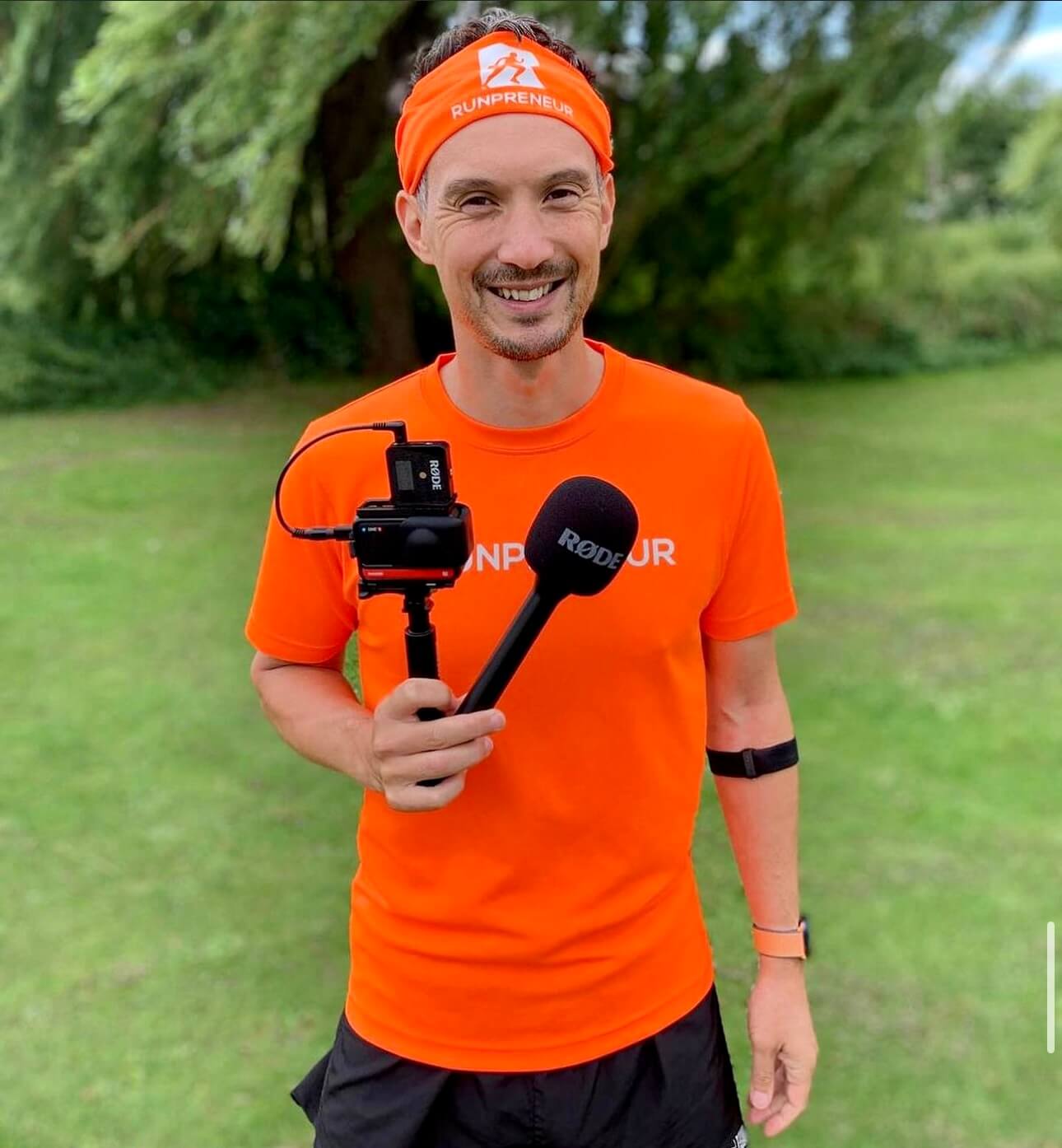
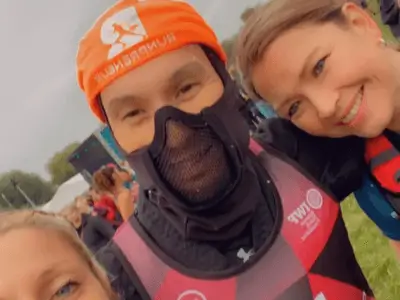
Kevin's 40,075km Challenge: Raising £1 Million for Children
Meet Kevin, a dedicated Runpreneur who embarked on an extraordinary journey to raise £1 million for children in need. Over the course of his 40,075km challenge, Kevin's unwavering determination and passion inspired thousands to join the Runpreneur movement.
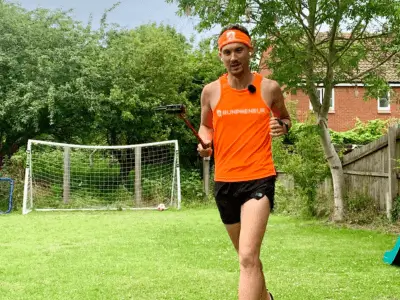
Runpreneur Vlogging: Capturing Kevin's Journey
Experience the Runpreneur challenge through the lens of Kevin's video diary. Witness his ups and downs, the camaraderie of the community, and the transformative power of running for a cause. Dive into the visual stories that capture the essence of the Runpreneur movement.

Empowering Children, One Step at a Time
As Kevin logged every kilometre of his 40,075km challenge, the true purpose behind his journey came into focus. Each step, each bead of sweat, fuelled essential healthcare, education, and nutrition programs for children in need around the world.
The Transformative 4x4x48 Challenge
Experience the thrill and personal growth of our iconic 48-hour running event. Witness the determination and resilience of Runpreneurs as they push their limits, one mile at a time.
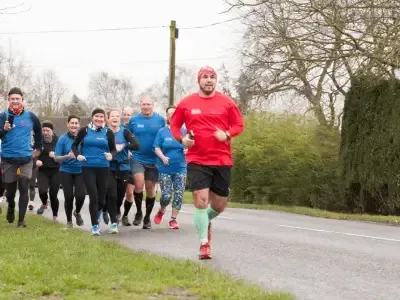
Runpreneur Vlogging: Capturing the Journey
Dive into the visual stories of our Runpreneurs as they document their experiences through engaging video logs. Witness the challenges, triumphs, and moments of camaraderie that define the Runpreneur spirit.
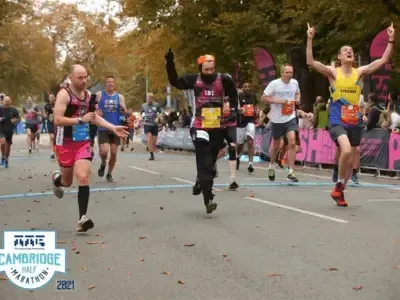
Becoming a Runpreneur: Join the Movement
Learn how you can become a Runpreneur and be part of this global community. Discover the steps to sign up, complete the challenge, and share your journey, all while making a lasting difference.
Connect With Us:



















I am on a mission to raise £1,000,000 for children's causes by daily run-vlogging barefoot-style, covering the total distance of a lap around the world—40,075 km.