
Runpreneur Journey Blog
Embark on an extraordinary journey with the Runpreneur community. Discover inspiring stories, insider tips, and the transformative power of our global challenge. From first-time runners to seasoned athletes, our blog captures the essence of the Runpreneur movement, inspiring others to join the cause.

How I Capture and Action Learning While Running 20,000km Into a World Lap Streak
How I Capture and Action Learning While Running 20,000km Into a World Lap Streak
Day 2033. I am 20,330km into a goal to run 40,075km a full lap of the world in barefoot-style footwear, one day at a time. That leaves 19,745km still to go. And almost every single one of those kilometres has been spent learning.
Not just moving. Learning.
I do the vast majority of my personal development reading, podcast listening, and educational content consumption while I run. That is not a flex. It is simply how my day works. The run happens every day without exception. The time is there. So the question became: how do I make that time count beyond the physical kilometres?
For a long time, the honest answer was: not very well.
I would finish a run having listened to something genuinely useful a chapter of a book, an episode of a podcast, an idea that felt important and by the time I had cooled down, eaten, and moved into the rest of my day, most of it had gone. Not all of it. Some things stick. But the actionable, specific insight I had heard forty minutes into a run? Usually lost.
That bothered me. Because the whole point of consuming educational content is to do something with it. Reading and listening are inputs. What matters is the output the action, the implementation, the change in behaviour or thinking. If none of that happens, you have had an enjoyable experience, but you have not really learned anything in any meaningful sense.
So I built a system. Two parts. Both simple. Both genuinely changed how I operate.
The first part is real-time capture.
When I run, I do not carry my phone. I have my Apple Watch, my AirPods, and the route. That is it. I built a simple shortcut in the Apple ecosystem that I can trigger from my watch with a single button press. When I press it, whatever I am listening to pauses, and I can speak directly into my AirPods. My voice is captured as a note, and that note is automatically routed into Airtable, which is my business operating system.
This means that the moment I hear something useful a concept, a stat, a question I want to explore, an action I want to take I can capture it in under ten seconds without stopping, without fumbling with a phone, and without breaking the run. The note sits in Airtable waiting for me. When I get back, it is there. It does not rely on my memory. It does not get lost in a notes app I forget to check. It goes directly into the system where I actually manage my work.
The principle behind this is straightforward. The gap between insight and action is almost always time. The longer the gap, the less likely the action becomes. If I can close that gap to near zero — capturing the thought the moment it arrives I dramatically increase the chance that something useful actually happens as a result of what I heard.
This matters to me personally because I am running this streak alongside running two businesses, investing in property, and doing everything I can to build toward raising £1 million for children's causes including Great Ormond Street Hospital and BBC Children in Need. There is no slack in the day. If I am going to give time to learning, it needs to convert into something real.
The second part is the knowledge base.
I use Google Workspace for my businesses, and within that there is an AI tool called NotebookLM. The concept is simple: you create a notebook, you upload everything relevant to a particular book, author, course, or podcast transcripts, PDFs, notes, links and the AI can then find answers, surface relevant information, and help you interrogate what you have already consumed.
So rather than trying to hold everything in my head, or hunting back through a book I read eight months ago, I can ask a question and get a relevant answer drawn from the material I have already gathered. The knowledge compounds over time. Each book, each podcast, each piece of content I engage with becomes part of a growing, searchable resource I actually use.
A lot of people treat personal development content as something you consume. You read the book, you feel inspired, you move on. The library looks impressive. The change is minimal. What I am trying to do instead is treat it as something you build with. Every piece of content is raw material. The system turns that raw material into something you can return to, act on, and build from.
I am not saying this is the only way. I am saying it is the way that has worked for me, running daily since before Day 1 of what eventually became a 2,033-day consecutive streak. When you are covering 10km a day in Vibram FiveFingers on roads, pavements, and trails, you have time. The question is always what you do with it.
The parallel to the wider mission is not subtle. Running 40,075km a full equatorial circumference is not something you do in a moment of inspiration. It is something that happens one consistent day at a time, over years, without skipping. Learning is the same. One consistent day at a time, captured properly, actioned deliberately, built into a system that does not rely on motivation or memory.
19,745km remain. That is a long way. There is a lot more road, a lot more listening, and if the system holds a lot more implementation still to come.
If you are consuming a lot of educational content and not doing much with it, the problem is probably not the content. It is the gap between hearing something useful and doing something about it. Closing that gap is a process problem, not a willpower problem. Build the system. The results follow.
The run continues.
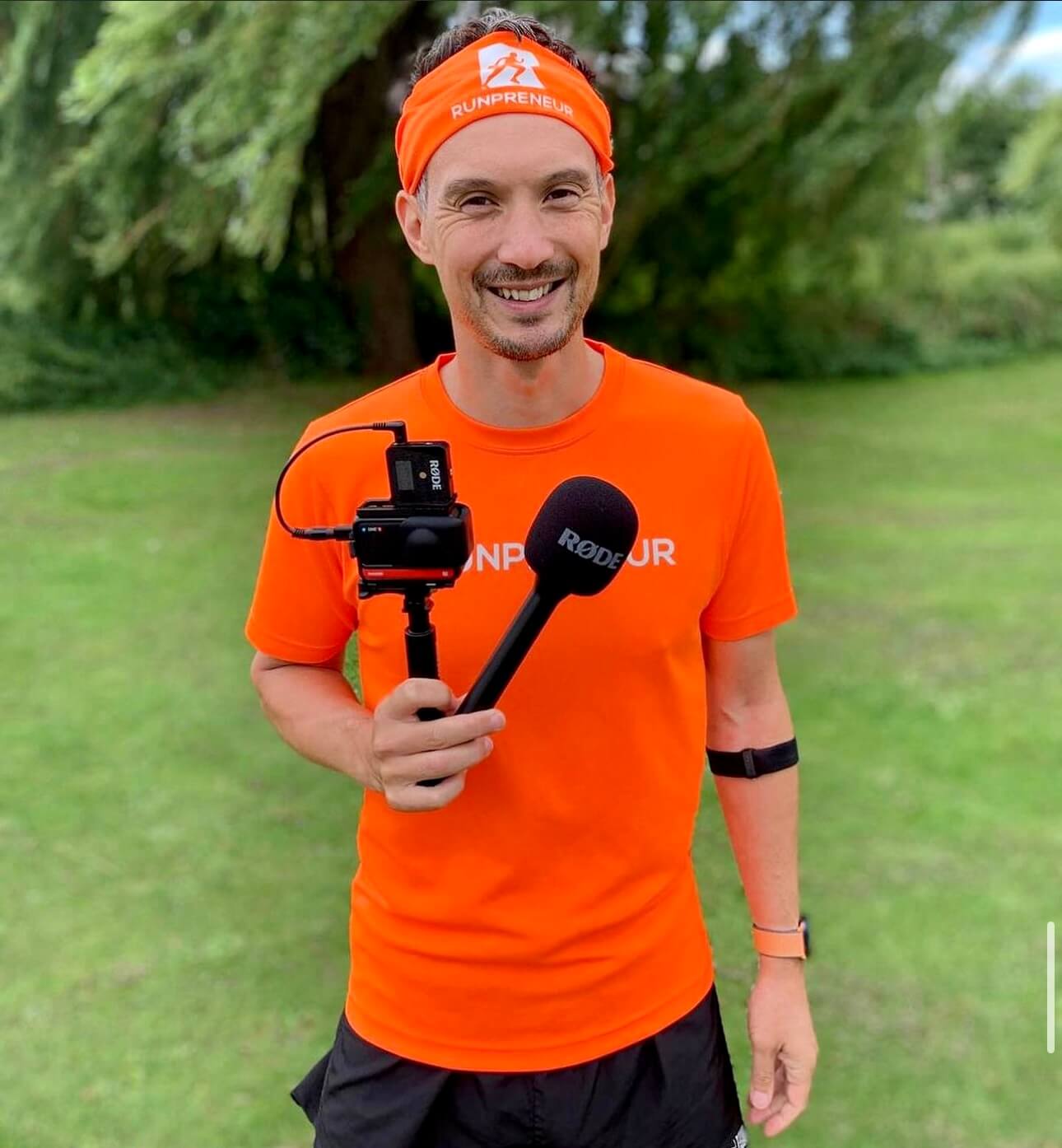
Kevin's 40,075km Challenge: Raising £1 Million for Children
Meet Kevin, a dedicated Runpreneur who embarked on an extraordinary journey to raise £1 million for children in need. Over the course of his 40,075km challenge, Kevin's unwavering determination and passion inspired thousands to join the Runpreneur movement.
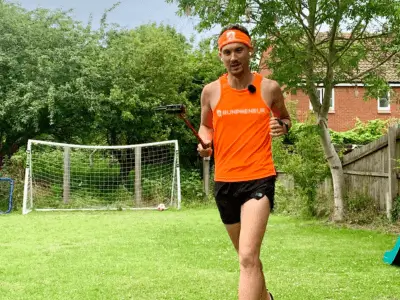
Runpreneur Vlogging: Capturing Kevin's Journey
Experience the Runpreneur challenge through the lens of Kevin's video diary. Witness his ups and downs, the camaraderie of the community, and the transformative power of running for a cause. Dive into the visual stories that capture the essence of the Runpreneur movement.

Empowering Children, One Step at a Time
As Kevin logged every kilometre of his 40,075km challenge, the true purpose behind his journey came into focus. Each step, each bead of sweat, fuelled essential healthcare, education, and nutrition programs for children in need around the world.
The Transformative 4x4x48 Challenge
Experience the thrill and personal growth of our iconic 48-hour running event. Witness the determination and resilience of Runpreneurs as they push their limits, one mile at a time.
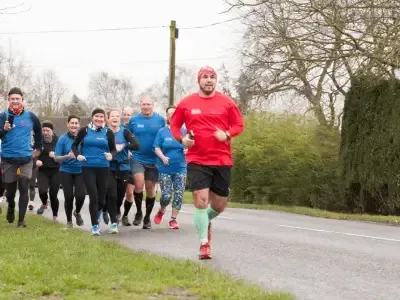
Runpreneur Vlogging: Capturing the Journey
Dive into the visual stories of our Runpreneurs as they document their experiences through engaging video logs. Witness the challenges, triumphs, and moments of camaraderie that define the Runpreneur spirit.
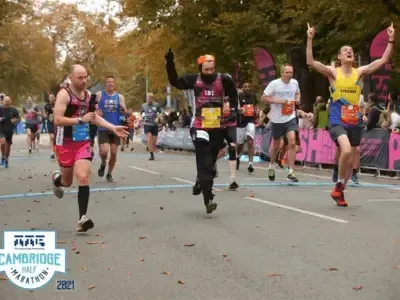
Becoming a Runpreneur: Join the Movement
Learn how you can become a Runpreneur and be part of this global community. Discover the steps to sign up, complete the challenge, and share your journey, all while making a lasting difference.
Connect With Us:



















I am on a mission to raise £1,000,000 for children's causes by daily run-vlogging barefoot-style, covering the total distance of a lap around the world—40,075 km.