
Runpreneur Journey Blog
Embark on an extraordinary journey with the Runpreneur community. Discover inspiring stories, insider tips, and the transformative power of our global challenge. From first-time runners to seasoned athletes, our blog captures the essence of the Runpreneur movement, inspiring others to join the cause.

How Getting Teenagers Off Screens and Into Nature Can Transform Their Mood
How Getting Teenagers Off Screens and Into Nature Can Transform Their Mood
Day 2038. I'm now 20,380km into a 40,075km mission to run the equivalent of a lap of the world, barefoot-style, every single day without exception, raising money for children's causes including Great Ormond Street Hospital and BBC Children in Need. Today's run gave me the space to think about something I've been navigating at home for a while now screen time, teenagers, and what I've actually noticed works when their mood drops through the floor.
I want to be clear before I say anything else. I'm not a parenting expert. I'm not a child psychologist. What I am is a dad of three two teenagers and an 11-year-old who isn't far behind them and I can only speak from what I've seen and experienced in my own home. That's always been the point of this vlog and this blog. It's a diary. Real observations, not polished advice.
So here's what I've been thinking about on today's run.
Teenagers and screens. It's one of those conversations that every parent I speak to is having, and most of us feel like we're losing it. The mood swings, the low energy, the irritability, the disconnection and underneath all of it, a screen that never seems to switch off. I don't think it helps anyone to point fingers or catastrophise about technology. Screens are part of how young people socialise now. My kids game with their friends online, they have group calls, they stay connected in ways that are genuinely social. That matters, and I try to hold onto that perspective rather than writing it all off as damaging.
But there's another side to it. The endless scrolling. The solitary gaming sessions that stretch for hours. The passive consumption of content that leaves them flat and withdrawn. And I don't think young people always have the self-awareness to recognise what it's doing to them in the moment. They're in it. They don't see it from the outside the way we do.
What I've noticed and this is the practical observation that I think is worth sharing is that getting my teenagers outside, even briefly, changes everything. Not a lecture. Not a screen confiscation. Not a confrontation. Just getting them out of the house and into fresh air. A walk. Sometimes a run if they're up for it. Even just standing outside and talking. Within a few minutes and I mean genuinely just a few minutes the person I'm used to comes back. The mood lifts. The conversation opens up. It's not dramatic or immediate every single time, but the consistency of it has surprised me. Nature does something that I don't think we fully understand, but I've seen it work often enough now to trust it.
The key for me is not to use that time to lecture them. If they've reluctantly agreed to come outside, the worst thing I can do is turn it into a performance review of their screen habits. It has to just be time together. Normal conversation. Noticing things around us. Letting the environment do the heavy lifting rather than me trying to force a result.
I think about this in relation to running as well. Some of the heaviest, most difficult days on this streak and I'm now 2038 consecutive days in have been the ones where I've gone out with an agenda. Expecting a certain outcome, pushing too hard, overthinking it. The runs that have genuinely helped me mentally, emotionally, in terms of perspective have been the ones where I just go. No expectation. Just movement and fresh air and whatever thoughts come.
Teenagers aren't so different. They're carrying things we don't always see. The pressure of social comparison that social media amplifies in ways my generation never experienced at that age. The addictive design of the platforms they use, which are built to keep them scrolling whether it benefits them or not. The sheer volume of input they're processing every day. Getting outside doesn't solve any of that permanently. But it interrupts it. It gives the nervous system a break. And in that break, the real person tends to show up again.
We're also thinking at home about putting some shared family rules in place around screen use. Not singling out the kids rules that apply to all of us, including me. Because the truth is, adults aren't immune to this either. I'm as capable of mindless scrolling as anyone. The difference is I've built a daily running practice that forces me outside every single day regardless of how I feel, and I think that anchors me in a way I'd struggle without. Not everyone has that structure, especially not teenagers who are still figuring out how to regulate themselves.
The broader point for me and this connects to why I do this run every day without exception — is that consistency in small, simple actions produces results that intensity alone never can. Getting outside every day isn't transformative on day one. But across 2038 days, it has fundamentally changed how I process stress, how I think, how I show up for my family and my work. If I can help my children build even a fraction of that relationship with the outdoors while they're young, I think it matters enormously.
Nineteen thousand, six hundred and ninety-five kilometres still to go on this mission. Every single day I run, a few more people see this. A few more pounds go toward children's causes that genuinely need the support. That's why I keep going, even when it's hard, even when the weather's grim, even when life makes it complicated. The children this mission is for don't get the luxury of choosing their circumstances. The least I can do is keep showing up.
If you've got teenagers at home and you're finding the screen battle exhausting, I'd just say — try the simplest thing first. Get outside with them. Don't go with a plan. Just go.

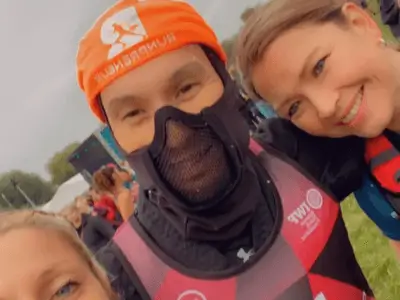
Kevin's 40,075km Challenge: Raising £1 Million for Children
Meet Kevin, a dedicated Runpreneur who embarked on an extraordinary journey to raise £1 million for children in need. Over the course of his 40,075km challenge, Kevin's unwavering determination and passion inspired thousands to join the Runpreneur movement.

Runpreneur Vlogging: Capturing Kevin's Journey
Experience the Runpreneur challenge through the lens of Kevin's video diary. Witness his ups and downs, the camaraderie of the community, and the transformative power of running for a cause. Dive into the visual stories that capture the essence of the Runpreneur movement.

Empowering Children, One Step at a Time
As Kevin logged every kilometre of his 40,075km challenge, the true purpose behind his journey came into focus. Each step, each bead of sweat, fuelled essential healthcare, education, and nutrition programs for children in need around the world.

The Transformative 4x4x48 Challenge
Experience the thrill and personal growth of our iconic 48-hour running event. Witness the determination and resilience of Runpreneurs as they push their limits, one mile at a time.
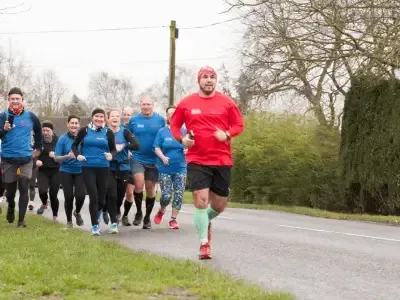
Runpreneur Vlogging: Capturing the Journey
Dive into the visual stories of our Runpreneurs as they document their experiences through engaging video logs. Witness the challenges, triumphs, and moments of camaraderie that define the Runpreneur spirit.

Becoming a Runpreneur: Join the Movement
Learn how you can become a Runpreneur and be part of this global community. Discover the steps to sign up, complete the challenge, and share your journey, all while making a lasting difference.
Connect With Us:



















I am on a mission to raise £1,000,000 for children's causes by daily run-vlogging barefoot-style, covering the total distance of a lap around the world—40,075 km.