
Runpreneur Journey Blog
Embark on an extraordinary journey with the Runpreneur community. Discover inspiring stories, insider tips, and the transformative power of our global challenge. From first-time runners to seasoned athletes, our blog captures the essence of the Runpreneur movement, inspiring others to join the cause.
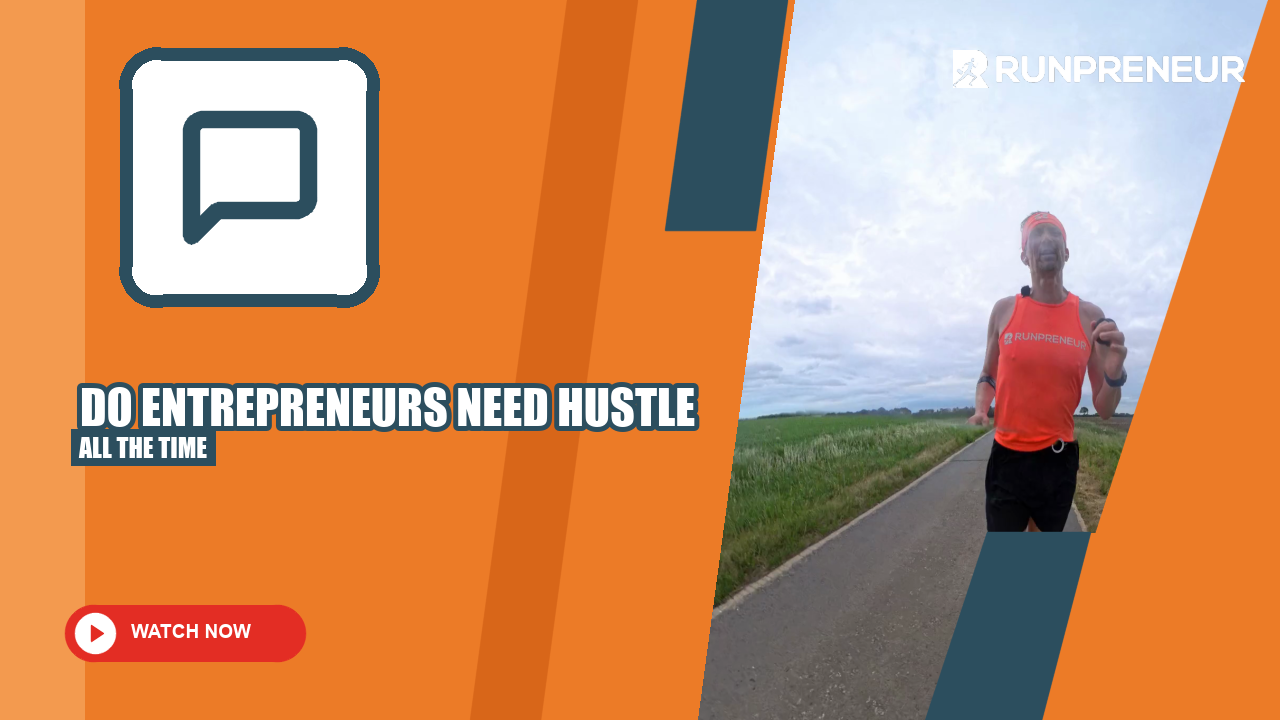
Entrepreneur Hustle: Do You Have to Hustle Hard All the Time?
Today's question is one I have been sitting with for a few weeks: as an entrepreneur, do you need to hustle all the time?
Most of what I come across on social media says yes. Success in entrepreneurship is linked to hustle, and hustle means working incredibly hard, often eighteen-hour days. The people who work the hardest are said to achieve the most. Working hard is treated like a medal of honour.
I only partly agree with that, and I want to explain why.
Where hustle is needed
When you start something new, hustle is close to an entrepreneur's best trade. Who else is going to do the work? In the early stages, the founder is the agency. You do the selling, the building, the fixing and the chasing. I would never diminish that, and I have done it myself.
But the problem changes once you have proven the concept and know it is a viable business. The question stops being "can this work?" and becomes "how do I make this sustainable?" That is when you bring in systems, processes, people, data and reporting. The aim is to do less of the actual hustle and more of the overseeing. It is the old idea of working on the business rather than in it.
Entrepreneurship is problem solving, and the problems shift as the business matures. A successful entrepreneur is unlikely to be grafting 24/7 once momentum is established. At that point, I think the job is to remove yourself from the day-to-day and move towards ownership.
Where I am right now
I am in the middle of launching an AI-built software business, an operating system for small businesses. I have worked hard on it for the past four or five weeks. It is still a few weeks from going live, and I have run low on energy.
I also put pressure on myself to launch in 30 days. The reality is that it will be launched within 30 working days, but those days do not have to run back to back. So I have taken a short break to recharge. I will go back to it in a few days.
My property business is the other side of this. It is 20 years old and well established, with systems, processes, people and reporting in place. I have worked hard on it over the last 12 months or so, optimising and improving it. Now I need to oversee it, but I am not working in it the way I once did. I am working on it.
And I feel guilty about both. That is the part I wanted to examine.
Why the guilt shows up
The guilt does not come from anything I have actually done wrong. The business is performing, the new venture has very little overhead, and I am not under financial pressure that forces me to move faster. The guilt comes from the message I have absorbed: if you are not hustling, you are not a proper entrepreneur.
I think that message is wrong, and I think it makes people feel guilty for resting when they have no reason to.
The ADHD factor
Many entrepreneurs have a link with ADHD, and I am one of them. One thing I struggle with is moderation. I go all in on something, fixated, and then my interest drops and I look for the next thing. My running vlog is the exception, because I have stayed with it for years. But with most projects, I do not find the balance easily.
I have been all in on this software experiment, and I think I have burnt through my interest for now. It will come back, because I believe in what I am building. But I have learned that pushing through a dip in energy does not help me. Taking a few days and coming back with energy is better than forcing weeks of poor work.
What I take from this
Here are the lessons from my diary today.
First, hustle is a phase, not an identity. It is essential when you are taking something from nothing to something. It is not meant to be permanent.
Second, hard work and balance are not opposites. I have seen it said that entrepreneurs have some of the highest marriage failure rates, because the work takes over and the balance goes. I cannot give you a statistic on that, but I understand how it happens. I am not saying hard work does not matter. I am saying it should not be consistent at maximum intensity for ever.
Third, guilt is a poor guide. If the business is sound and the plan is intact, a short break is a decision, not a failure.
Fourth, the way to need less hustle is to solve a different problem. Systems, people, AI, automation and data are how you reduce your own load. That is the work once the concept is proven.
How this connects to the streak
I do not stop running or vlogging. Day 2192 is done, and that is part of why I think about this so much. The streak works because it is small enough to repeat every day, not because it is maximum effort every day. Consistency has carried me further than intensity ever did.
I have now covered 16,816.41km of the 40,075km lap of the world, with 23,258.59km still to go. I am running it barefoot-style, and I am filming it every day. Pacing matters over a distance like that, and it matters in business too.
Why I do it
This vlog is part of a fundraiser to help save the lives of children, by attempting the ultimate ultra marathon of run vlogging on consecutive days, over the distance of a lap of the world. The target is £1M for children's causes. The more people the vlog reaches, the more we can raise. That is why I do this every single day.
If you are an entrepreneur who feels guilty for resting, ask a plain question: is the business sound, and is the plan intact? If yes, rest, then go again. If this was useful, watch the full episode, follow along, and share it with someone who needs to hear it.
Watch the full episode: https://youtu.be/QxMk0vk39i0
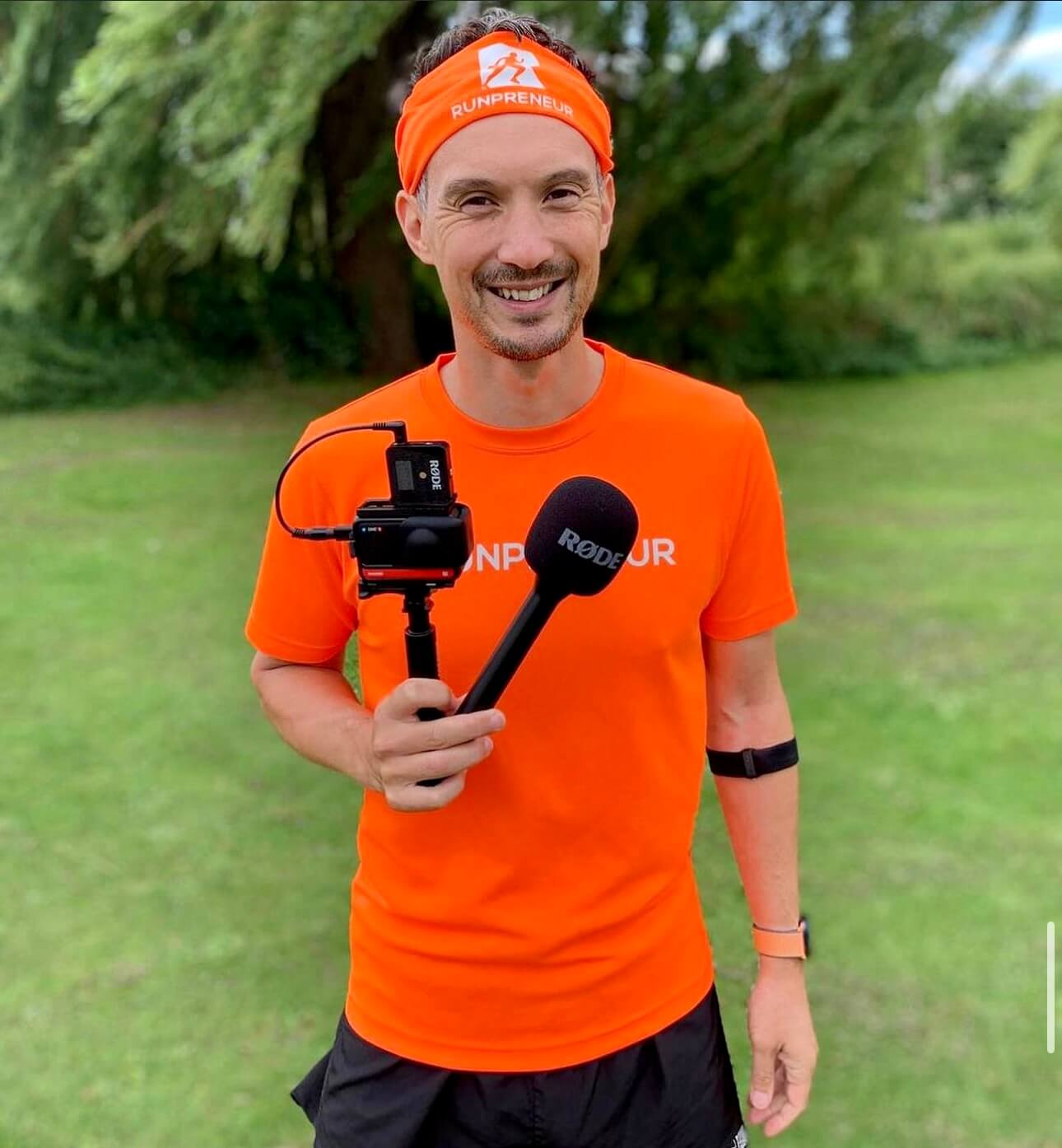
Kevin's 40,075km Challenge: Raising £1 Million for Children
Meet Kevin, a dedicated Runpreneur who embarked on an extraordinary journey to raise £1 million for children in need. Over the course of his 40,075km challenge, Kevin's unwavering determination and passion inspired thousands to join the Runpreneur movement.
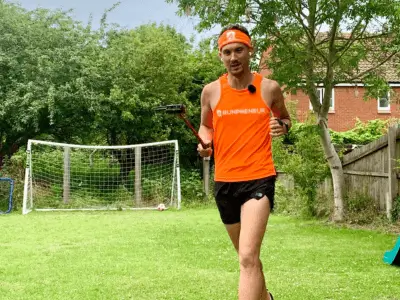
Runpreneur Vlogging: Capturing Kevin's Journey
Experience the Runpreneur challenge through the lens of Kevin's video diary. Witness his ups and downs, the camaraderie of the community, and the transformative power of running for a cause. Dive into the visual stories that capture the essence of the Runpreneur movement.

Empowering Children, One Step at a Time
As Kevin logged every kilometre of his 40,075km challenge, the true purpose behind his journey came into focus. Each step, each bead of sweat, fuelled essential healthcare, education, and nutrition programs for children in need around the world.
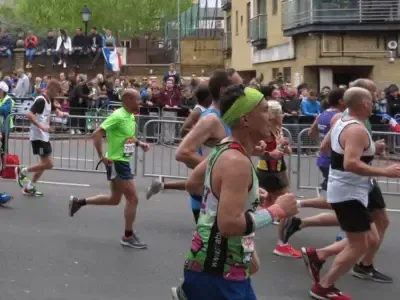
The Transformative 4x4x48 Challenge
Experience the thrill and personal growth of our iconic 48-hour running event. Witness the determination and resilience of Runpreneurs as they push their limits, one mile at a time.
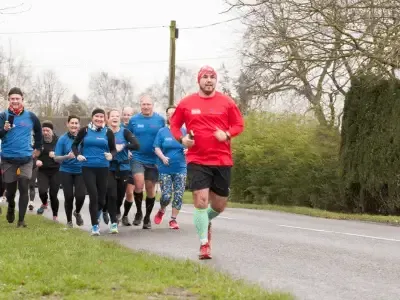
Runpreneur Vlogging: Capturing the Journey
Dive into the visual stories of our Runpreneurs as they document their experiences through engaging video logs. Witness the challenges, triumphs, and moments of camaraderie that define the Runpreneur spirit.
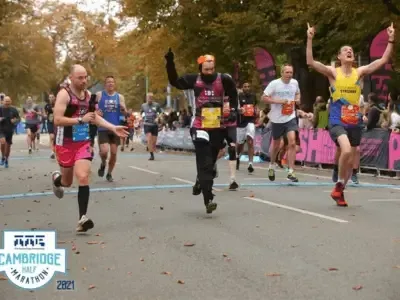
Becoming a Runpreneur: Join the Movement
Learn how you can become a Runpreneur and be part of this global community. Discover the steps to sign up, complete the challenge, and share your journey, all while making a lasting difference.
Connect With Us:



















I am on a mission to raise £1,000,000 for children's causes by daily run-vlogging barefoot-style, covering the total distance of a lap around the world—40,075 km.