
Runpreneur Journey Blog
Embark on an extraordinary journey with the Runpreneur community. Discover inspiring stories, insider tips, and the transformative power of our global challenge. From first-time runners to seasoned athletes, our blog captures the essence of the Runpreneur movement, inspiring others to join the cause.

Cash Flow Forecast for Small Business: The One Report I Would Build First
Today is consecutive day 2,193 of my daily run vlog. I have now covered 16,823.62km towards a lap of the world, which is 40,075km. That leaves 23,251.38km. I am running in barefoot-style footwear every day, and the whole effort is part of a mission to raise £1M for children's causes. Nothing about the streak is dramatic. It is one run, one episode, one more day.
Today's topic is not about running at all. It is about the report I believe every micro or small business owner needs before any other.
For me, it is the cash flow forecast.
Why I rate the cash flow forecast above everything else
I have been an entrepreneur for 24 years and I am still going. I do not take that lightly, because the often-quoted figure is that 9 out of 10 businesses fail. Over the years I have worked with roughly 200 micro and small business owners. Two problems come up more than any others.
The first is cash. Managing cash flow, and running out of cash. The second is overwhelm. Doing everything yourself, spinning plates, feeling shackled to the business.
Overwhelm is a different problem and I will cover it another day. But cash is the one a forecast solves directly. I have heard the figure that around 75% of small and micro business owners struggle with cash flow. If that is close to right, the report that gives you clarity on cash is the one to build first.
Why this is easier than it used to be
A few years ago a cash flow forecast was hard work. You needed complex accounting software, or a spreadsheet you updated by hand, and it was out of date as soon as you saved it.
Now the pieces are simple and cheap:
1. A database. It could be an Excel spreadsheet, Airtable or Supabase. Excel and Supabase are free. 2. A bank feed. I use FinTable, which connects to your bank accounts and pulls transactions into your database. I pay roughly £100 a year, so the cost is small. 3. AI. It reads the database and builds the forecast for you.
I used to run my forecast from Airtable with a live bank feed. I have since taken it a step further with AI doing the work. The bank feed matters most. If the data is live, the forecast is live.
Keep the categories simple
Accounting software is complex and I do not want that complexity in a forecast. You can do deeper analysis later. For forecasting, I need four categories:
- Fixed costs. These recur, usually monthly. The total tells you how much the business must make each month just to cover its base. - Variable costs. These change in amount. In a property business, maintenance is a good example. You do not know what will break, or when. Tenant sourcing fees are another. - Fixed income. In property, this is rent. It should arrive at the same time and in the same amount each month. - Variable income. If you do not have fixed income, this matters even more. You record the invoices you have sent, and the forecast places each one when payment is due under your terms.
Do not get lost in cost of goods sold, gross profit and net profit at this stage. You need to know what goes out and comes in on a fixed basis, and what goes out and comes in on a variable basis.
How my forecast works
I use a 31-day forecast. I can see inflows and outflows for every day of the month ahead. Variable costs sit on top as budgets. In my property example, I hold a maintenance budget. I also hold a budget for tenants who do not pay. That is not a cost in the usual sense, but it reduces my fixed income, so I treat it as a variable cost and plan for it.
If you do not know what a budget should be, AI will review your historical transactions and give you a rough starting figure.
The result is a graph with three lines:
- A best case, where everything comes in and I spend nothing from my variable budgets. - A worst case, where I deduct all of my variable budgets from my fixed position. - A third line I can adjust for money that has arrived, or money I do not expect to arrive.
That third line matters, because real life does not follow the plan.
What the forecast lets you decide
Once you have the report, other measures follow. I look at an operating cushion, which is your income minus your fixed costs. It shows how much you have to play with for variable costs.
It also helps with something many owners avoid: taking money out. We start businesses for a reason, yet we seldom withdraw, because we worry about cash. With clear visibility you can build a withdrawal rule into the forecast. You can set a minimum bank balance, allow for your variable budgets, and see when it is safe to take money out.
The lesson for me
This is the same lesson I learn on the road. Clarity beats anxiety. When I run every day, I do not wonder whether I will run. The decision is made. A cash flow forecast does the same for a business. You stop guessing and start looking at the next 31 days.
Consistency matters here too. A forecast only works if the data stays current. A live bank feed, a database and a short routine do that work for you. Small, repeated actions keep the picture accurate. That is the same principle behind a streak of 2,193 days.
My vision is a streak of around 16.5 years to complete the 40,075km. I will not get there through intensity. I will get there by turning up and doing the next run. Businesses are similar. The owners I have seen last tend to have simple systems they check daily.
Where to start
If you run a micro or small business, I would start with these steps:
- Choose a database you will actually use. - Connect your bank accounts through a bank feed. - Sort your transactions into fixed and variable costs and income. - Ask AI to build a 31-day forecast, with budgets for your variable costs. - Review it every day, and adjust the third line when reality changes.
This will not solve every cash problem overnight. It gives you the information to solve them, and a better chance of lasting in a world where 9 out of 10 fail.
Why I keep doing this daily
Every episode is part of a fundraiser to help save the lives of children, through the ultimate ultra-marathon of run vlogging on consecutive days, the distance of a lap of the world. The goal is £1M for children's causes. If you find something useful in these episodes, subscribe, share, like or comment. The more people who see them, the more we can raise for children.
If you have a question about cash flow forecasts, drop me a line. I read and respond to the relevant ones.
I will see you tomorrow, on day 2,194.
Watch the full episode: https://youtu.be/P3iCJBcJG_g
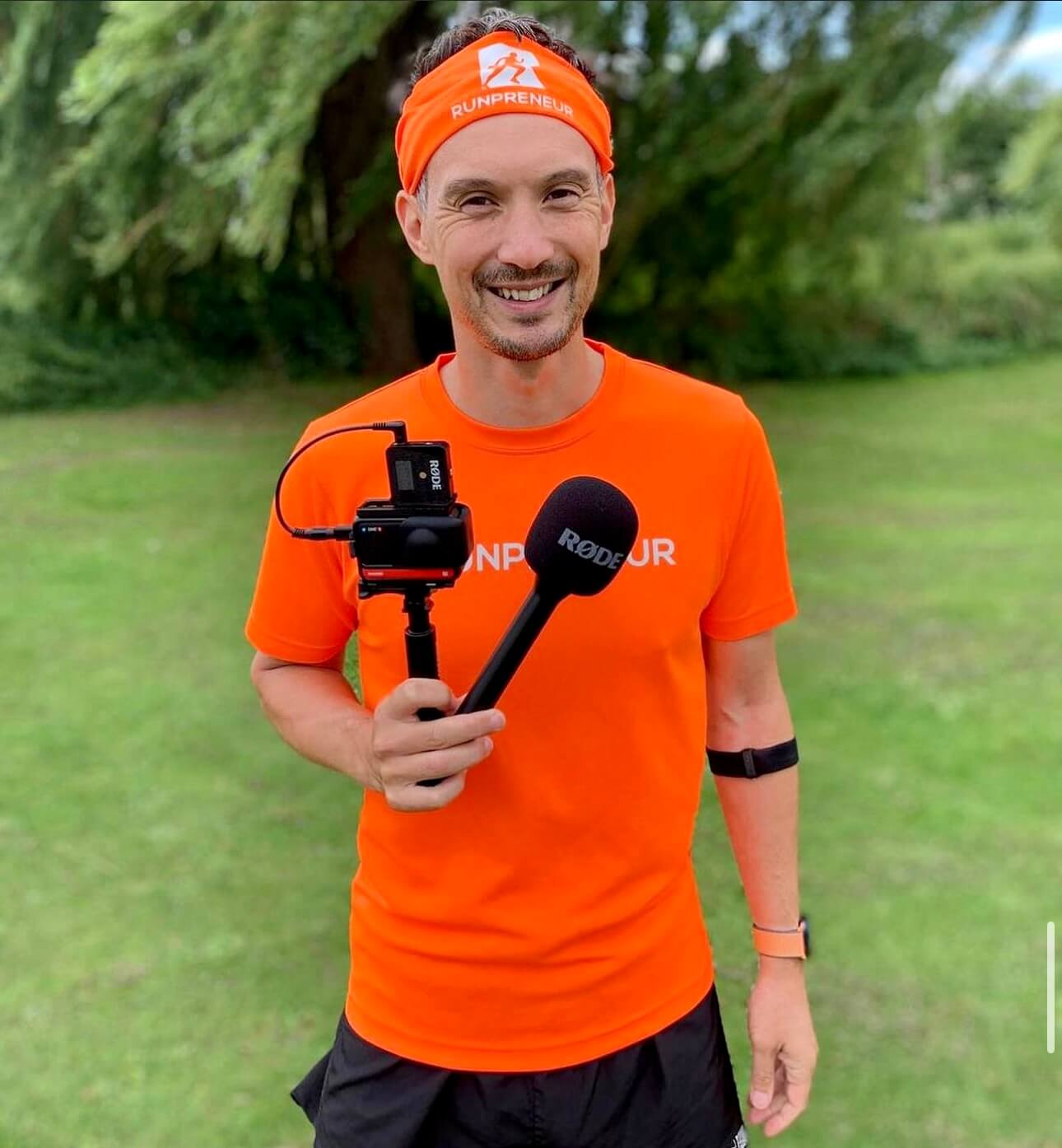

Kevin's 40,075km Challenge: Raising £1 Million for Children
Meet Kevin, a dedicated Runpreneur who embarked on an extraordinary journey to raise £1 million for children in need. Over the course of his 40,075km challenge, Kevin's unwavering determination and passion inspired thousands to join the Runpreneur movement.

Runpreneur Vlogging: Capturing Kevin's Journey
Experience the Runpreneur challenge through the lens of Kevin's video diary. Witness his ups and downs, the camaraderie of the community, and the transformative power of running for a cause. Dive into the visual stories that capture the essence of the Runpreneur movement.

Empowering Children, One Step at a Time
As Kevin logged every kilometre of his 40,075km challenge, the true purpose behind his journey came into focus. Each step, each bead of sweat, fuelled essential healthcare, education, and nutrition programs for children in need around the world.

The Transformative 4x4x48 Challenge
Experience the thrill and personal growth of our iconic 48-hour running event. Witness the determination and resilience of Runpreneurs as they push their limits, one mile at a time.

Runpreneur Vlogging: Capturing the Journey
Dive into the visual stories of our Runpreneurs as they document their experiences through engaging video logs. Witness the challenges, triumphs, and moments of camaraderie that define the Runpreneur spirit.

Becoming a Runpreneur: Join the Movement
Learn how you can become a Runpreneur and be part of this global community. Discover the steps to sign up, complete the challenge, and share your journey, all while making a lasting difference.
Connect With Us:



















I am on a mission to raise £1,000,000 for children's causes by daily run-vlogging barefoot-style, covering the total distance of a lap around the world—40,075 km.