
Runpreneur Journey Blog
Embark on an extraordinary journey with the Runpreneur community. Discover inspiring stories, insider tips, and the transformative power of our global challenge. From first-time runners to seasoned athletes, our blog captures the essence of the Runpreneur movement, inspiring others to join the cause.
AI Experiment Day 24: Why Software Development Slows Down and What to Do About It
Day 2196 of my running streak. 16,845.78km banked toward a lap of the world. 23,229.22km still to go. And today's run gave me the space to process something that has been quietly building over the past few days on my 30-day AI experiment.
I am 24 days into taking a business concept from zero to a launched product in 30 days, using AI to carry 90% of the workload. For the first three weeks, the pace felt fast. New modules, new functionality, new screens appearing every day. AI was doing the heavy lifting on the code. My job was to direct, review, and test. The momentum felt real and measurable.
Then around day 21, the pace started to drop.
Not because the AI stopped performing. Not because I lost focus or ran out of ideas. But because of something entirely predictable in software development, something I now understand far better than I did three weeks ago.
The more you build, the more bugs you generate.
Every new module adds new variables. Every new feature creates new interactions with the existing code. At a certain point, the ratio flips. You spend more time diagnosing and fixing errors than building anything new. Progress slows to a crawl. You feel like you are standing still even though you have built something genuinely substantial. That is a disorienting experience, especially when you are working to a deadline with momentum behind you.
This is where I found myself heading into day 24. A significant web application, well into development, but grinding through bug fixes while the final modules sat unfinished. The 30-day target is real. The pressure was there.
So I made a decision.
I wrote structured, AI-driven build instructions for my two team members so they each take on one of the remaining modules. Not a vague hand-off. Specific instructions, designed so they work in completely isolated development environments, separate from the main build.
This is not optional in software development. When two people work on the same codebase at the same time without the right structure, one person's changes overwrite or corrupt the other's. The solution is branching. Each team member clones the existing build, works in total isolation, tests their module against that clone, and then sends it back to me to connect to the main application. Separate sandboxes. No collisions. Nothing compromises what is already built and working.
In professional development teams, this is standard practice. For a non-technical operator building solo with AI as the primary tool, it is easy to stay in solo mode longer than you should. The rhythm of building feels like control. Handing over part of the build feels like introducing risk. But the truth is the opposite. Holding on past the point where one person alone moves things forward is the real risk. I felt the progress curve flatten. The honest move was to bring the team in properly rather than keep grinding alone and falling further behind.
By the end of day 25, I expect both modules to be ready to integrate. The product will be at version one. Slightly behind the original schedule, but for a clear reason. We built something more complex and more capable than the initial scope assumed. That is not a failure. That is the product responding to what it actually needs to be.
The lesson from day 24 of this AI experiment is worth stating plainly: in software development, a solo builder will hit a ceiling. Not a ceiling of effort or intelligence. A ceiling of capacity. When you hit it, the answer is not to push harder in the same way. The answer is structure, delegation, and isolated responsibility. One person on bug fixes. One person on new development. At a certain scale, that split is not a luxury. It is the only way to keep moving forward.
This maps to business building more broadly. Every growing system reaches a point where the same person who built it cannot simultaneously maintain and extend it. The answer is never to double down on effort in the same direction. The answer is to bring in the right support, structure the hand-off clearly, and trust the process.
Day 24 confirmed something else worth noting: AI does not remove the need for team coordination in product development. It changes what that coordination looks like. The instructions I wrote for my team members were built with AI. The modules they are building are being built with AI. But the decision to delegate, the structure around how to do it, and the integration of the final product, those are human decisions that no AI makes for you.
The goal of this experiment was never to go faster alone. The goal is to cross the line with something that works. Today was a step toward that.
Meanwhile, the streak continues.
2,196 consecutive days running in barefoot-style footwear. 16,845.78km accumulated on a mission to complete 40,075km, the equivalent of a lap of the Earth, and raise £1 million for children's causes including Great Ormond Street Hospital and BBC Children in Need. The run did not stop because the build was frustrating. The build was frustrating and the run happened anyway. That is the principle that holds the whole thing together. Consistency does not negotiate with inconvenience. You show up, you run, you log it, you move on.
Day 25 tomorrow.
Watch the full episode: https://youtu.be/yGOws0WofyU
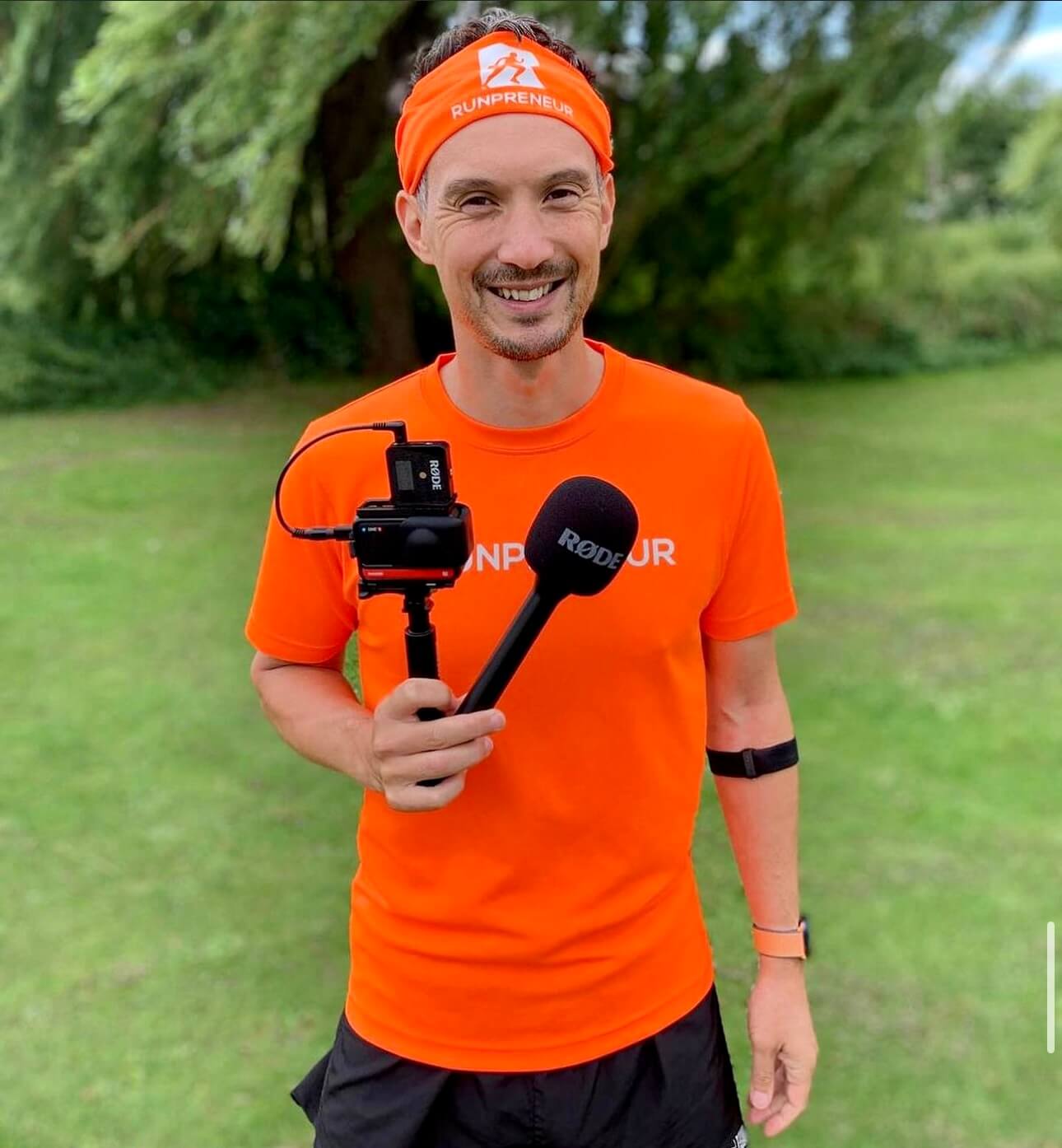
Kevin's 40,075km Challenge: Raising £1 Million for Children
Meet Kevin, a dedicated Runpreneur who embarked on an extraordinary journey to raise £1 million for children in need. Over the course of his 40,075km challenge, Kevin's unwavering determination and passion inspired thousands to join the Runpreneur movement.
Runpreneur Vlogging: Capturing Kevin's Journey
Experience the Runpreneur challenge through the lens of Kevin's video diary. Witness his ups and downs, the camaraderie of the community, and the transformative power of running for a cause. Dive into the visual stories that capture the essence of the Runpreneur movement.

Empowering Children, One Step at a Time
As Kevin logged every kilometre of his 40,075km challenge, the true purpose behind his journey came into focus. Each step, each bead of sweat, fuelled essential healthcare, education, and nutrition programs for children in need around the world.

The Transformative 4x4x48 Challenge
Experience the thrill and personal growth of our iconic 48-hour running event. Witness the determination and resilience of Runpreneurs as they push their limits, one mile at a time.
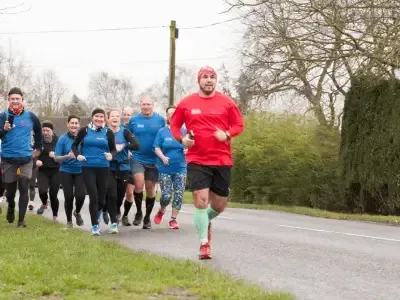
Runpreneur Vlogging: Capturing the Journey
Dive into the visual stories of our Runpreneurs as they document their experiences through engaging video logs. Witness the challenges, triumphs, and moments of camaraderie that define the Runpreneur spirit.
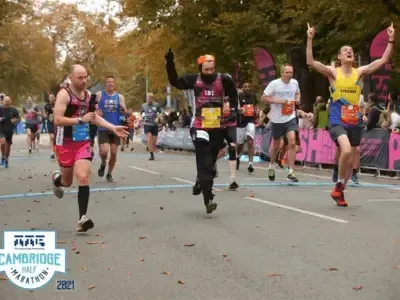
Becoming a Runpreneur: Join the Movement
Learn how you can become a Runpreneur and be part of this global community. Discover the steps to sign up, complete the challenge, and share your journey, all while making a lasting difference.
Connect With Us:



















I am on a mission to raise £1,000,000 for children's causes by daily run-vlogging barefoot-style, covering the total distance of a lap around the world—40,075 km.